

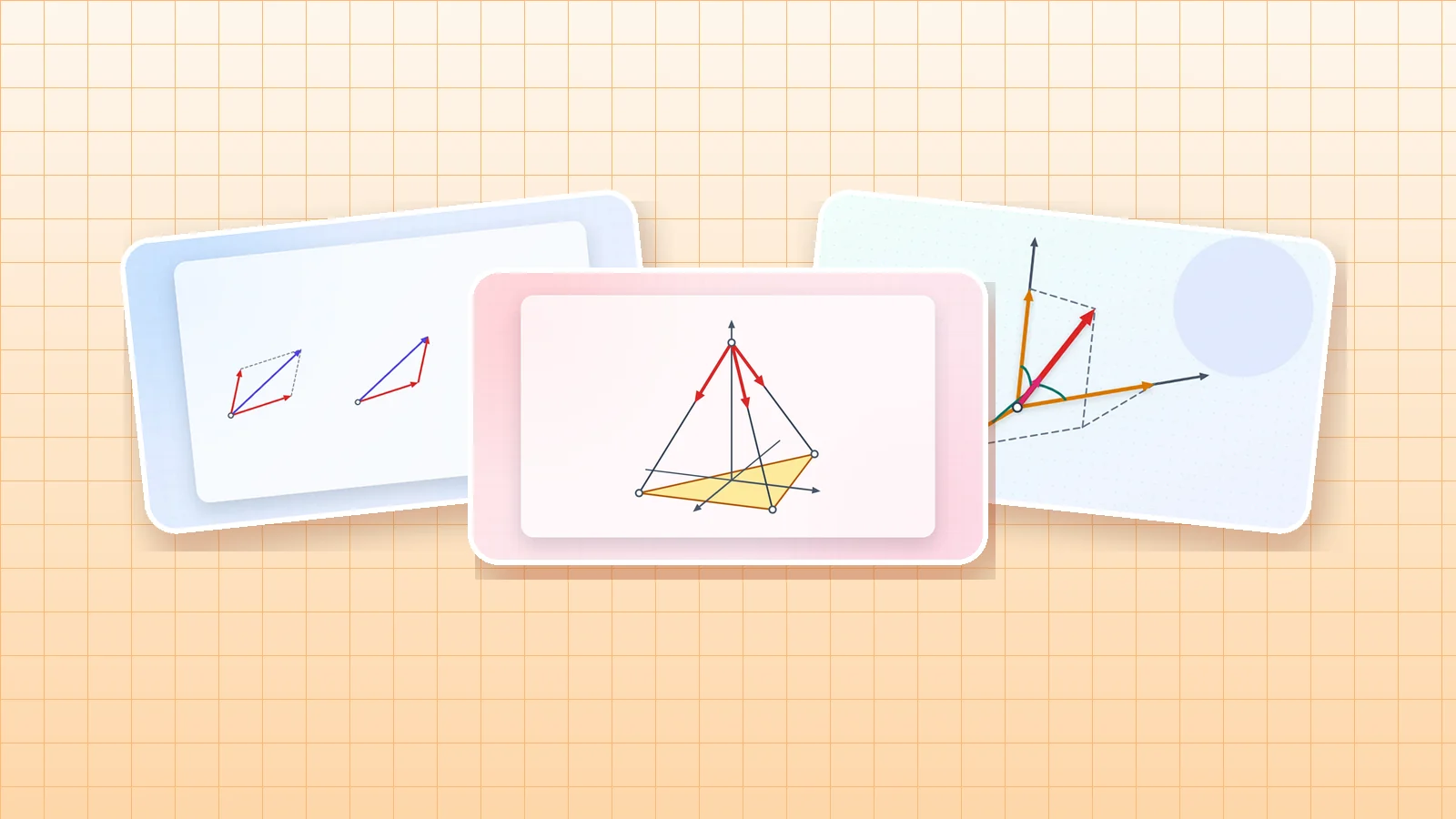



With rectangular components, adding any number of coplanar forces comes down to two sums of numbers: one for \(x\) and one for \(y\). The same two sums, run backwards, also find an unknown force when the resultant is known.
1. Adding forces by components
Write each force in Cartesian form, \(\mathbf{F}_i = F_{ix}\mathbf{i} + F_{iy}\mathbf{j}\), and add the terms with the same unit vector. The components of the resultant are the sums of the components:
The magnitude and the direction then follow as for any single force:
This note treats concurrent forces, whose lines of action meet at one point. When they do not meet at one point, the position of the resultant must also be found.
2. A component table
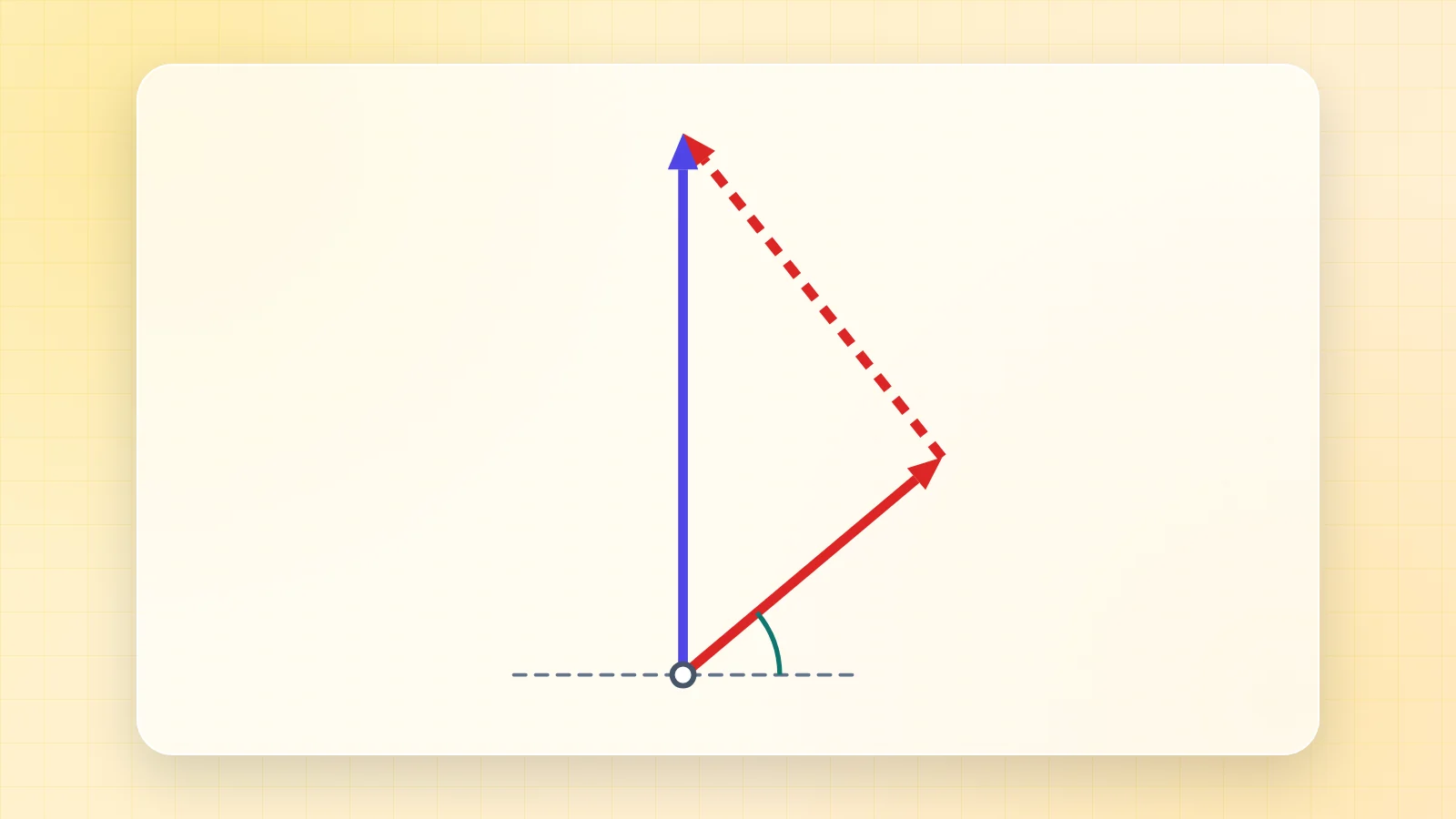
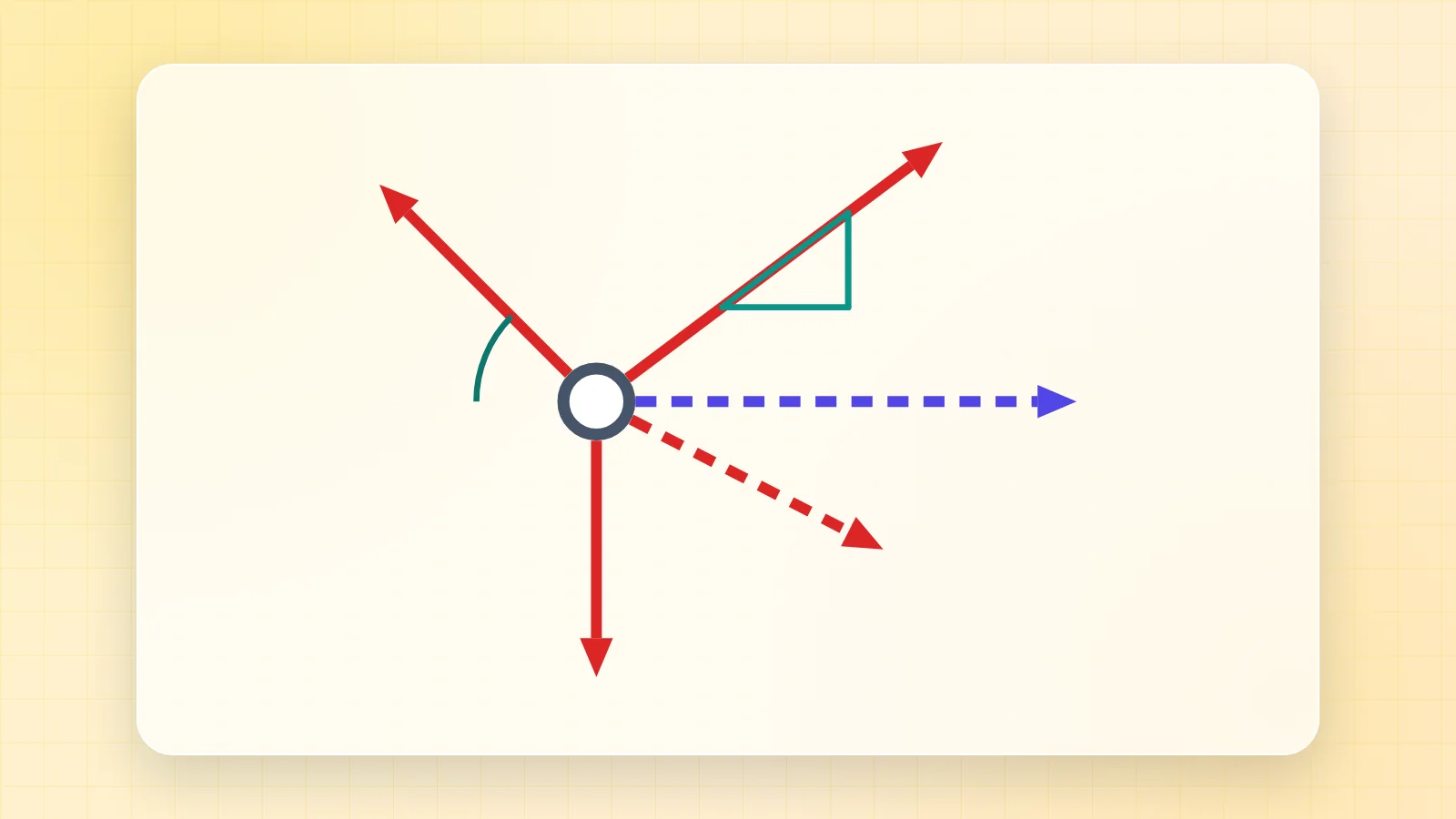
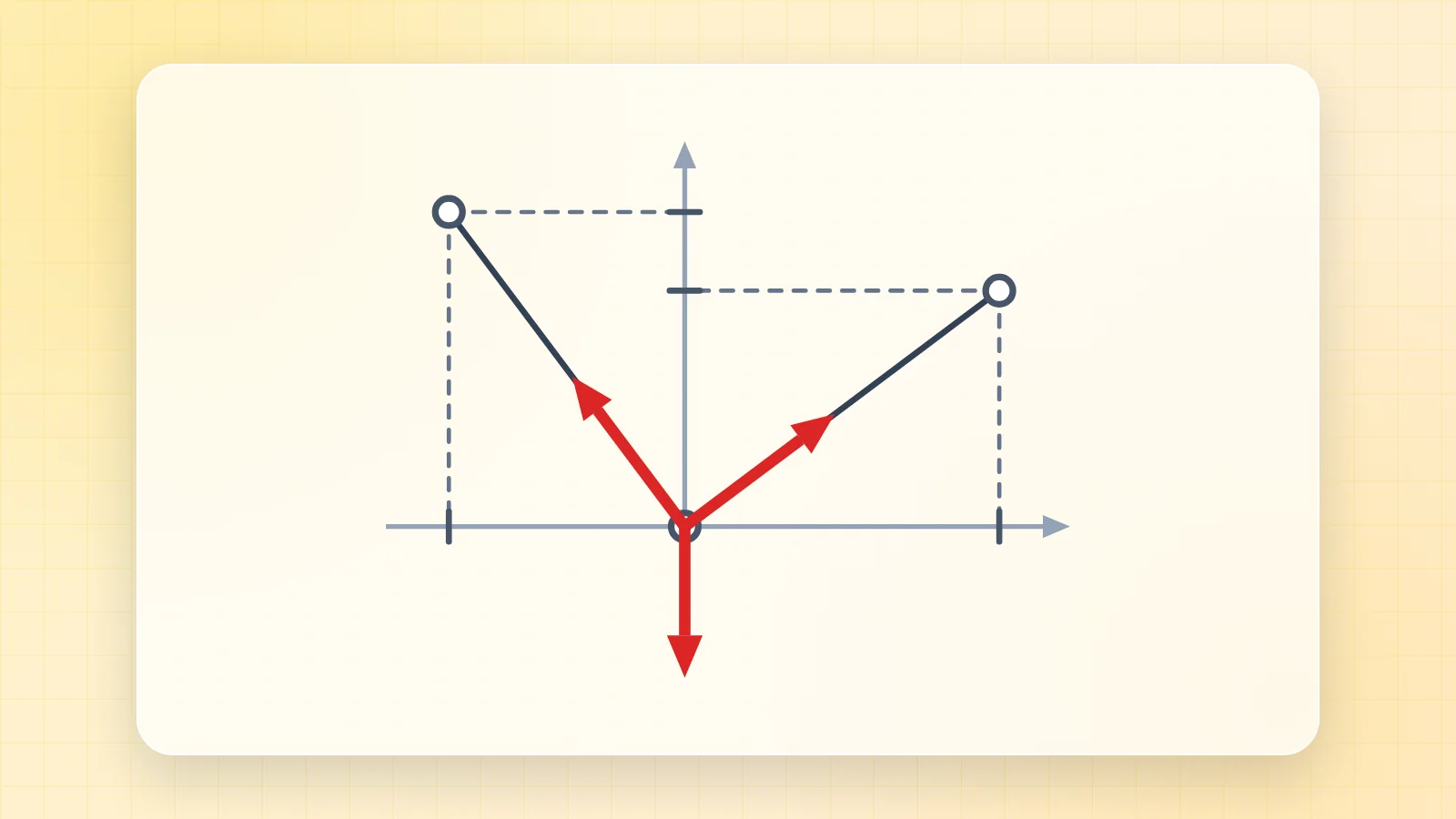
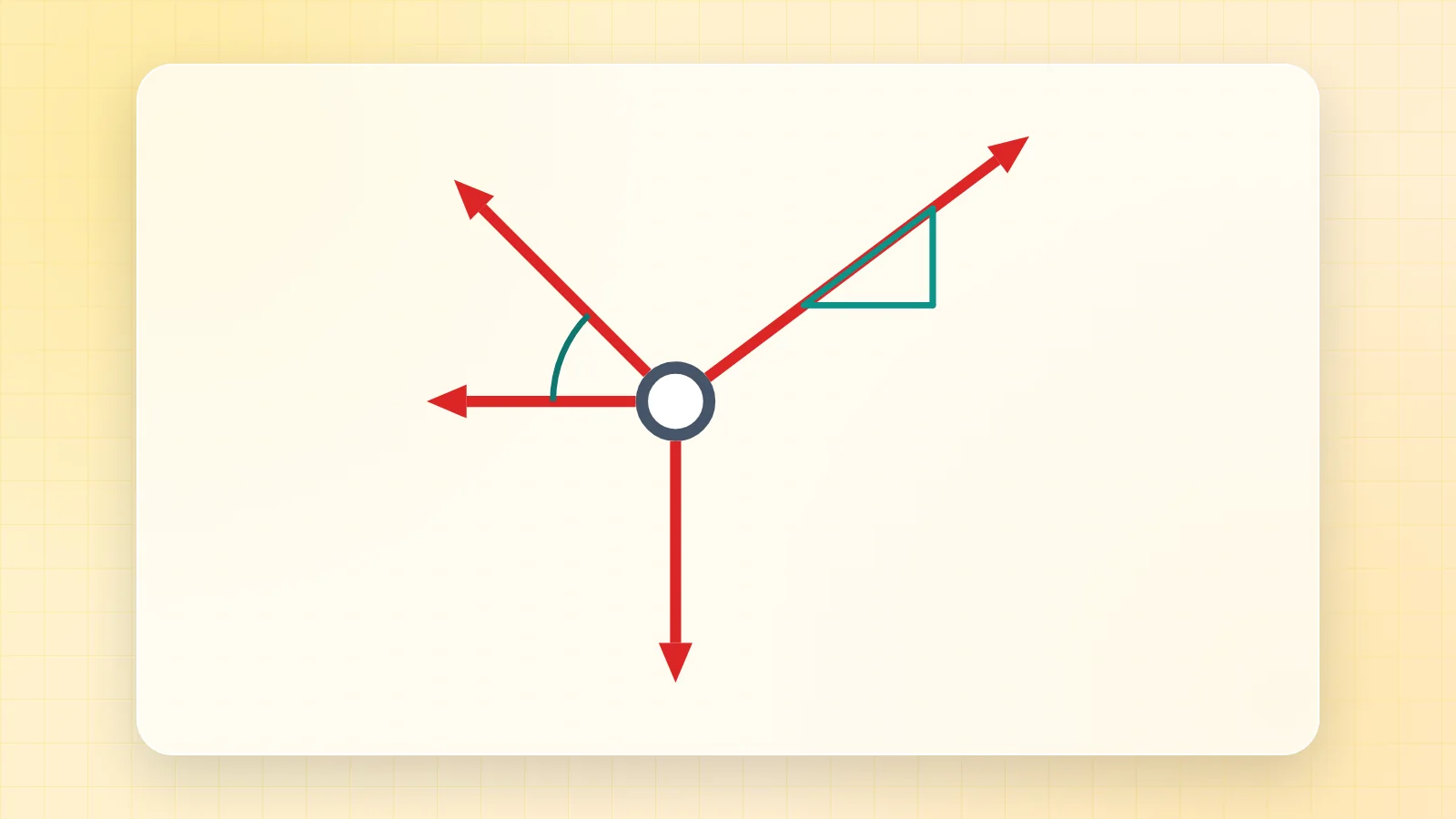
A table keeps the work tidy (Figure 1). Give each force one row, write its \(F_x\) and \(F_y\) with signs taken from the sketch, and add the columns.

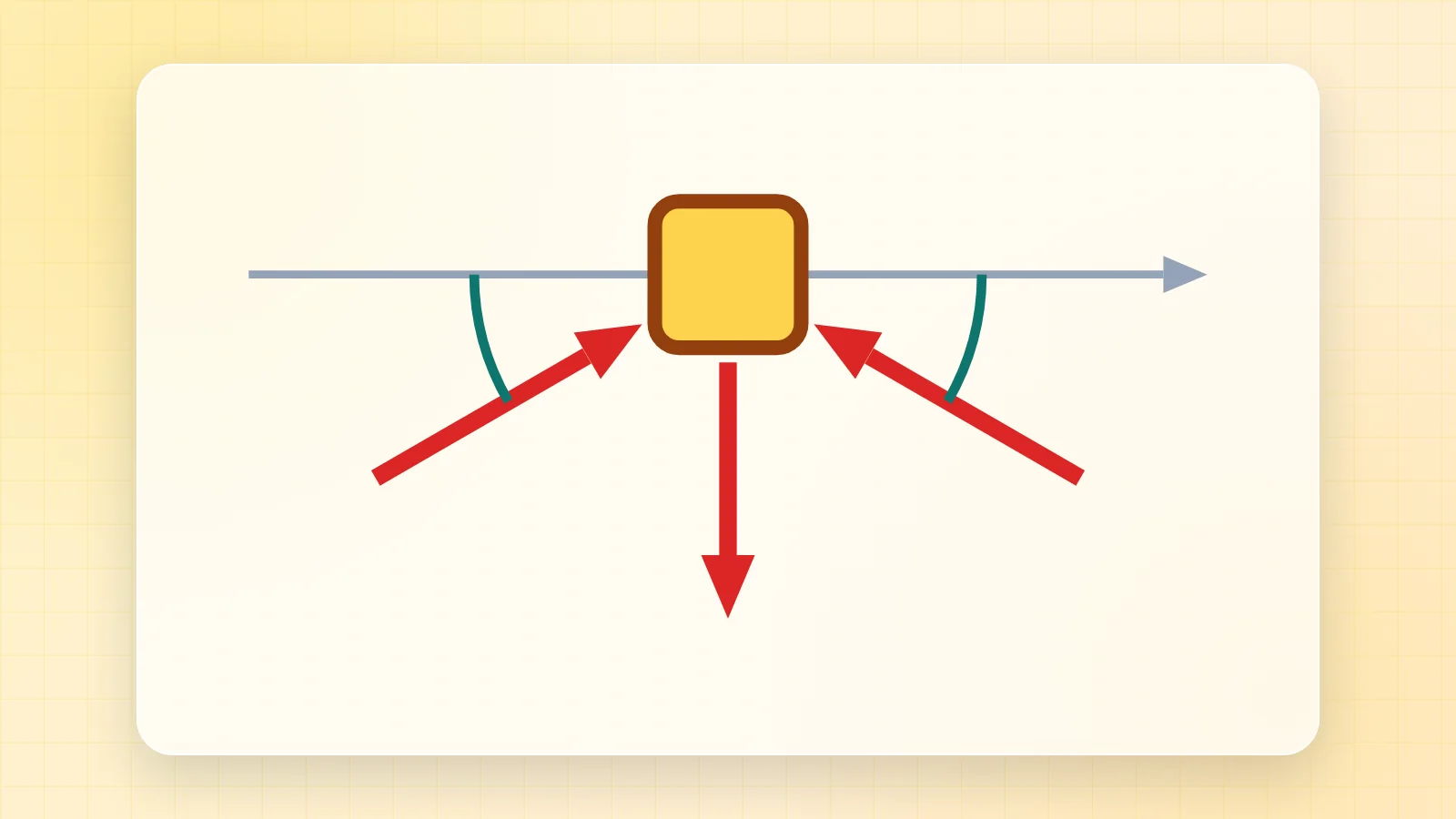
Three forces on an eyebolt. An eyebolt carries \(F_1 = 400\,\text{N}\) at \(30^\circ\) above \(+x\), \(F_2 = 250\,\text{N}\) at \(45^\circ\) above \(-x\), and \(F_3 = 300\,\text{N}\) directed down and to the right along a 3-4-5 slope (3 down, 4 across). Find the resultant.
Components (in N), with signs from the sketch:
- \(F_1\): \(400\cos 30^\circ = 346.4\) and \(400\sin 30^\circ = 200.0\)
- \(F_2\): \(-250\cos 45^\circ = -176.8\) and \(250\sin 45^\circ = 176.8\)
- \(F_3\): \(300\cdot\tfrac{4}{5} = 240.0\) and \(-300\cdot\tfrac{3}{5} = -180.0\)
$$ \begin{aligned} F_{Rx} &= 346.4 - 176.8 + 240.0 = 409.6\,\text{N} \\ F_{Ry} &= 200.0 + 176.8 - 180.0 = 196.8\,\text{N} \end{aligned} $$
Resultant. \(F_R = \sqrt{409.6^2 + 196.8^2} = 454\,\text{N}\) and \(\theta = \tan^{-1}(196.8/409.6) = 25.7^\circ\). Both components are positive, so \(\mathbf{F}_R\) points up and to the right.
Answer. \(\mathbf{F}_R = \{410\,\mathbf{i} + 197\,\mathbf{j}\}\,\text{N}\), that is, 454 N at \(25.7^\circ\) above \(+x\).
3. Finding an unknown force

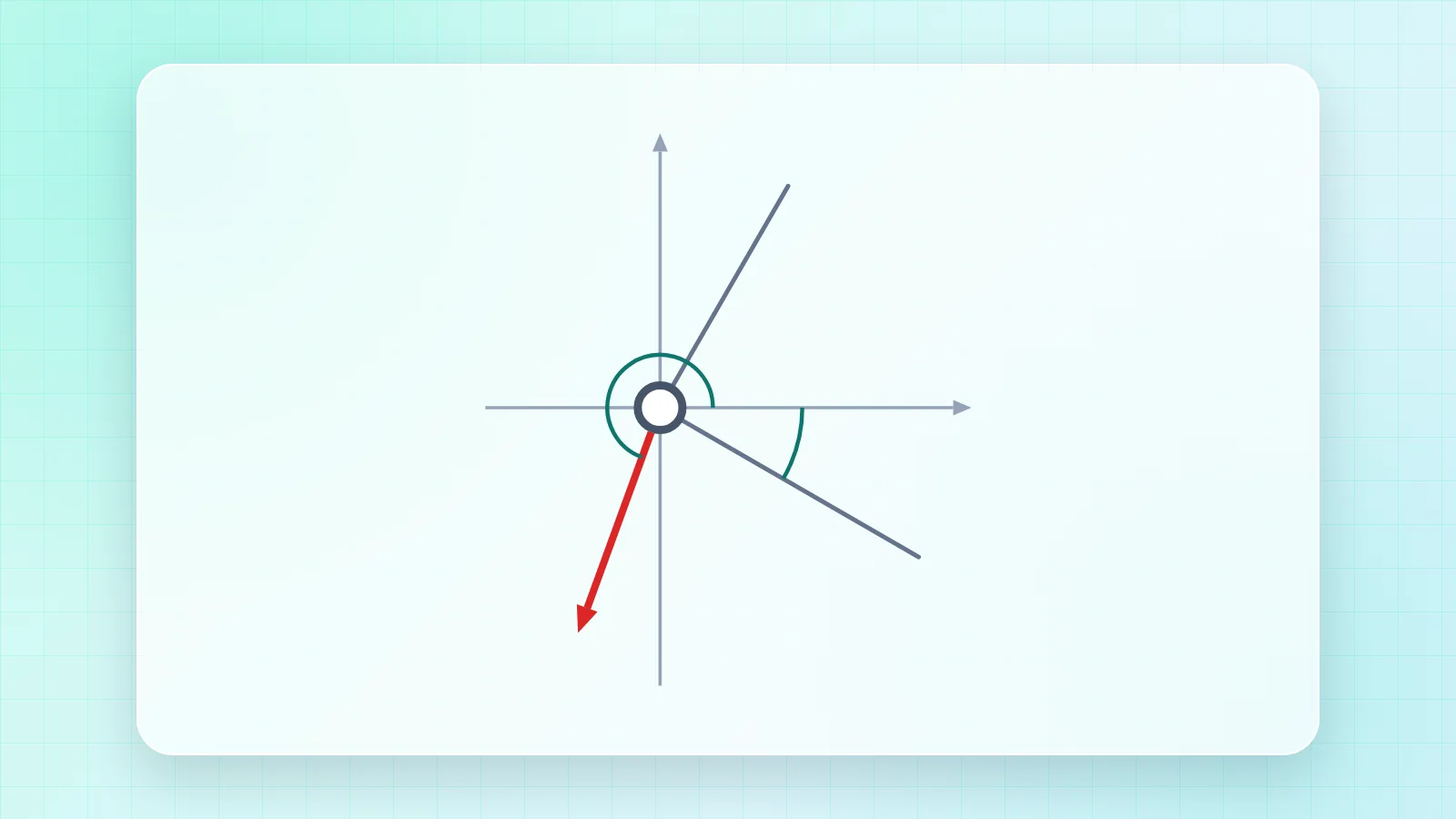
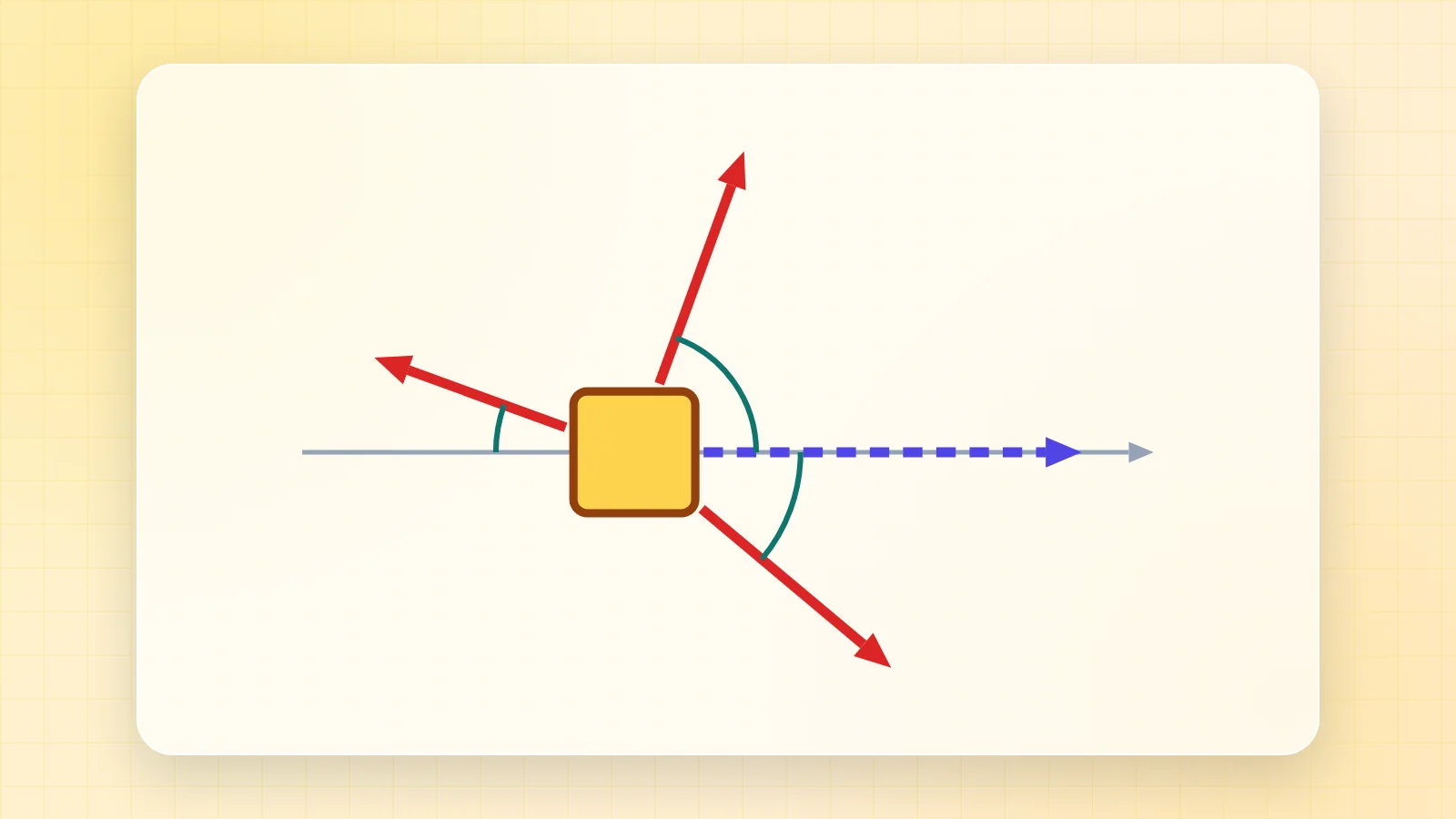
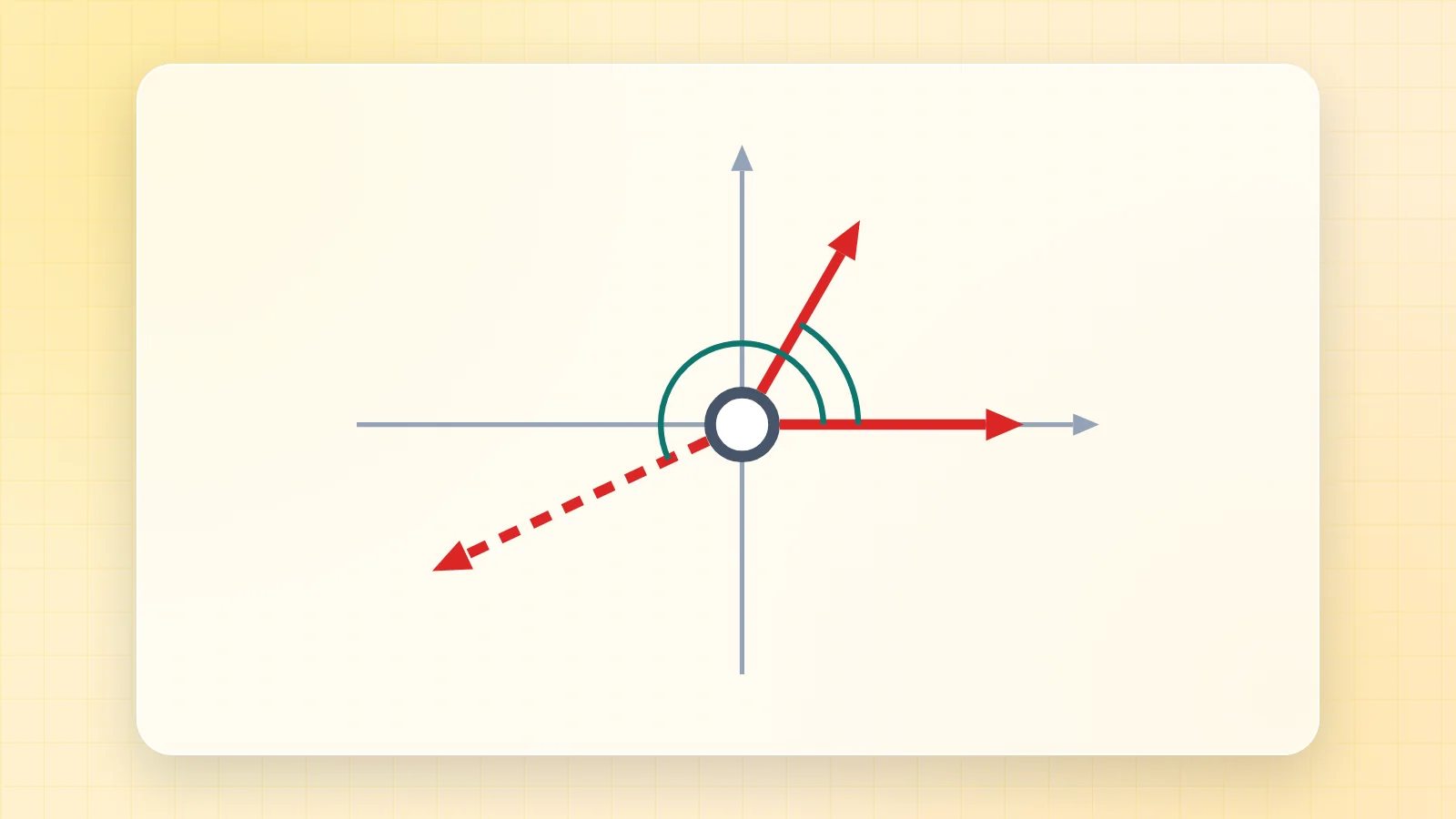
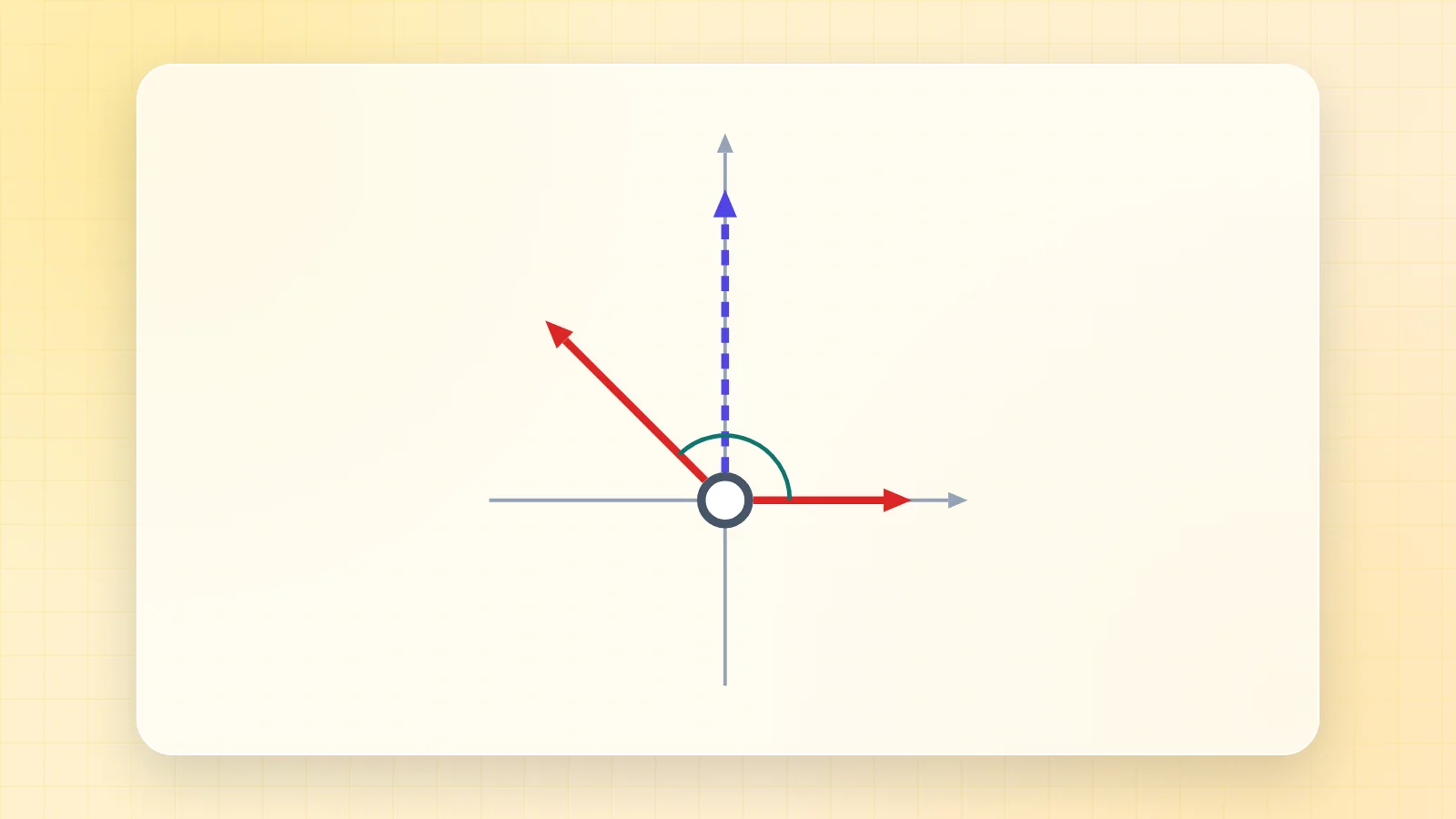
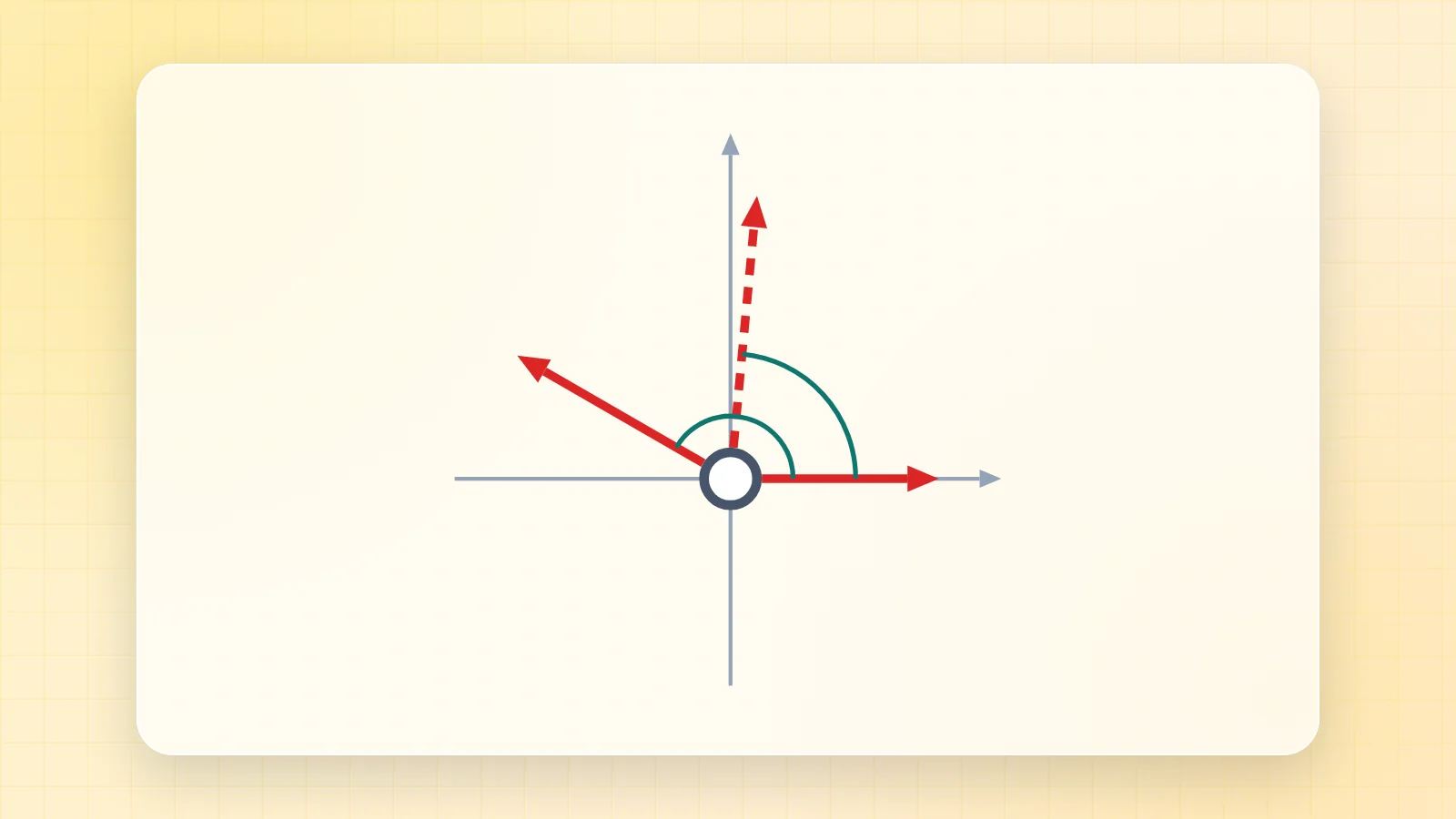
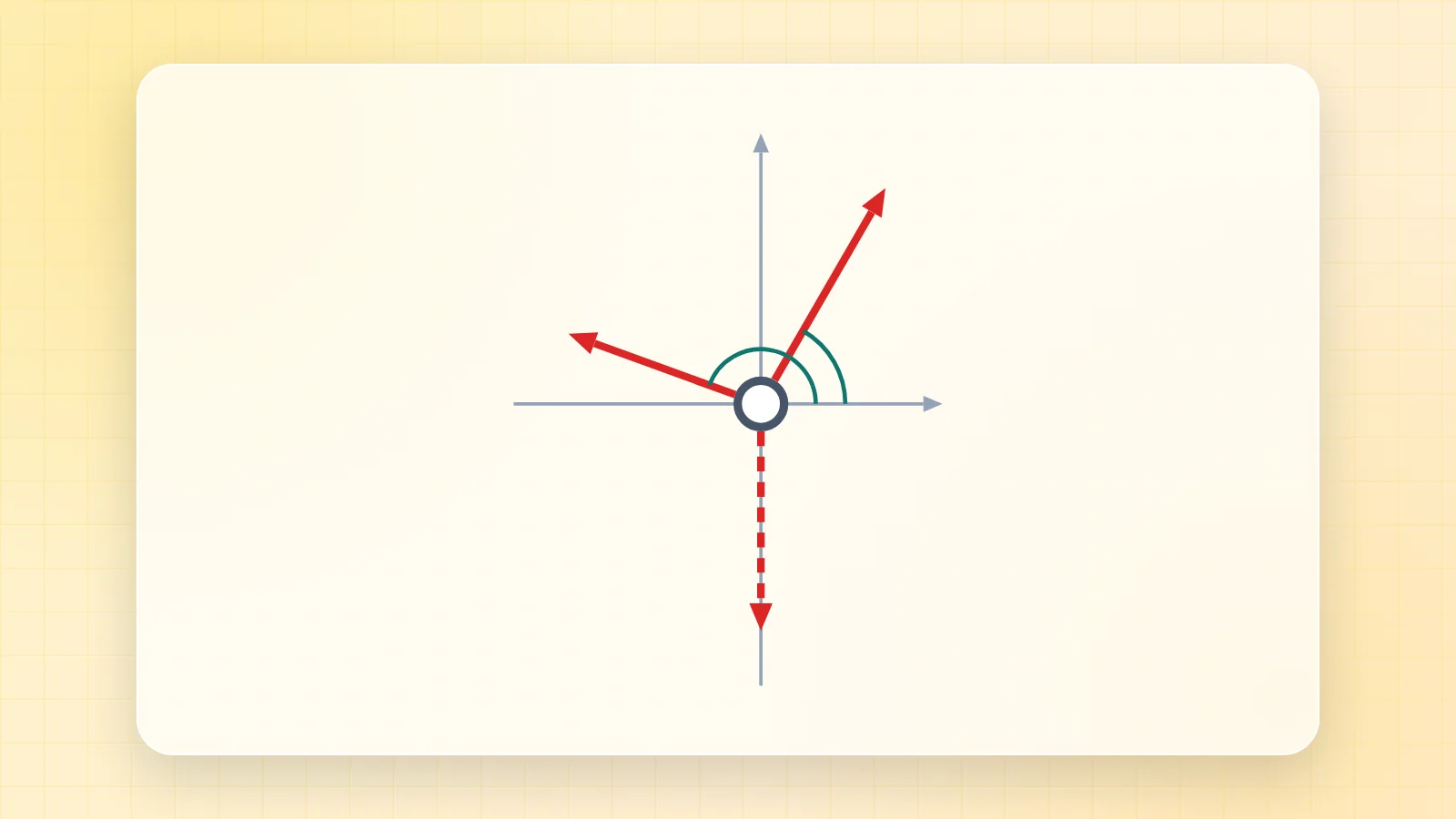
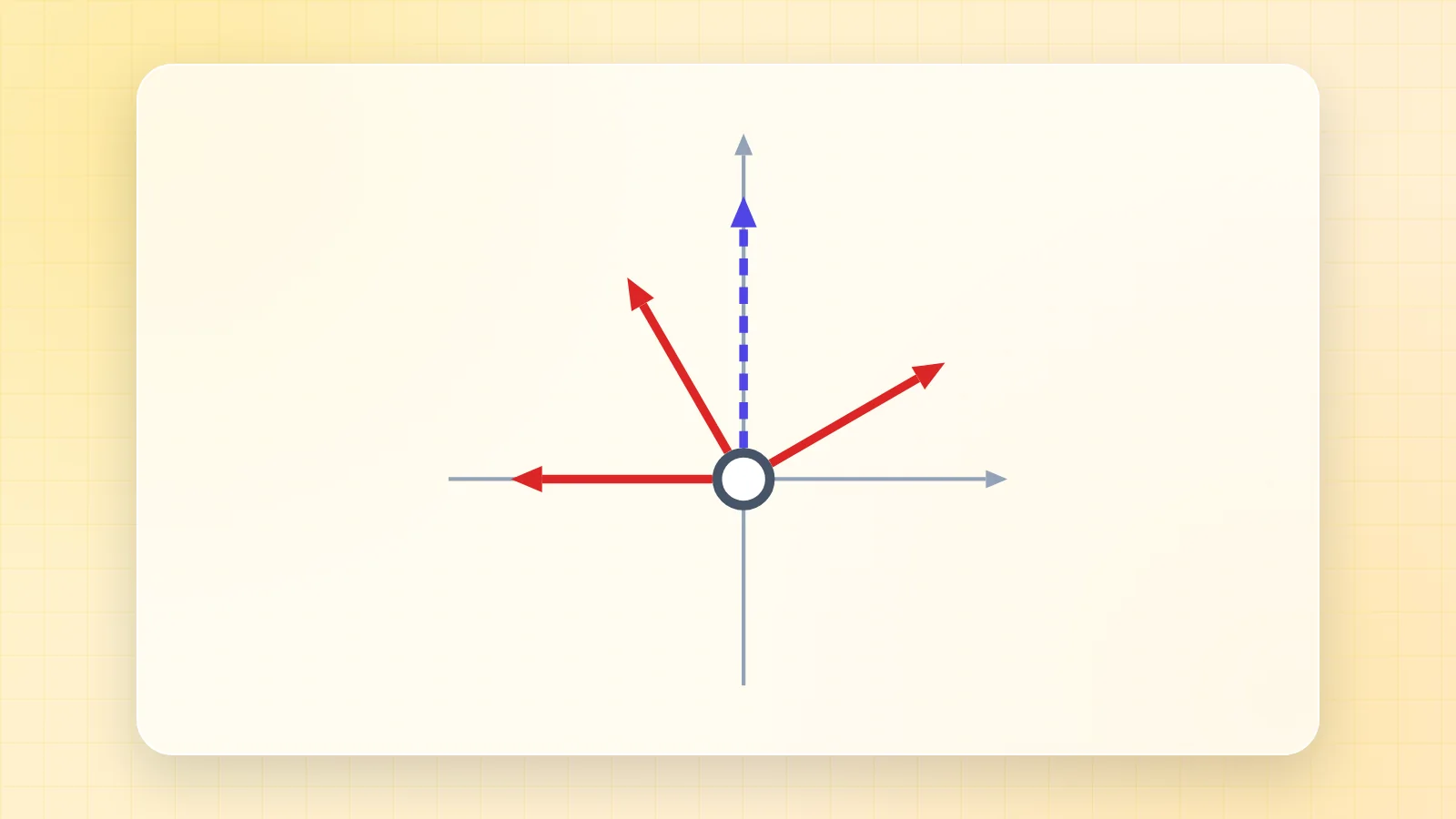
Equation 1 is two scalar equations, so it can also be solved for two unknowns: for example, the magnitude and direction of one force, or the magnitudes of two forces with known directions. Write the required resultant on the left and the forces on the right, then solve (Figure 2).
A required resultant. A bracket carries \(F_1 = 500\,\text{N}\) at \(40^\circ\) above \(+x\). Find the force \(\mathbf{F}_2\) that makes the resultant 800 N vertically upward.
Components of \(\mathbf{F}_2\) from Equation 1, with \(F_{Rx} = 0\) and \(F_{Ry} = 800\,\text{N}\):
$$ \begin{aligned} F_{2x} &= 0 - 500\cos 40^\circ = -383.0\,\text{N} \\ F_{2y} &= 800 - 500\sin 40^\circ = 478.6\,\text{N} \end{aligned} $$
Answer. \(F_2 = \sqrt{383.0^2 + 478.6^2} = 613\,\text{N}\), directed \(\tan^{-1}(478.6/383.0) = 51.3^\circ\) above the \(-x\) axis.
4. Checking the result
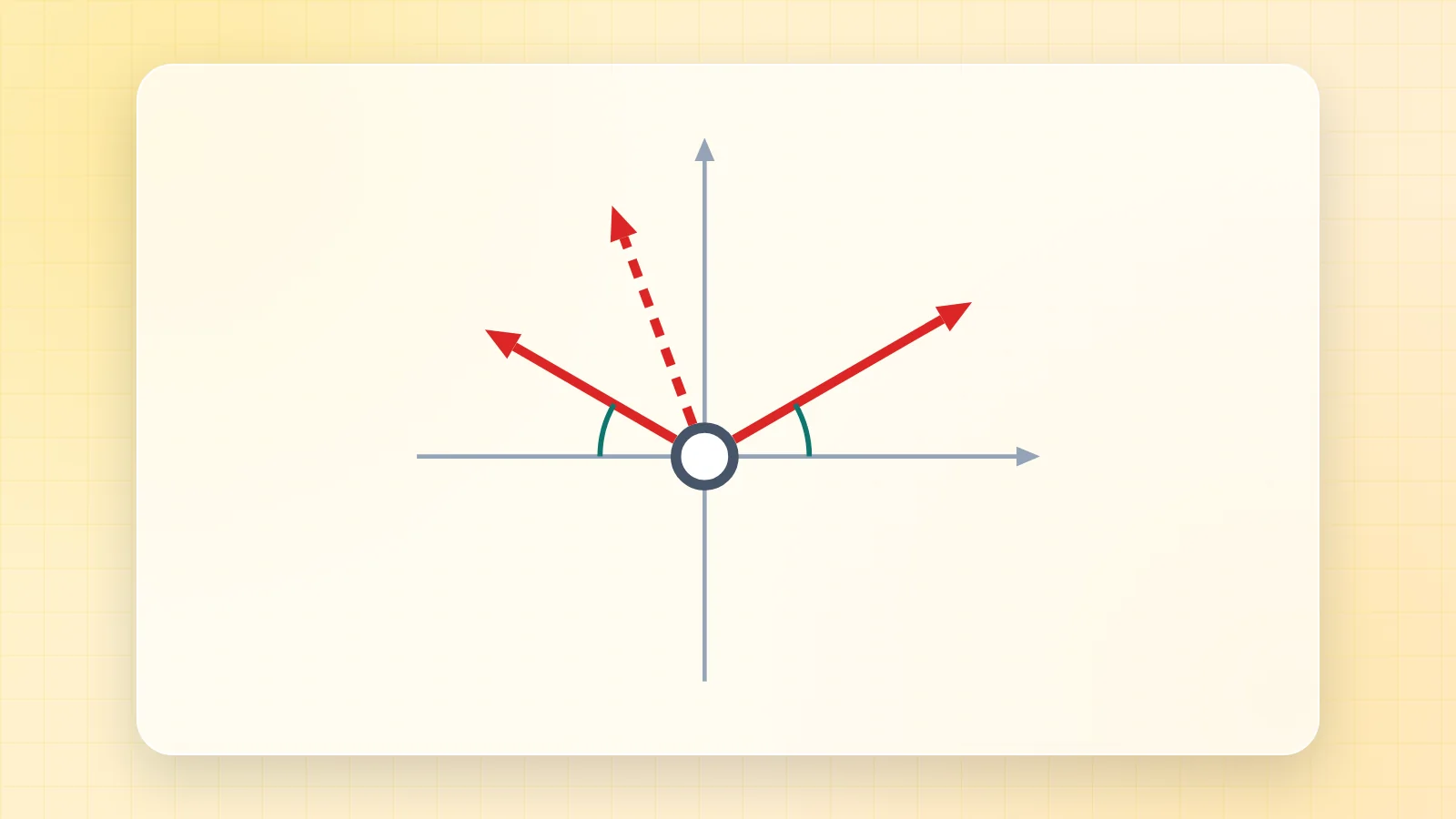
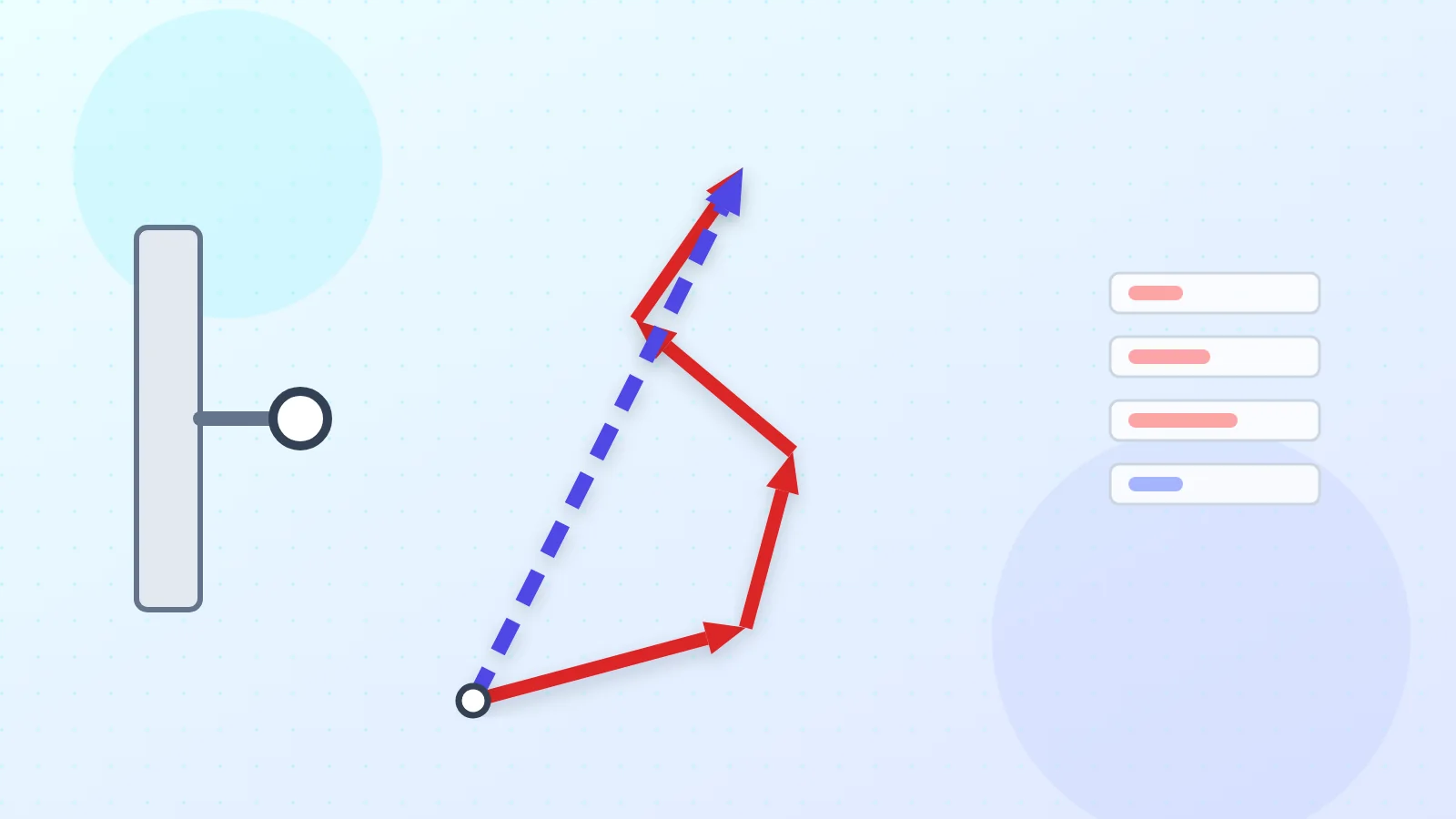
- Signs. Compare the signs of \(F_{Rx}\) and \(F_{Ry}\) with a rough tip-to-tail sketch of the forces.
- Size. \(F_R\) can never exceed the sum of the magnitudes of the forces.
- Precision. Keep full precision in the sums and round only the final answer.
Summary
- The resultant of concurrent coplanar forces has \(F_{Rx} = \sum F_x\) and \(F_{Ry} = \sum F_y\).
- Then \(F_R = \sqrt{F_{Rx}^2 + F_{Ry}^2}\), and the signs of the sums give the quadrant.
- A component table with signs from the sketch prevents most mistakes.
- The two sums can be solved for two unknowns, such as an unknown force for a required resultant.





Comments 0
Ask questions, explain a step or share a tip about this note.
Join the discussion
Log in to comment, reply and vote. It is free.
No comments yet
Ask a question, share a tip or say thanks. Be the first!