
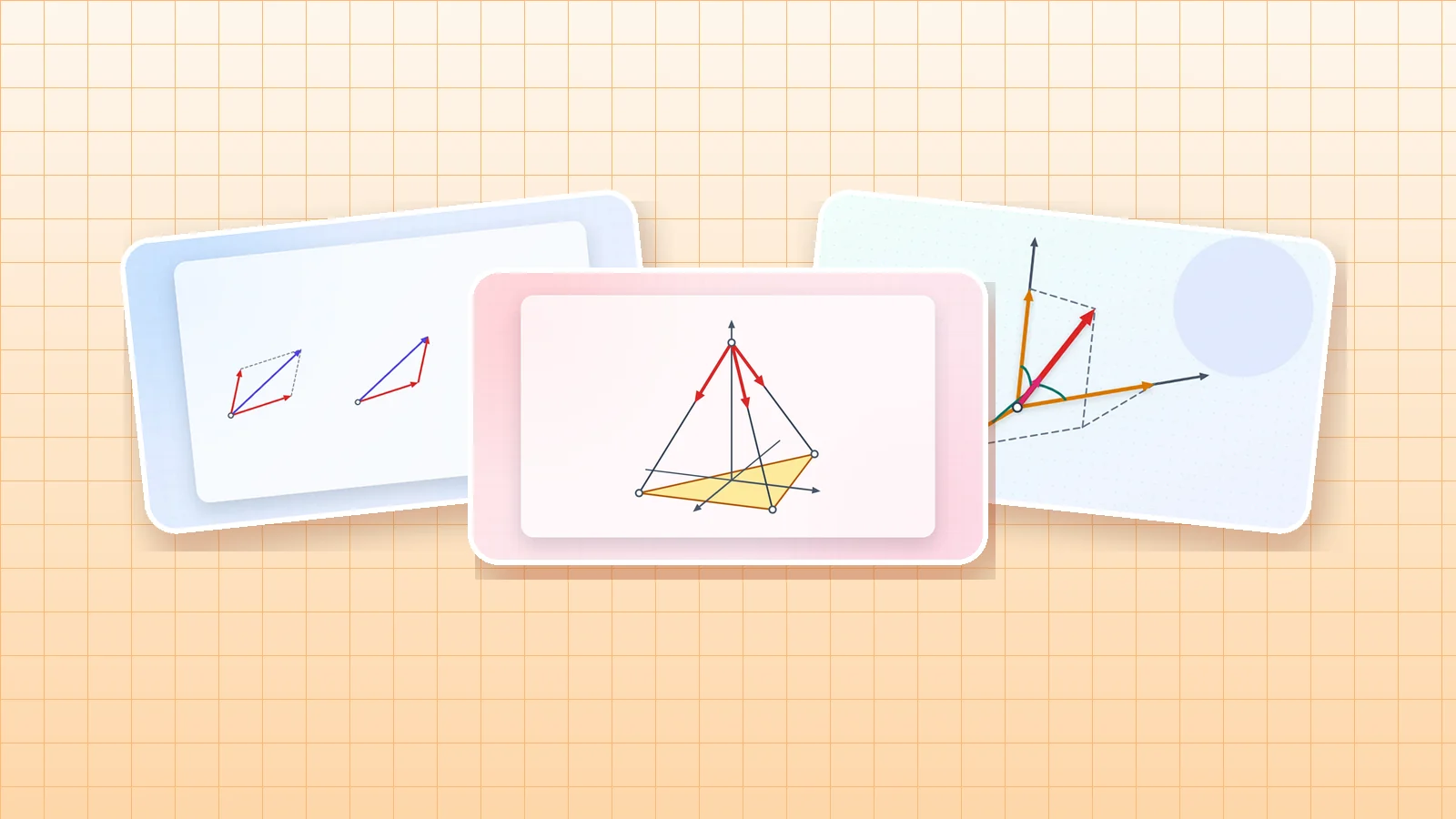

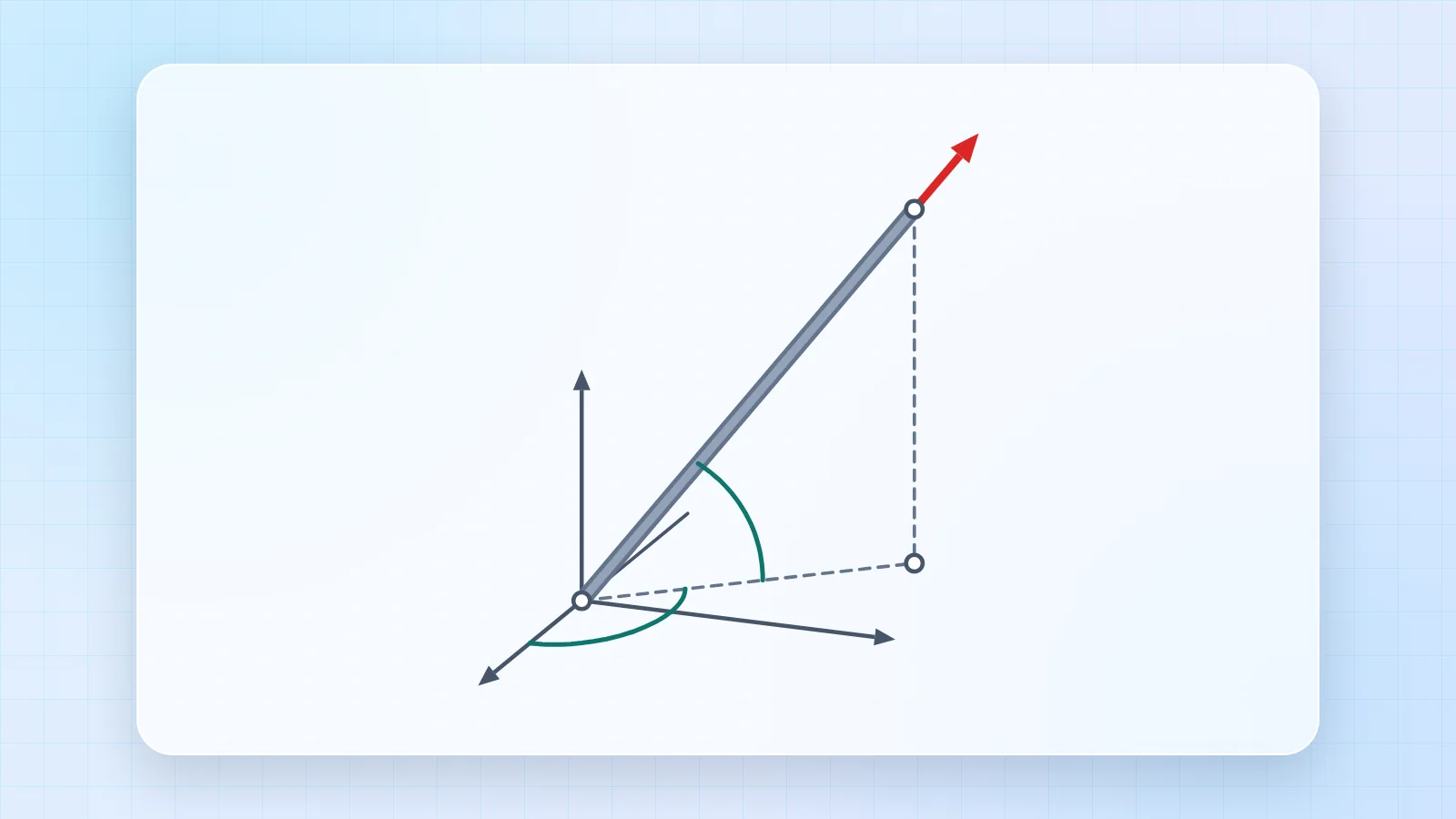

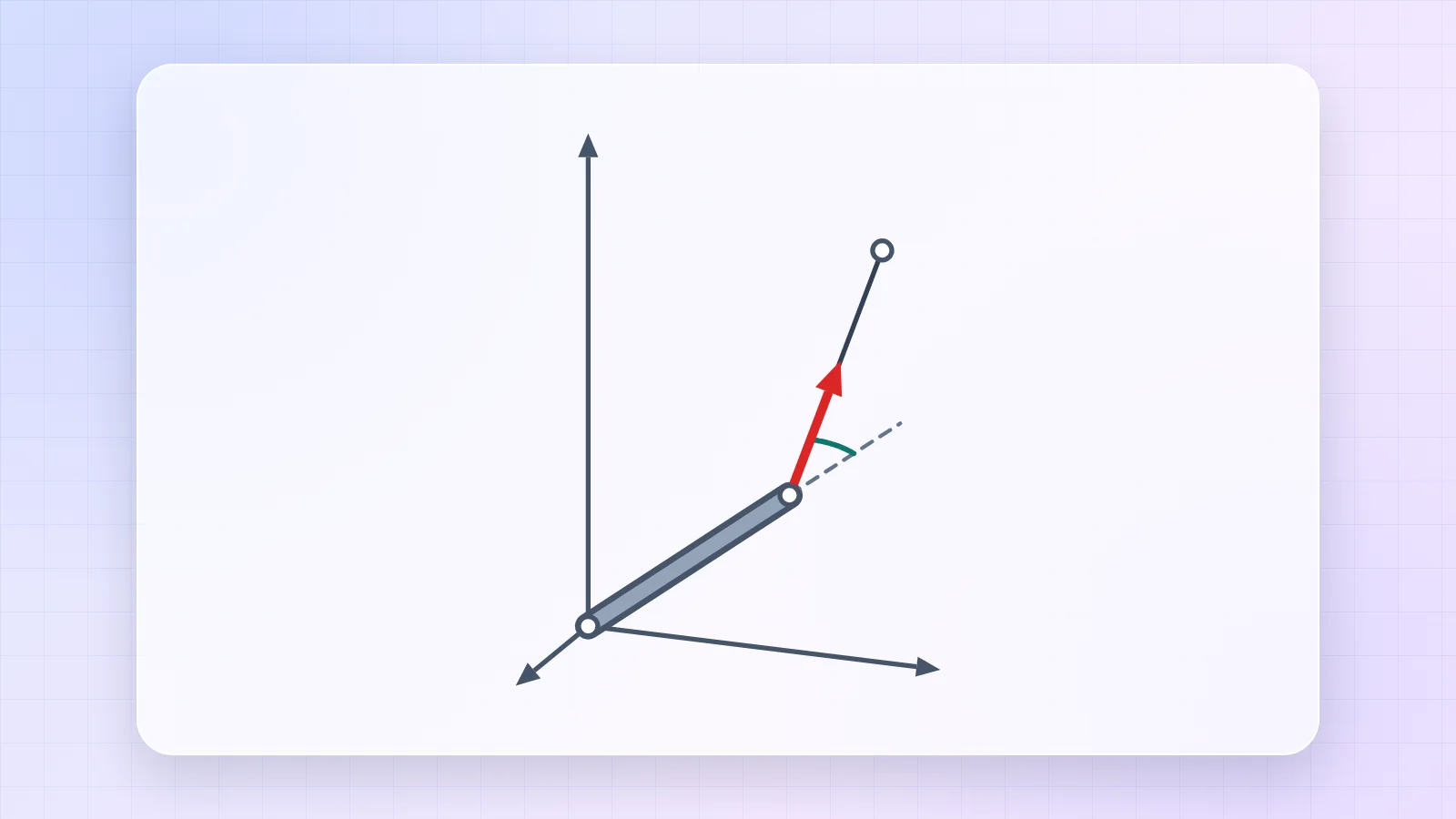
The force in a cable, rope or straight bar is usually given by its magnitude and by the two points that the cable connects, not by angles. Position vectors turn the coordinates of those points into the direction of the force.
1. Coordinates of points
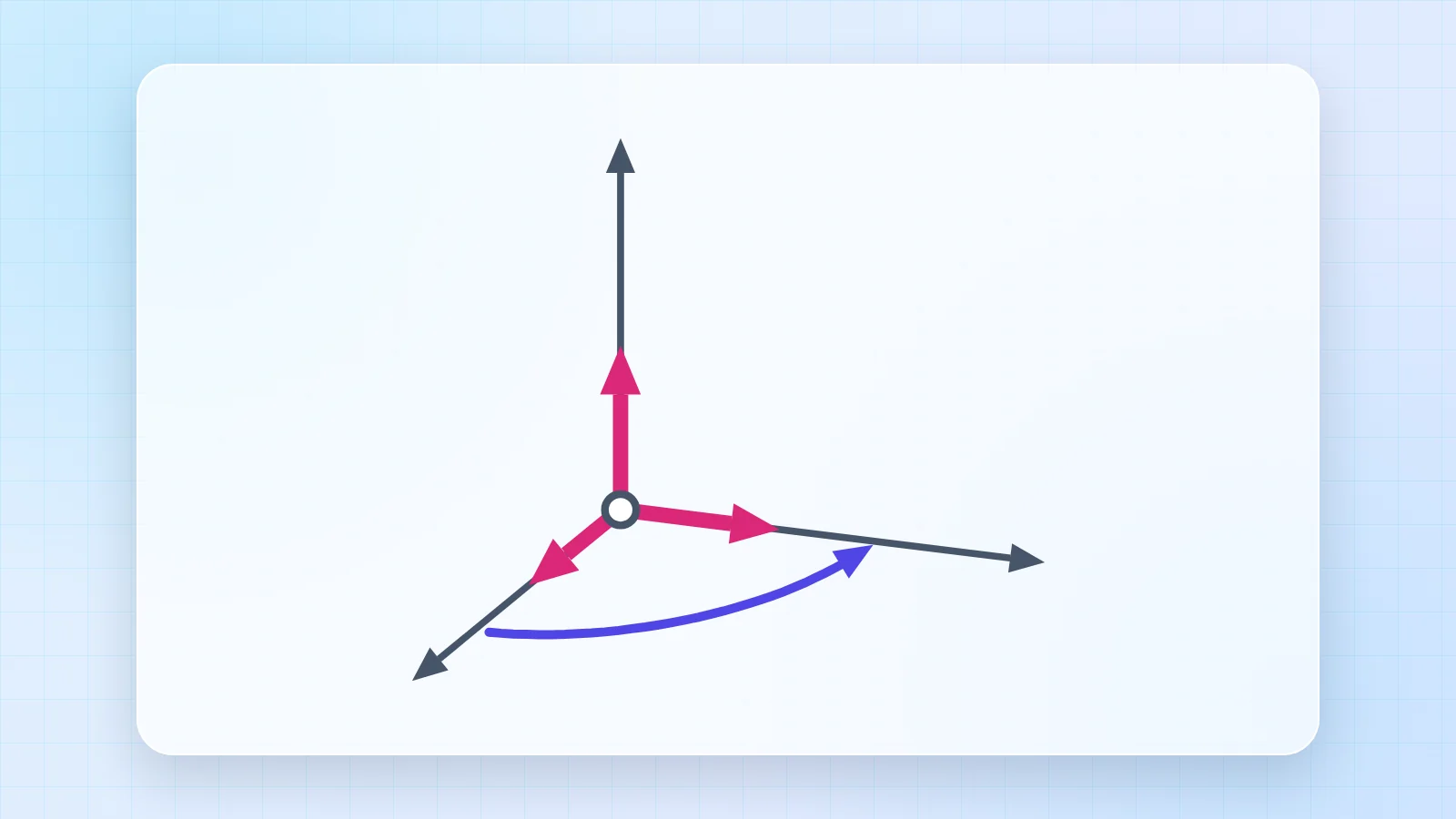
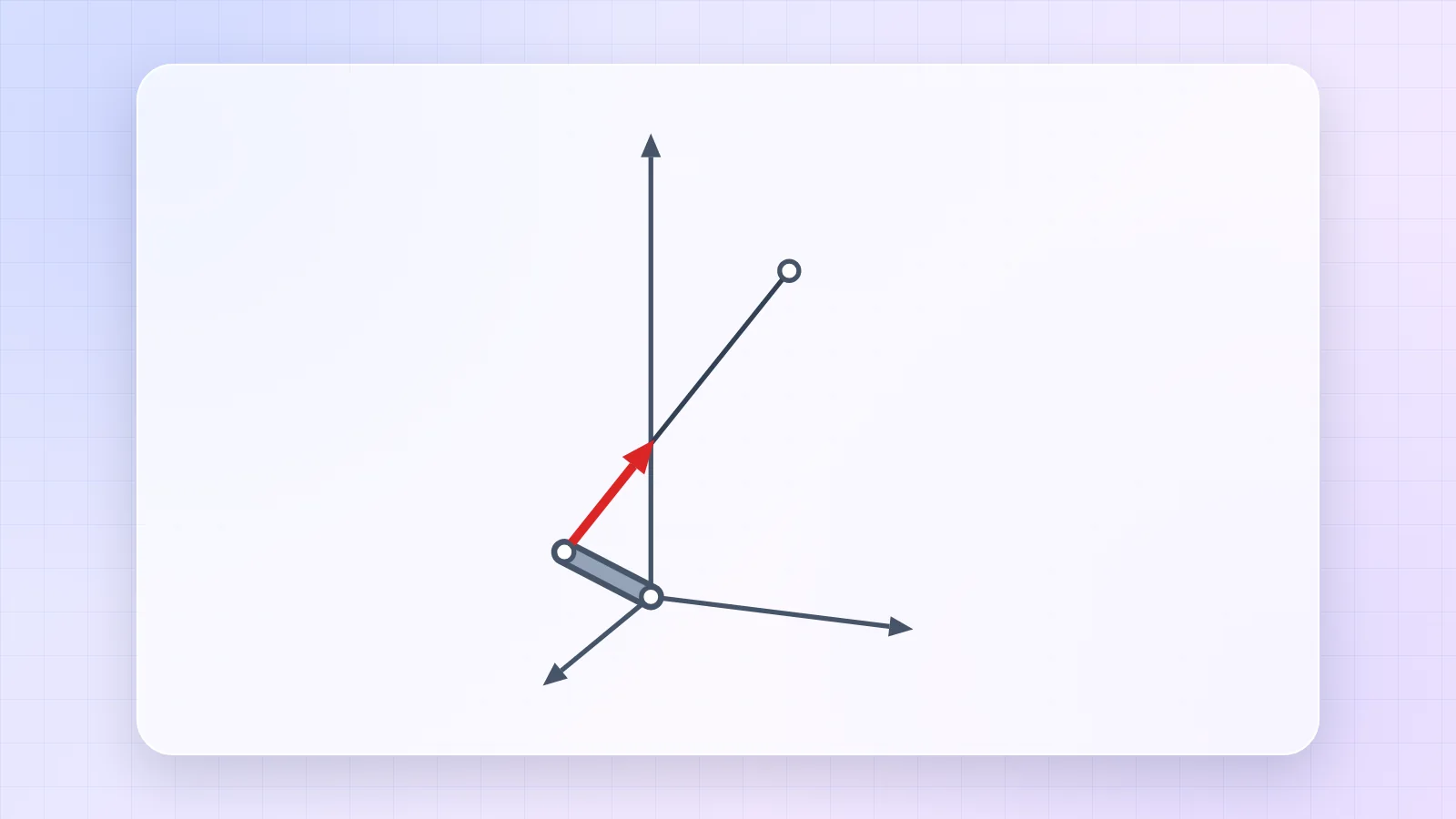
Every point has coordinates \((x, y, z)\) in a right-handed system. To read them from a 3D sketch, start at the origin and move along \(x\), then along \(y\), then along \(z\) until you reach the point, noting each distance with its sign.
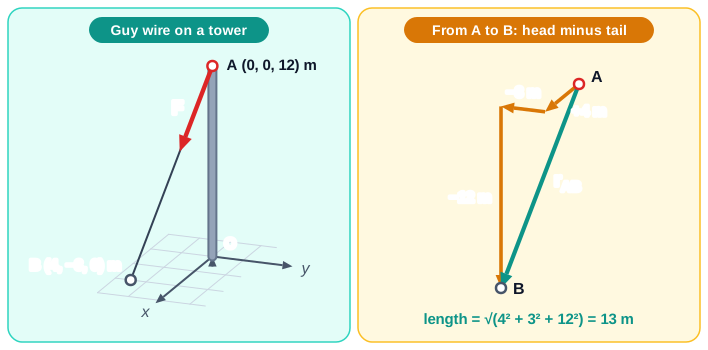
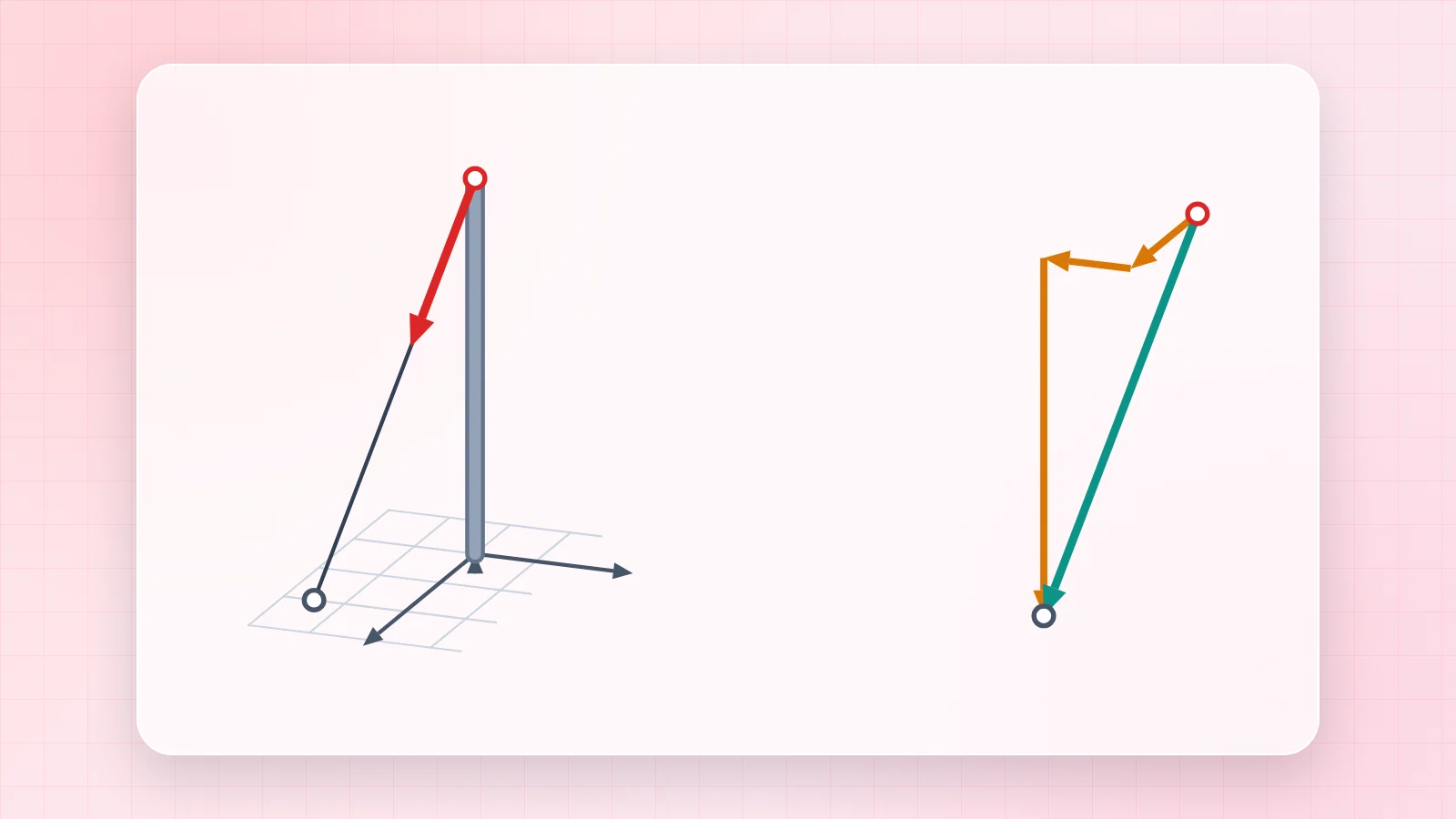
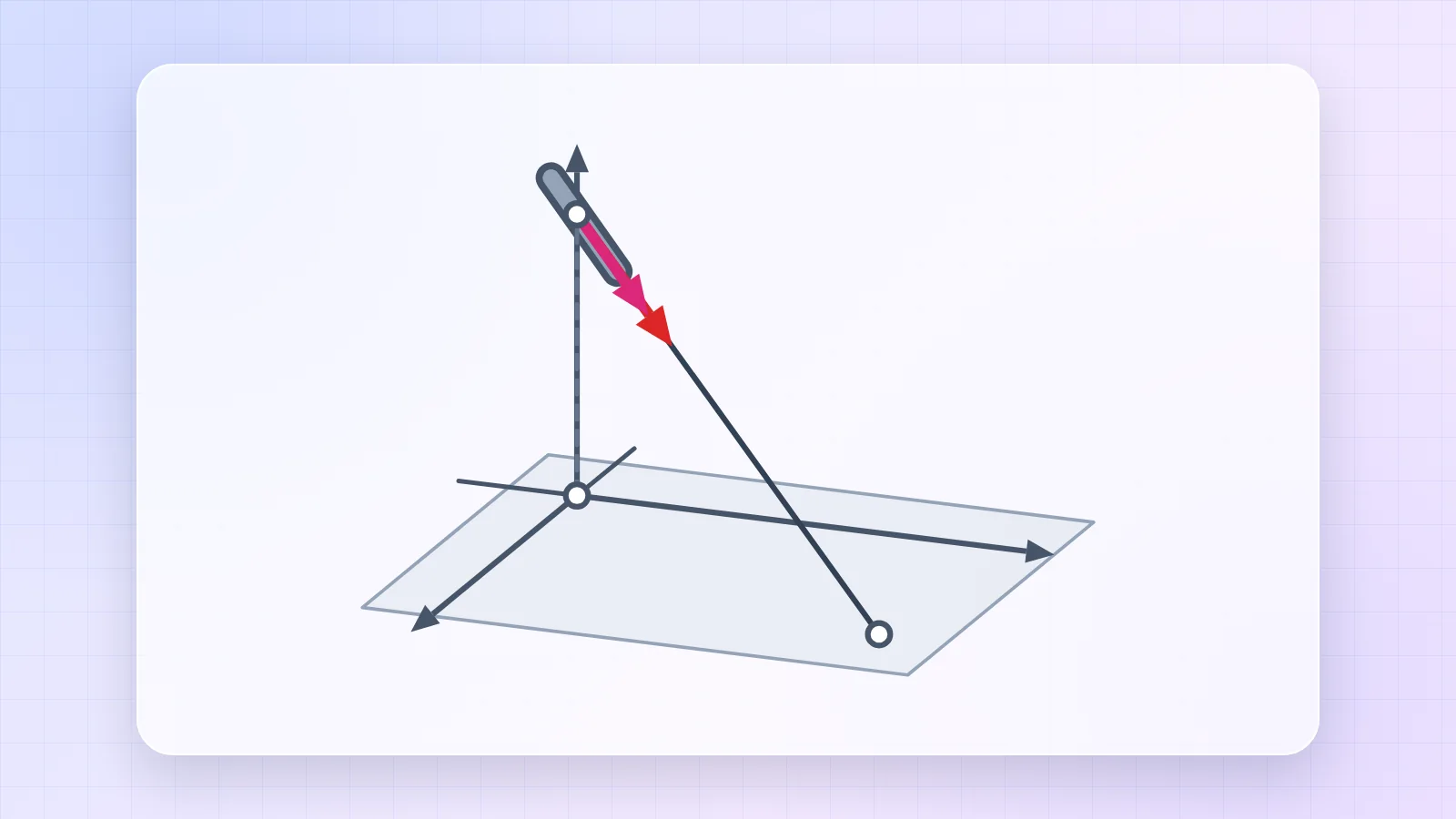
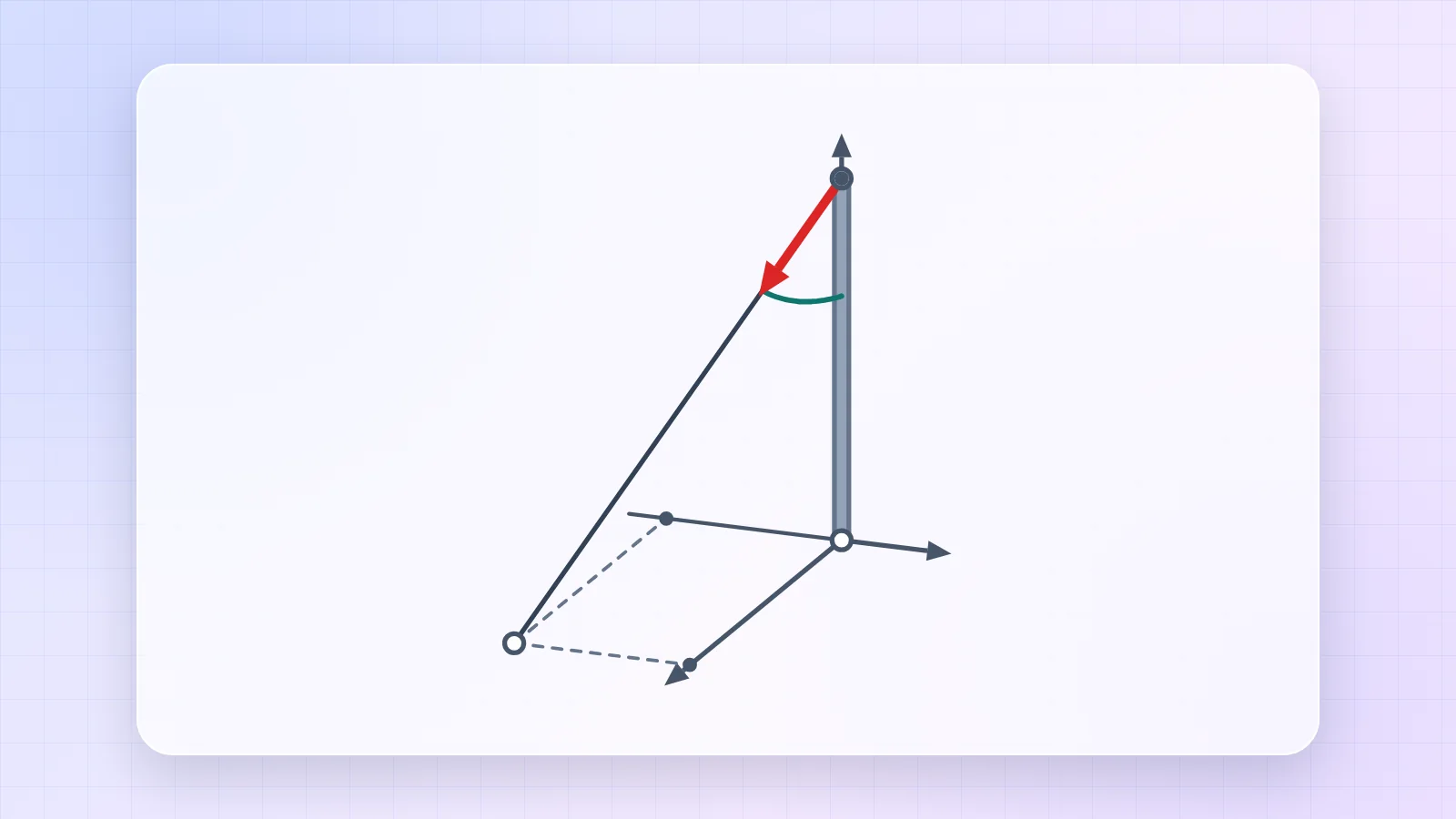
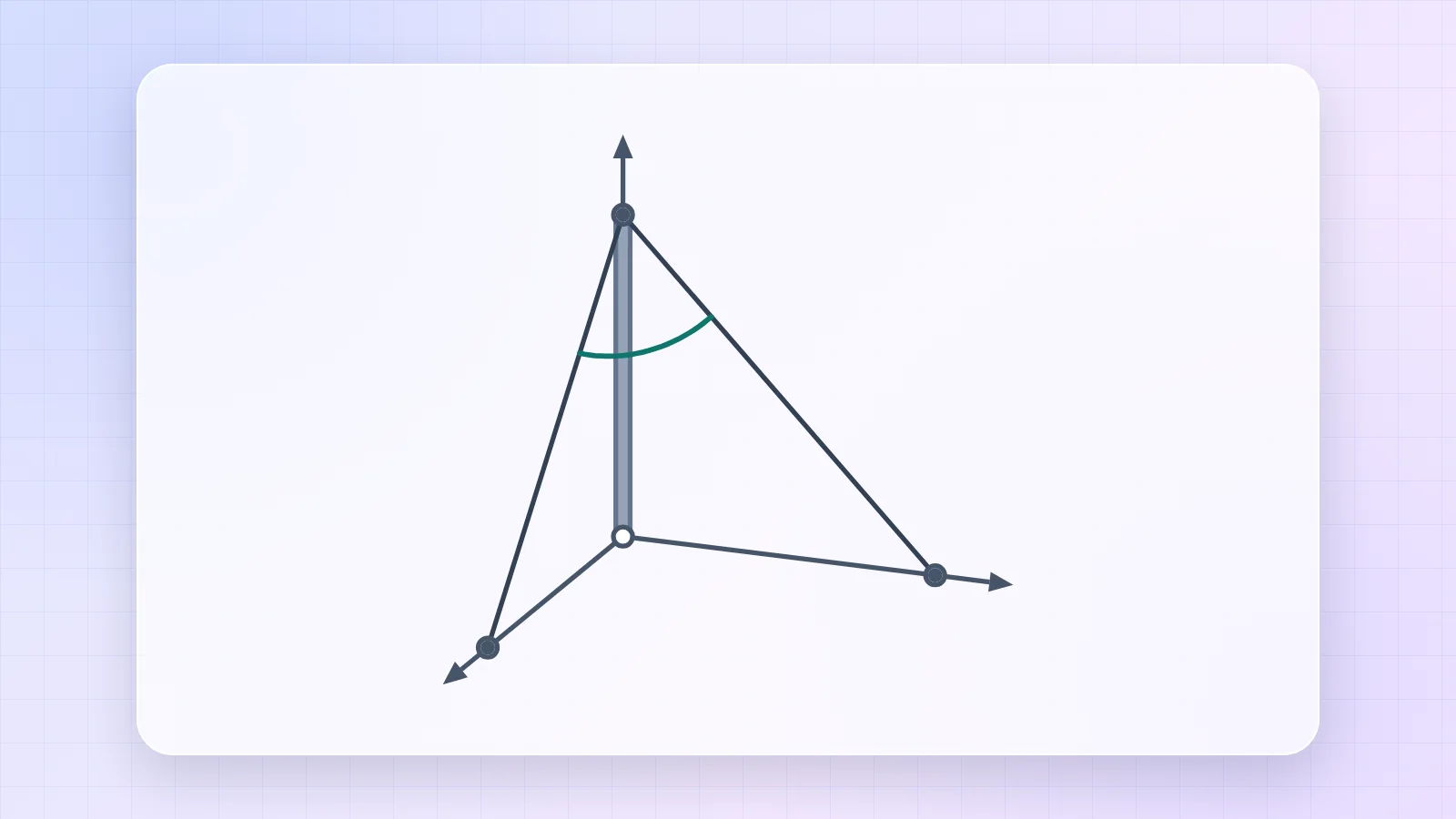
Watch the signs. Most errors in 3D force problems are wrong coordinates, not wrong formulas. A point behind the origin, or below the \(xy\) plane, has a negative coordinate. In Figure 1, the anchor B lies on the \(-y\) side, so its \(y\) coordinate is \(-3\,\text{m}\).
2. Position vectors
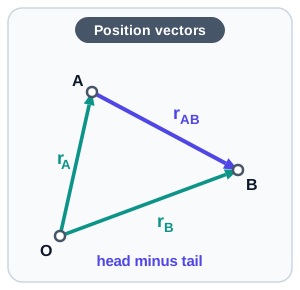
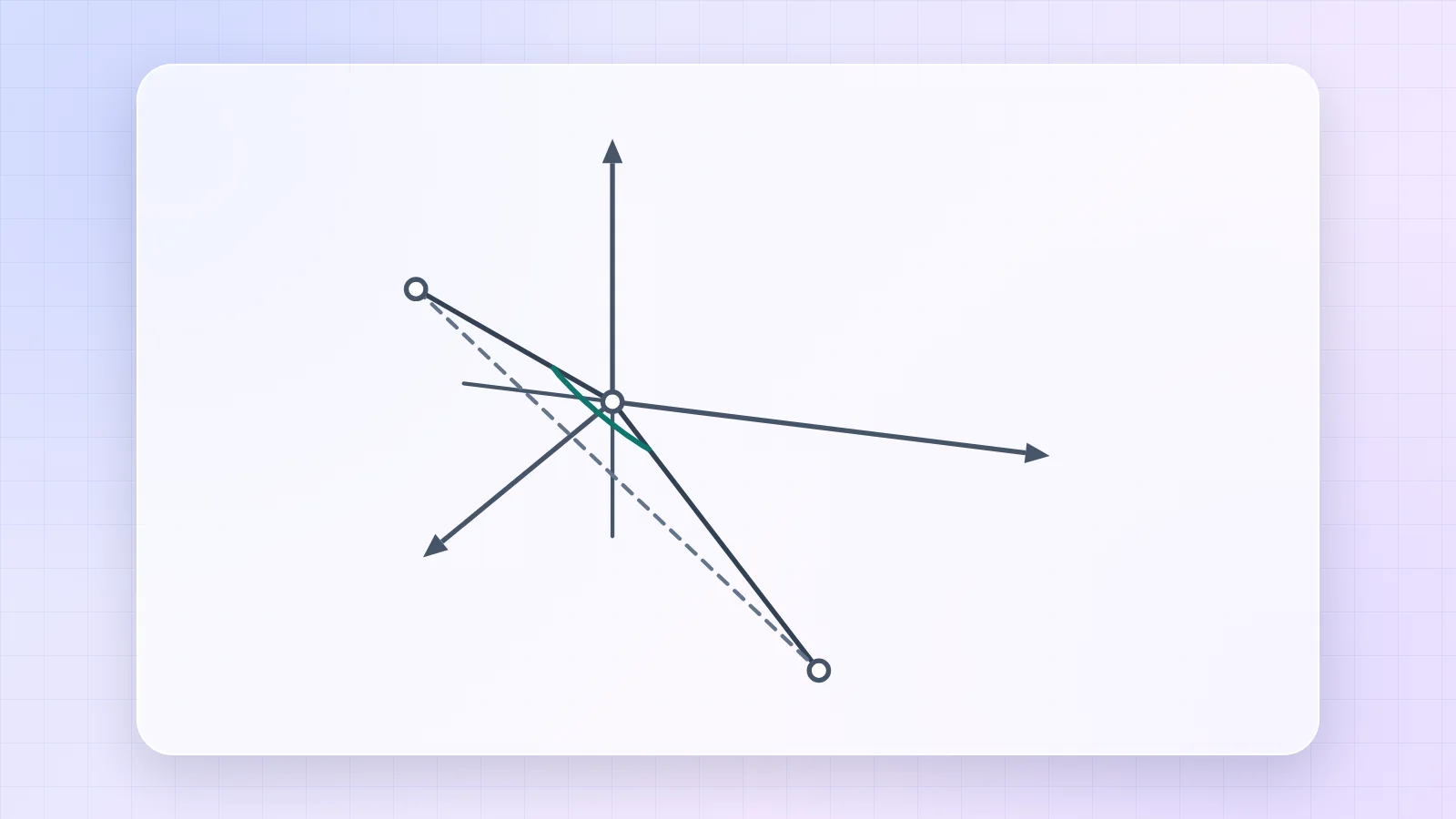
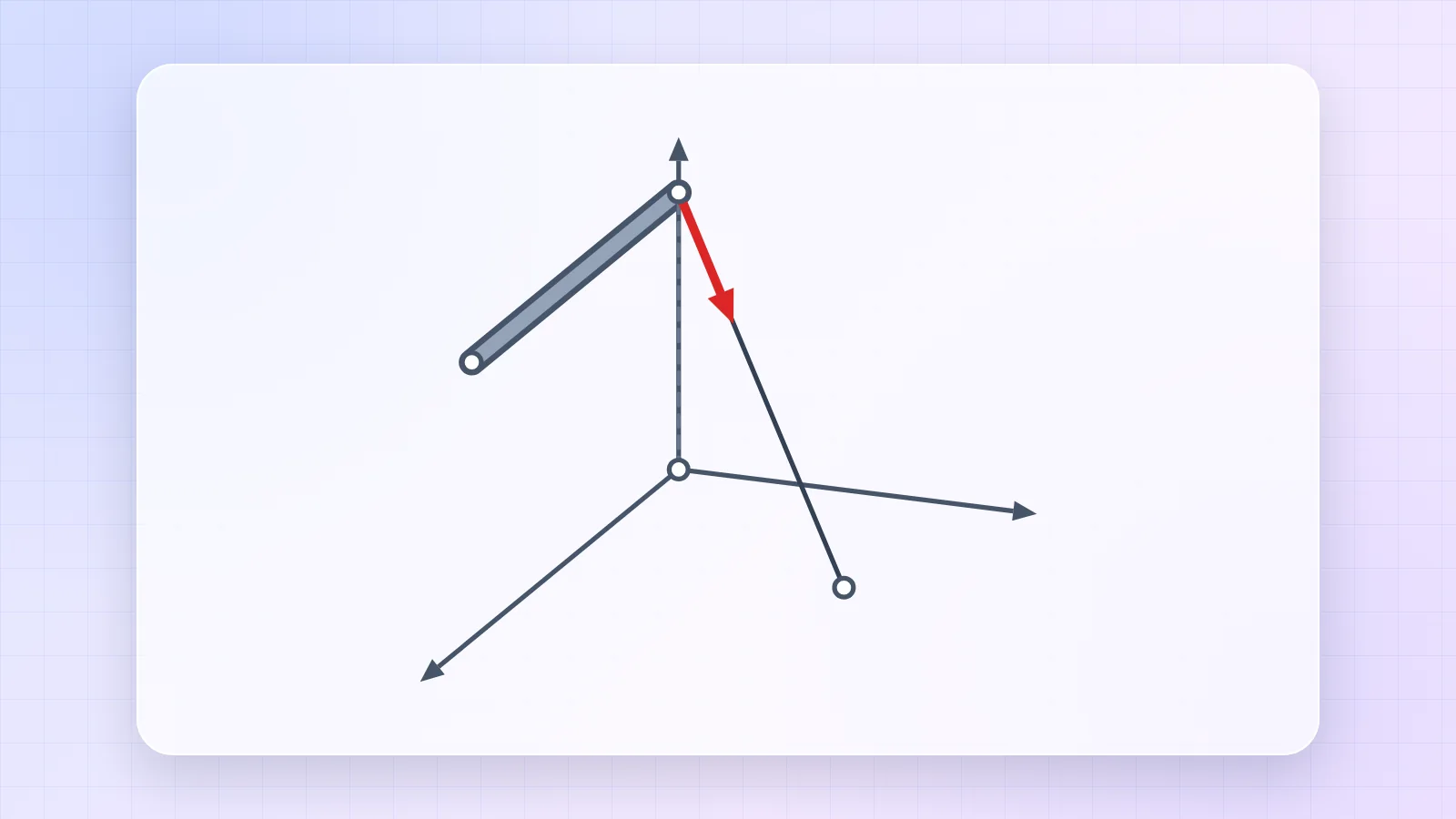
The position vector of a point is the vector from the origin to that point: \(\mathbf{r} = x\,\mathbf{i} + y\,\mathbf{j} + z\,\mathbf{k}\). The vector from point A to point B follows from \(\mathbf{r}_A + \mathbf{r}_{AB} = \mathbf{r}_B\) (Figure 2):
In words: head minus tail. Each component is the distance you travel along that axis to go from A to B.
3. Writing the force
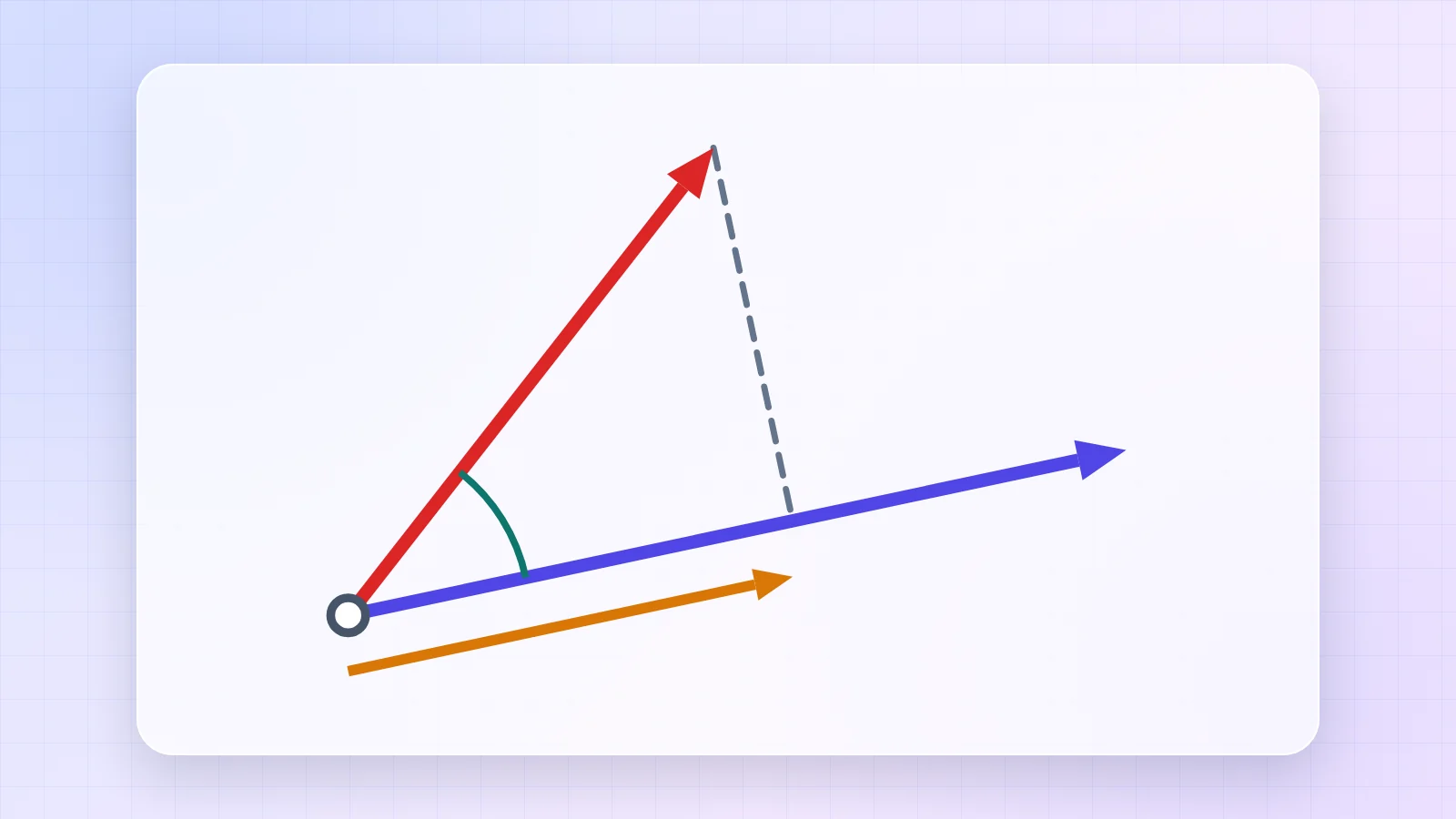
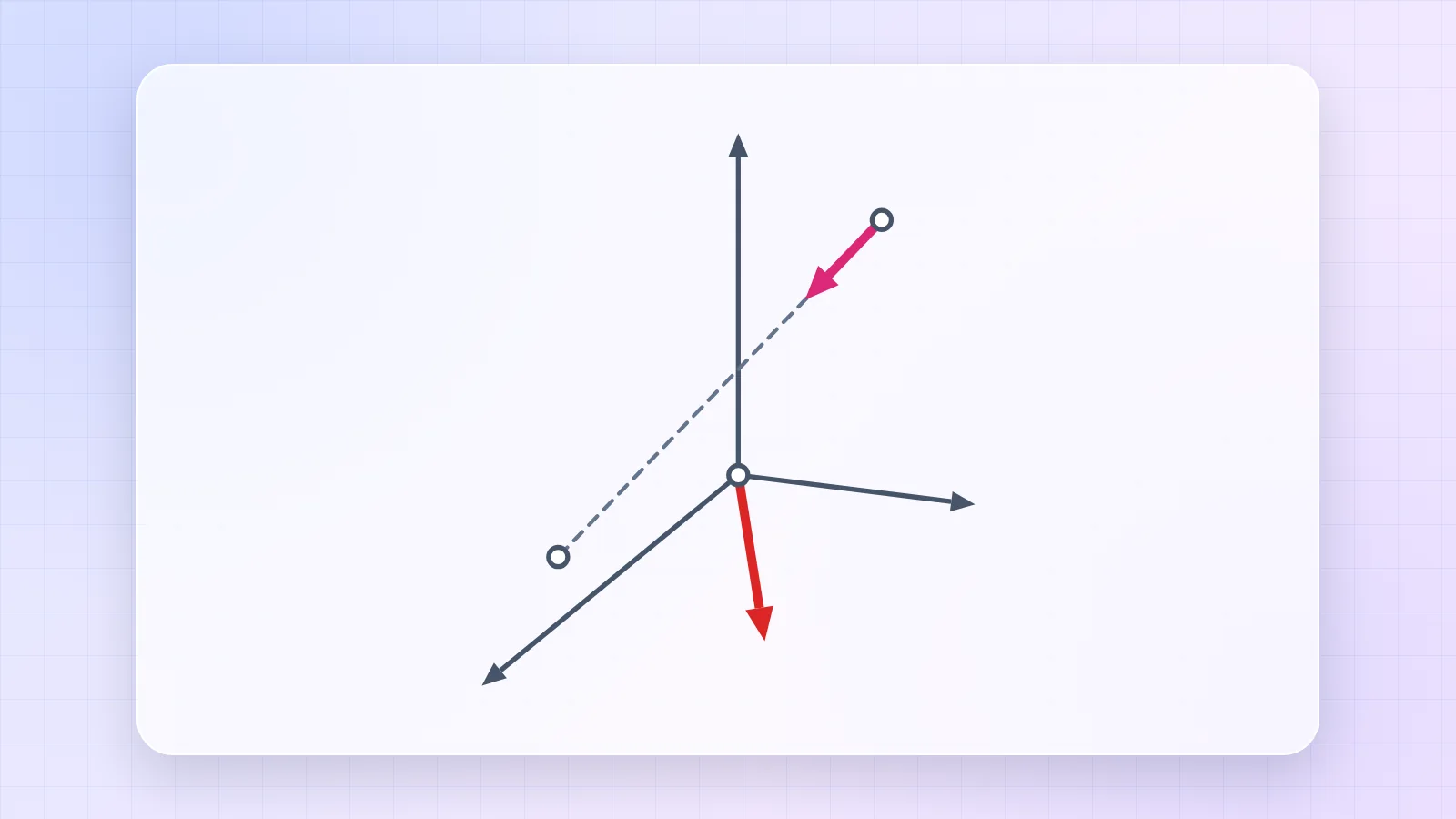
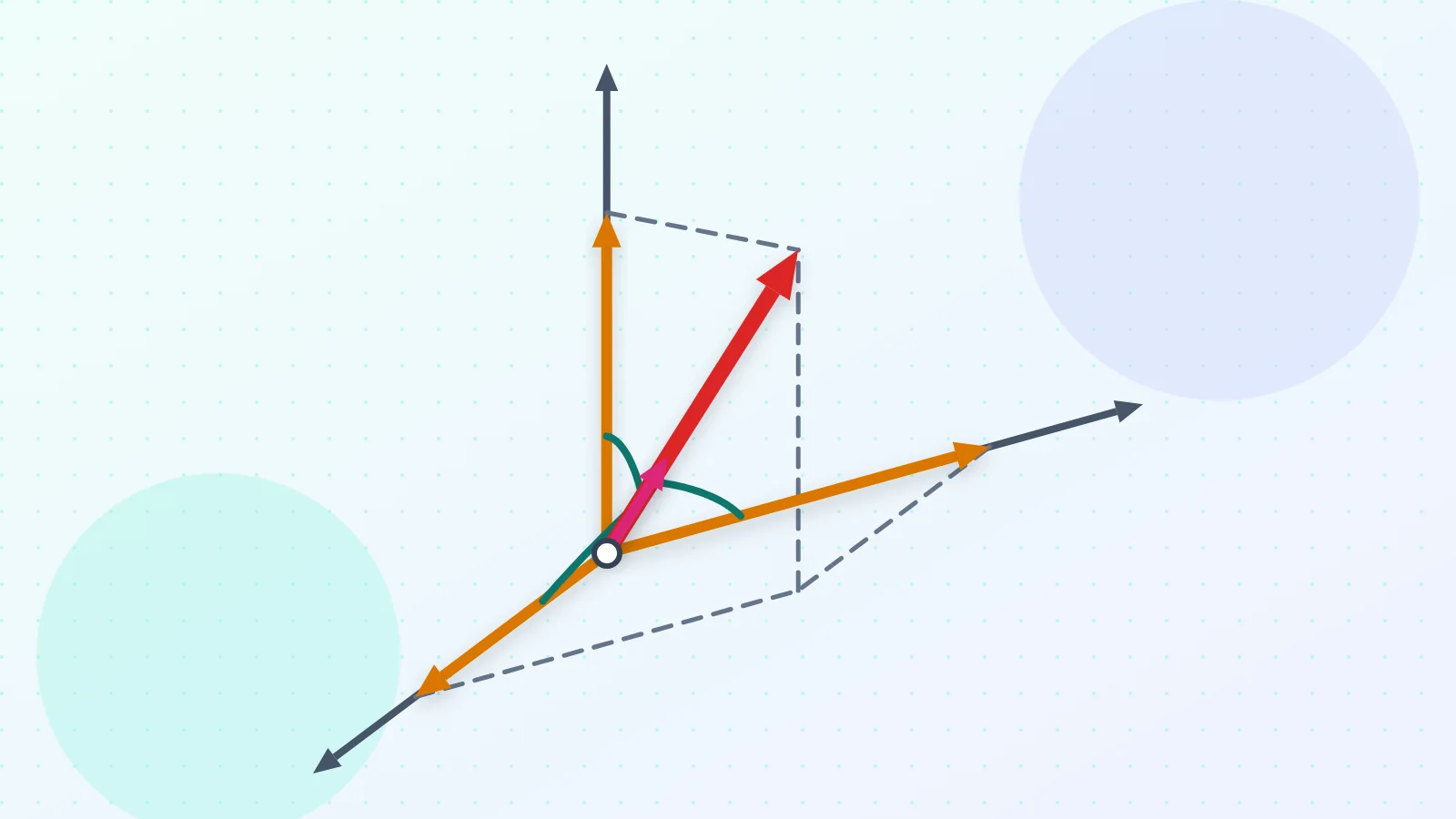
A force directed along the line from A to B has the direction of \(\mathbf{r}_{AB}\). Dividing \(\mathbf{r}_{AB}\) by its length gives the unit vector, and the force is its magnitude times that unit vector:
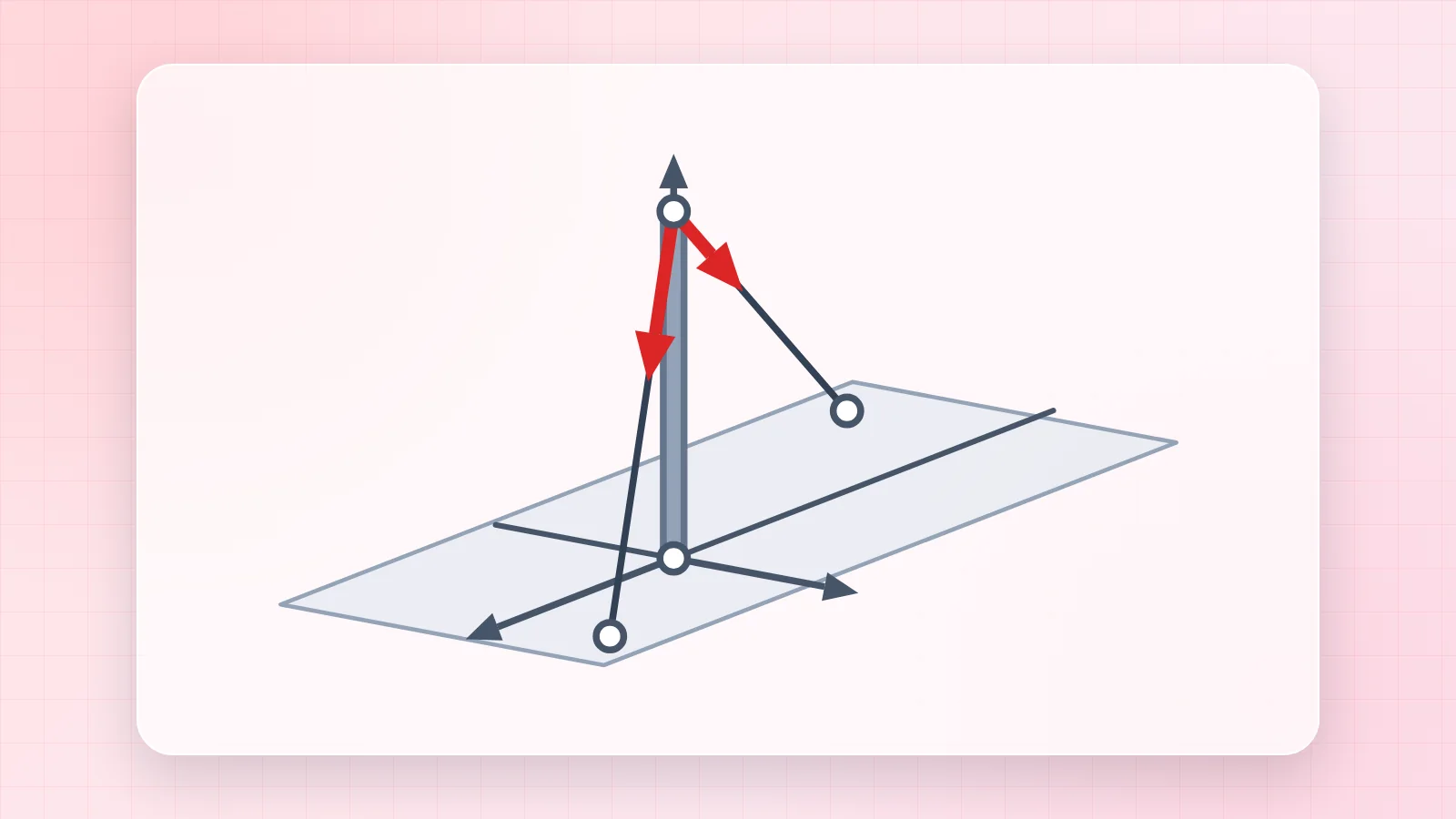
A cable can only pull. The force that it exerts on the body at A points from A toward the other end, B. Swapping A and B reverses every sign, so decide first which body you are looking at.
Guy wire on a tower. A wire runs from the top of a tower, A (0, 0, 12) m, to an anchor B (4, −3, 0) m (Figure 1). Its tension is 1.3 kN. Write the force that the wire exerts on the tower at A as a Cartesian vector and find its direction angles.
Position vector, head minus tail:
$$ \mathbf{r}_{AB} = (4 - 0)\,\mathbf{i} + (-3 - 0)\,\mathbf{j} + (0 - 12)\,\mathbf{k} = \{4\,\mathbf{i} - 3\,\mathbf{j} - 12\,\mathbf{k}\}\,\text{m} $$
Length and unit vector. \(r_{AB} = \sqrt{4^2 + 3^2 + 12^2} = 13\,\text{m}\), so \(\mathbf{u} = \tfrac{4}{13}\,\mathbf{i} - \tfrac{3}{13}\,\mathbf{j} - \tfrac{12}{13}\,\mathbf{k}\).
Force:
$$ \mathbf{F} = 1300\,\mathbf{u} = \{400\,\mathbf{i} - 300\,\mathbf{j} - 1200\,\mathbf{k}\}\,\text{N} $$
Direction angles. \(\theta_x = \cos^{-1}(4/13) = 72.1^\circ\), \(\theta_y = \cos^{-1}(-3/13) = 103.3^\circ\), \(\theta_z = \cos^{-1}(-12/13) = 157.4^\circ\).
4. Several cables at one point
When several cables meet at the same point, write each force with its own position vector and unit vector, then add the components. Each cable needs its own length; do not reuse the length of one cable for another.
Check the unit vector. The components of \(\mathbf{u}\) have no unit, and their squares must add up to 1. For the tower, \((4^2 + 3^2 + 12^2)/13^2 = 1\).
Summary
- Read point coordinates by moving along \(x\), \(y\) and \(z\) from the origin, keeping the signs.
- The position vector from A to B is head minus tail: \(\mathbf{r}_{AB} = \mathbf{r}_B - \mathbf{r}_A\).
- The force along AB is \(\mathbf{F} = F\,\mathbf{r}_{AB}/r_{AB}\).
- A cable pulls the body it is attached to toward the other end of the cable.
- With several cables, write each force separately, then add the components.





Comments 0
Ask questions, explain a step or share a tip about this note.
Join the discussion
Log in to comment, reply and vote. It is free.
No comments yet
Ask a question, share a tip or say thanks. Be the first!