



In three dimensions a force is described the same way as in a plane, by its components along perpendicular axes, but now there are three of them. This note sets up the coordinate system and the quantities that describe the magnitude and direction of any force in space.
1. A right-handed coordinate system
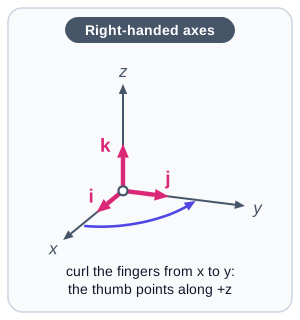
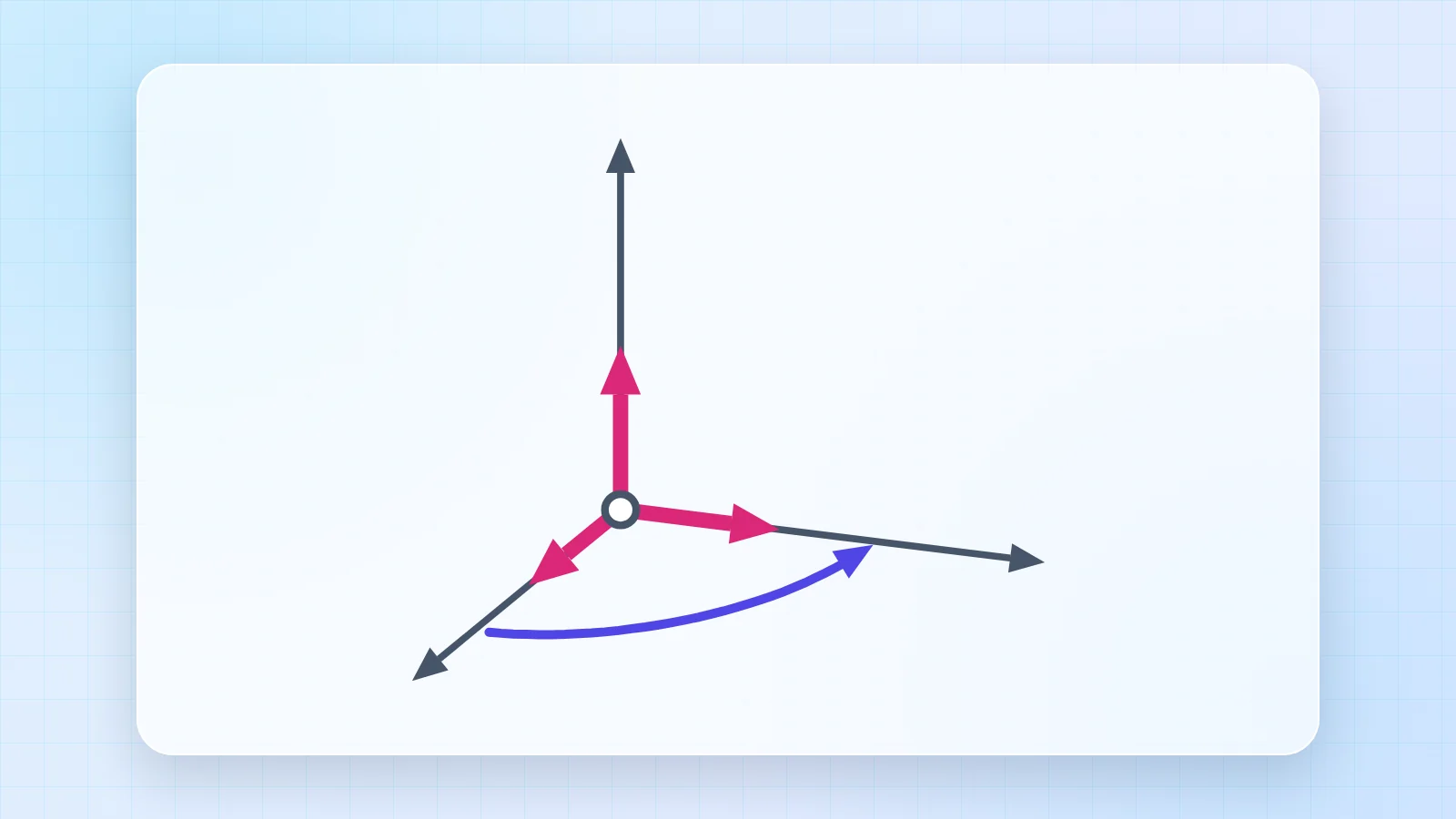
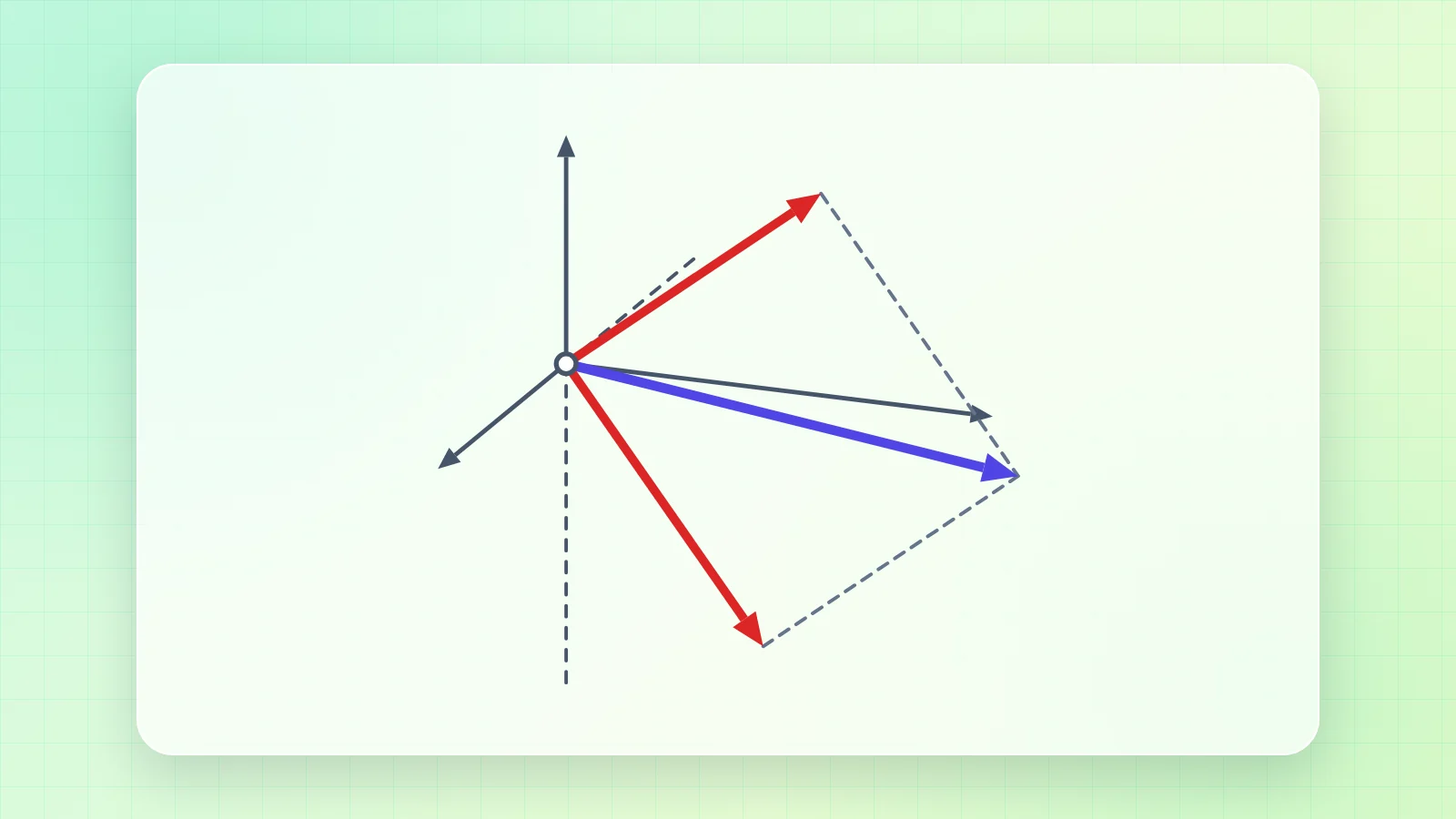
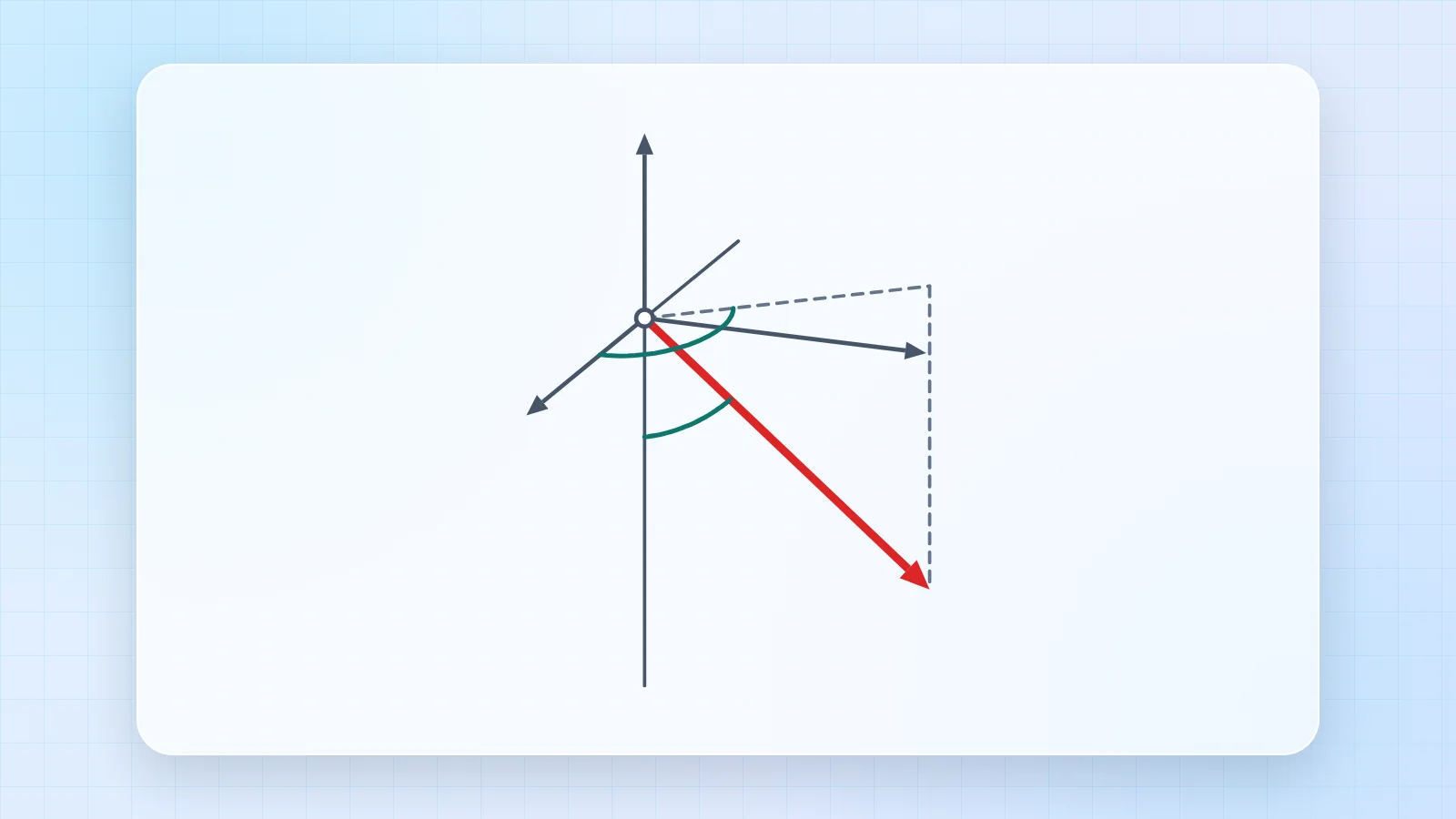
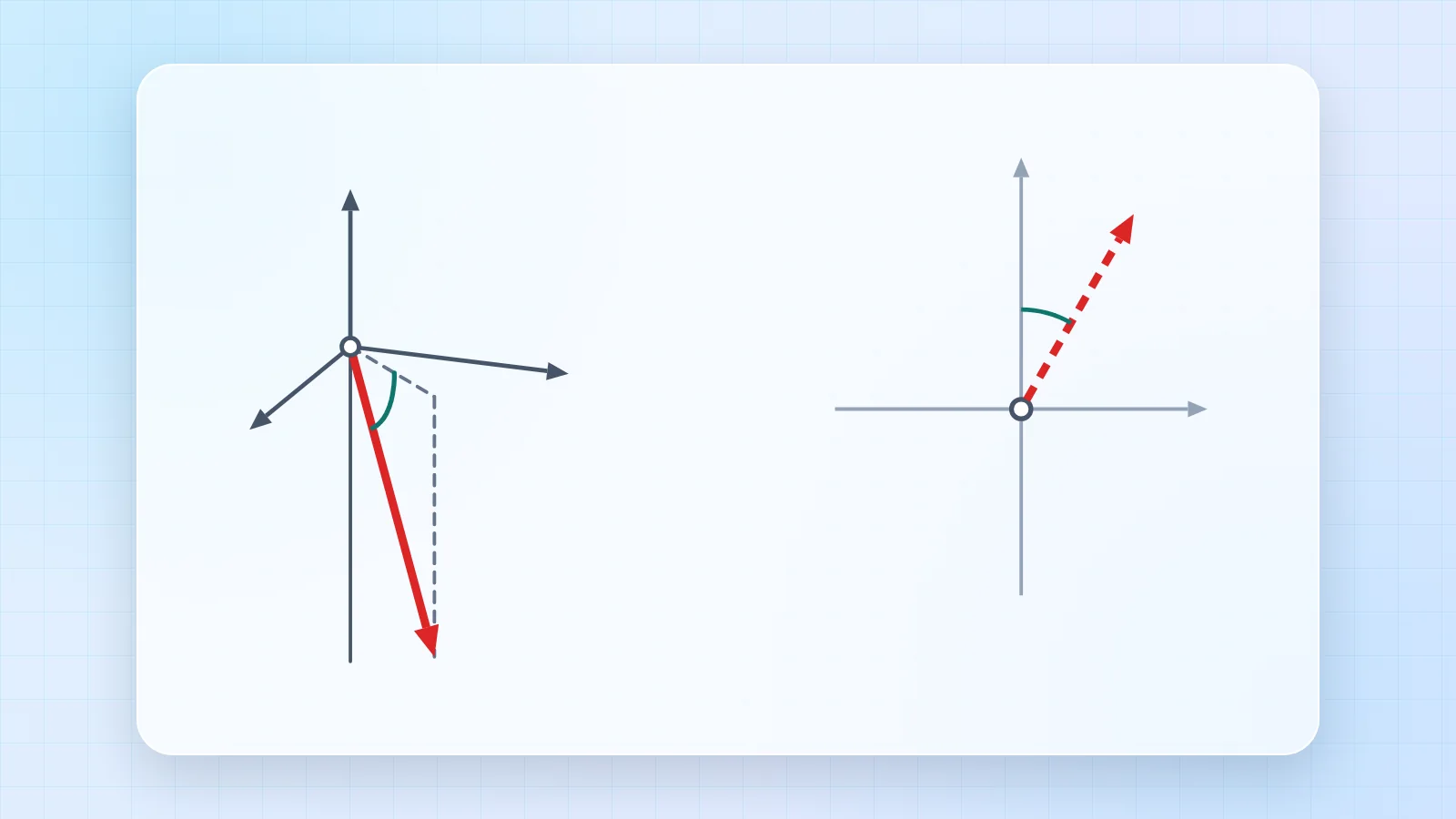
Statics always uses a right-handed set of axes. Curl the fingers of your right hand from \(+x\) toward \(+y\); the thumb then points along \(+z\) (Figure 1). Swapping the labels of two axes gives a left-handed system and changes the sign of later results, so check the axes on every 3D sketch.
The unit vectors \(\mathbf{i}\), \(\mathbf{j}\) and \(\mathbf{k}\) have magnitude 1 and point along \(+x\), \(+y\) and \(+z\).
2. Rectangular components in 3D
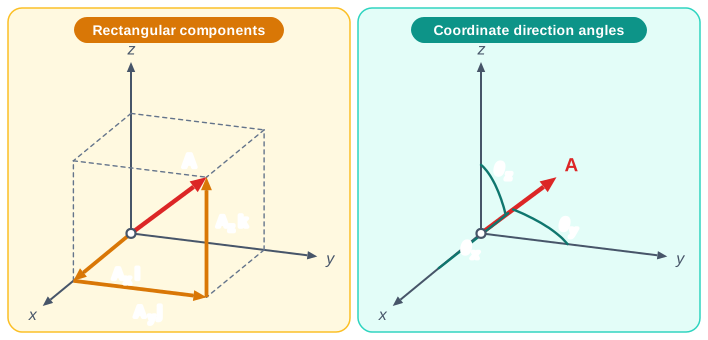
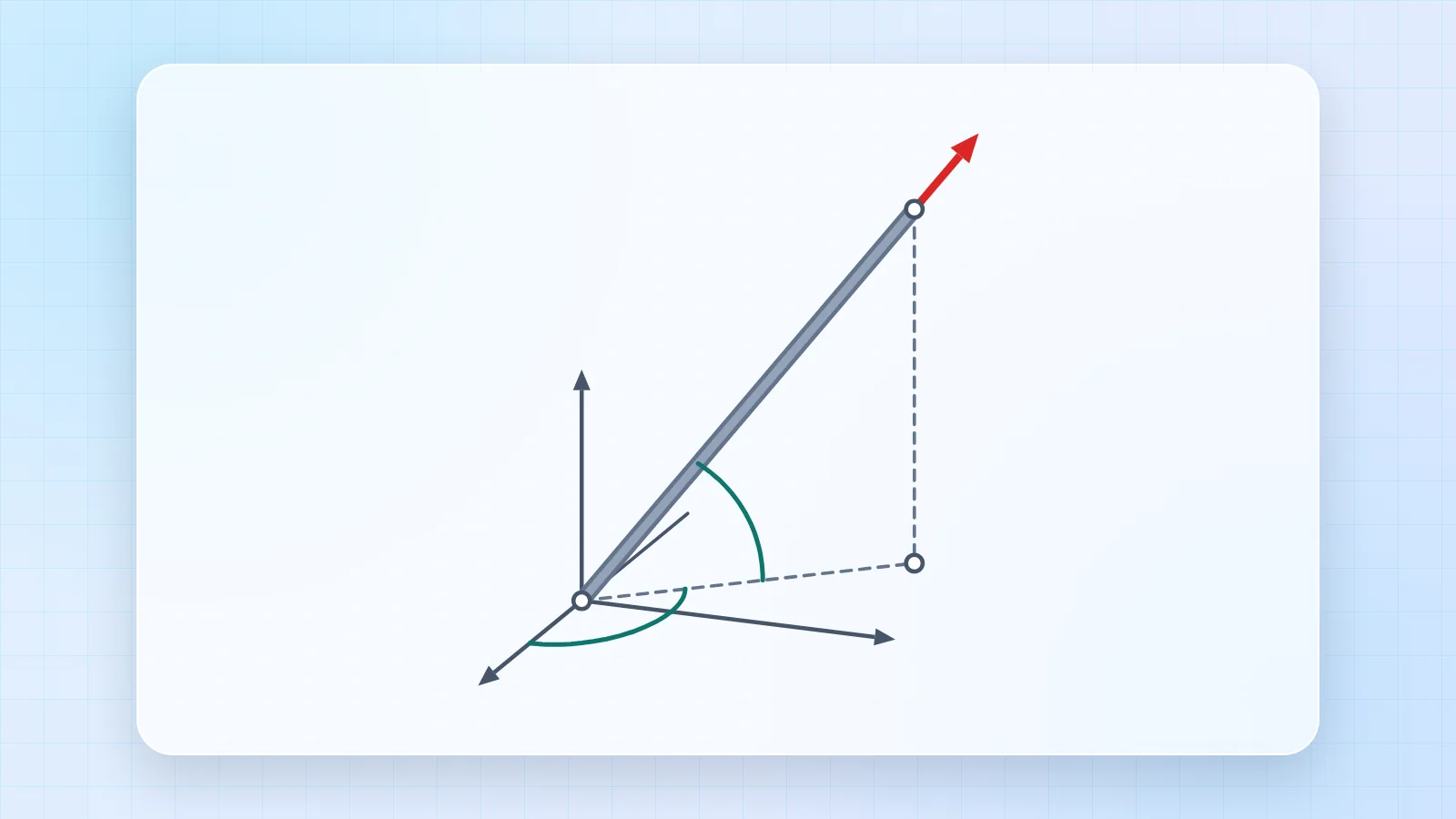
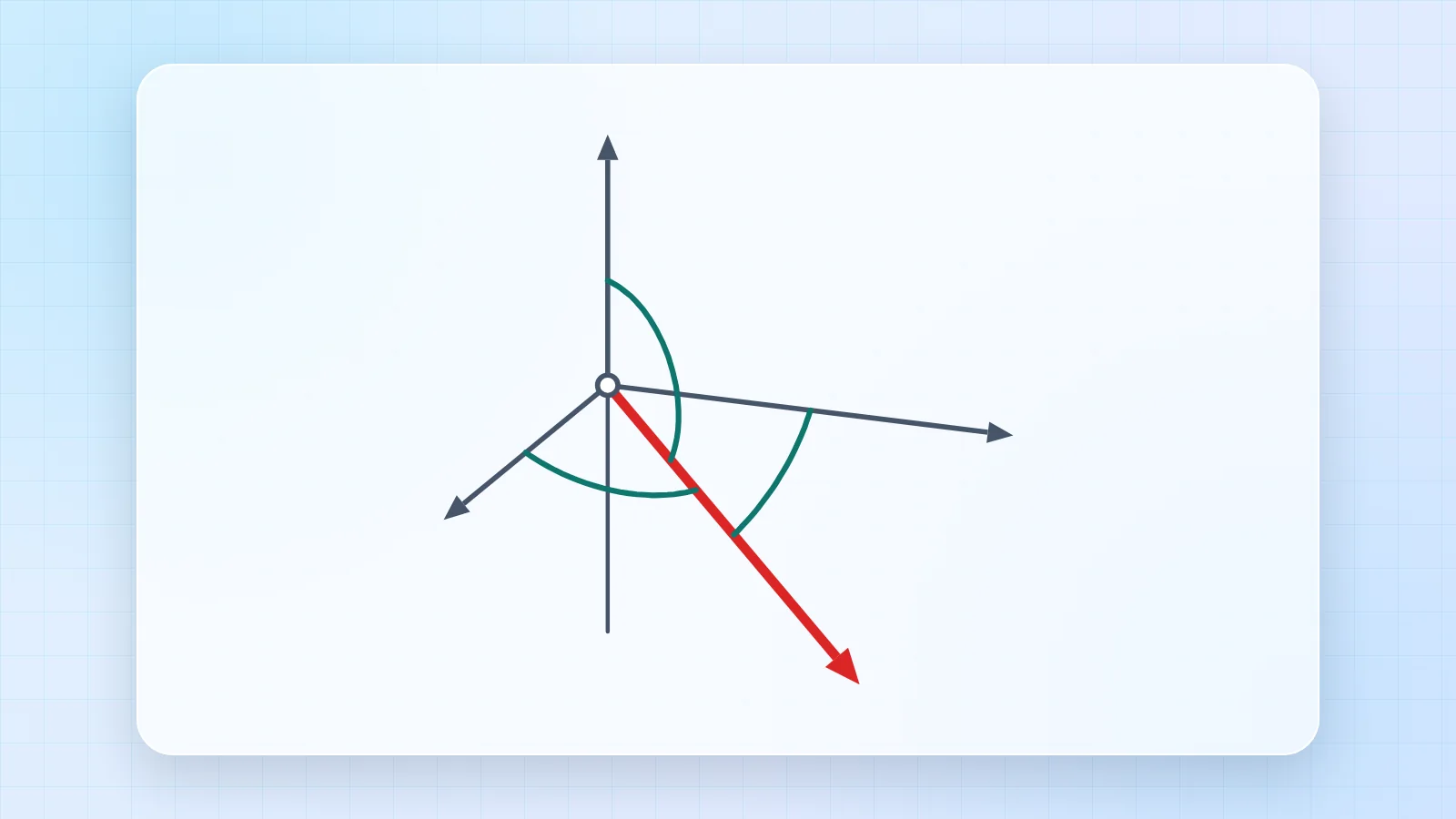
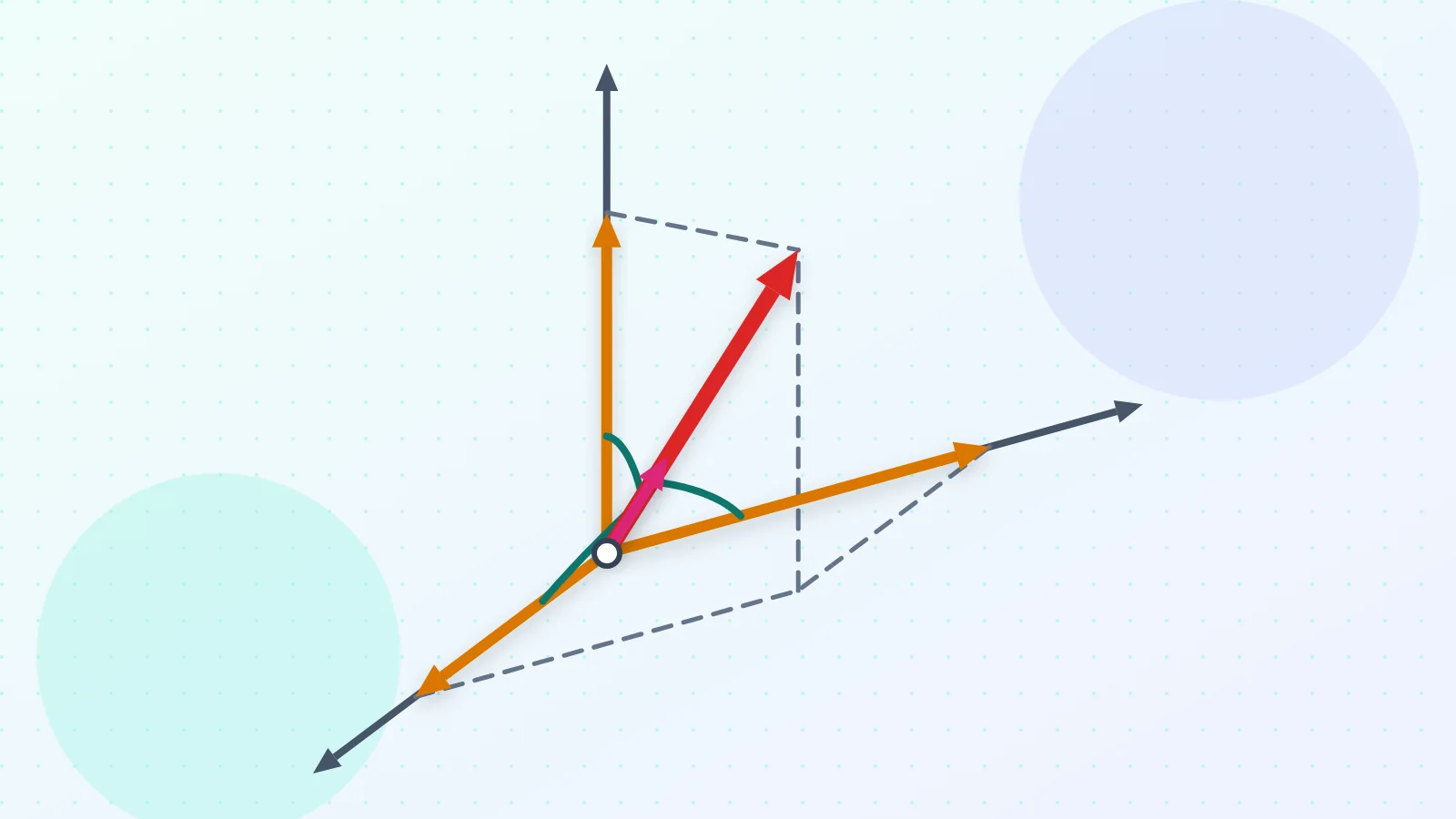
A vector \(\mathbf{A}\) can be drawn as the diagonal of a box whose edges are its three components (Figure 2):
Applying the Pythagorean theorem twice, first in the base of the box and then in the vertical triangle, gives the magnitude:
3. Coordinate direction angles
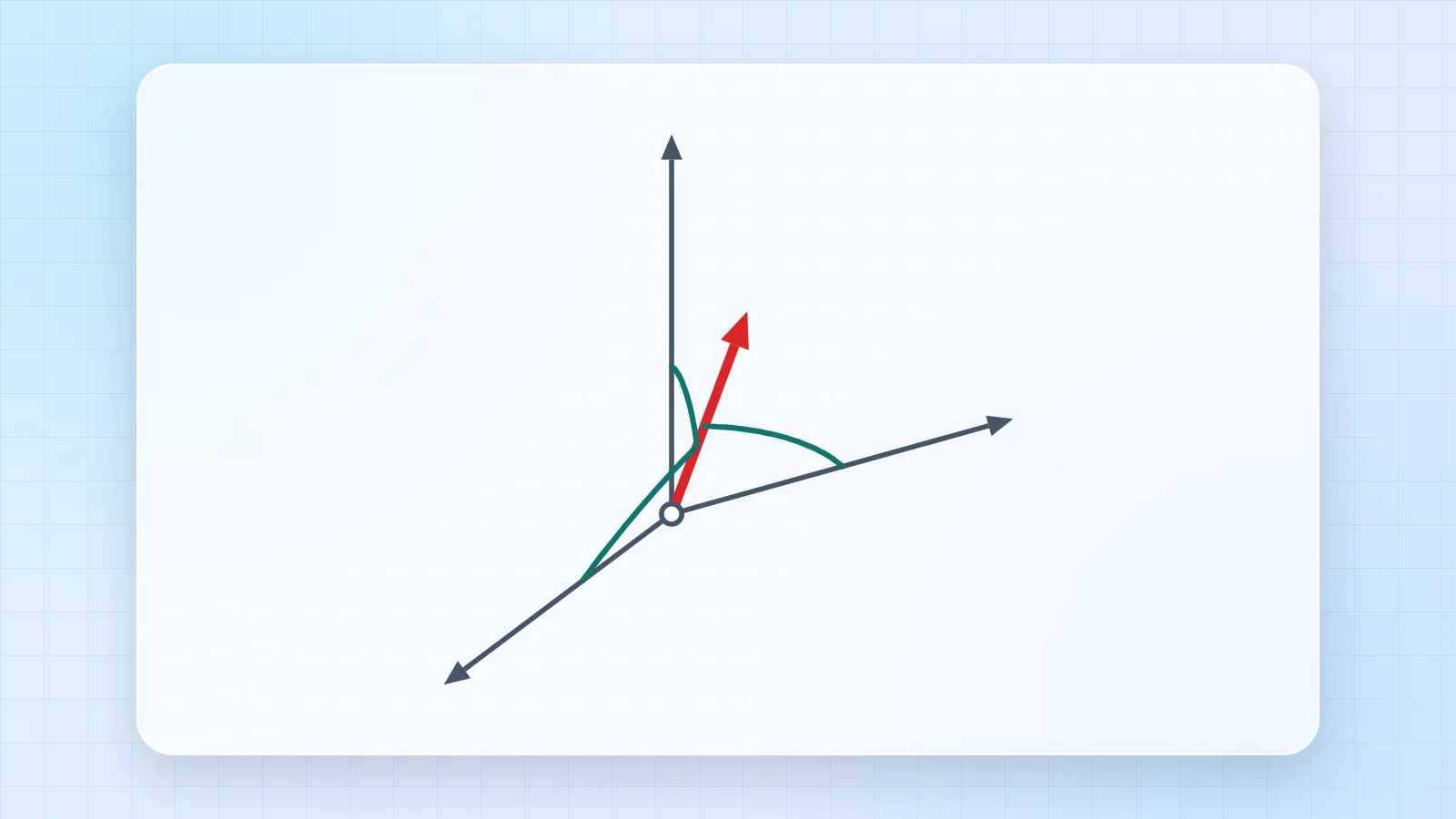
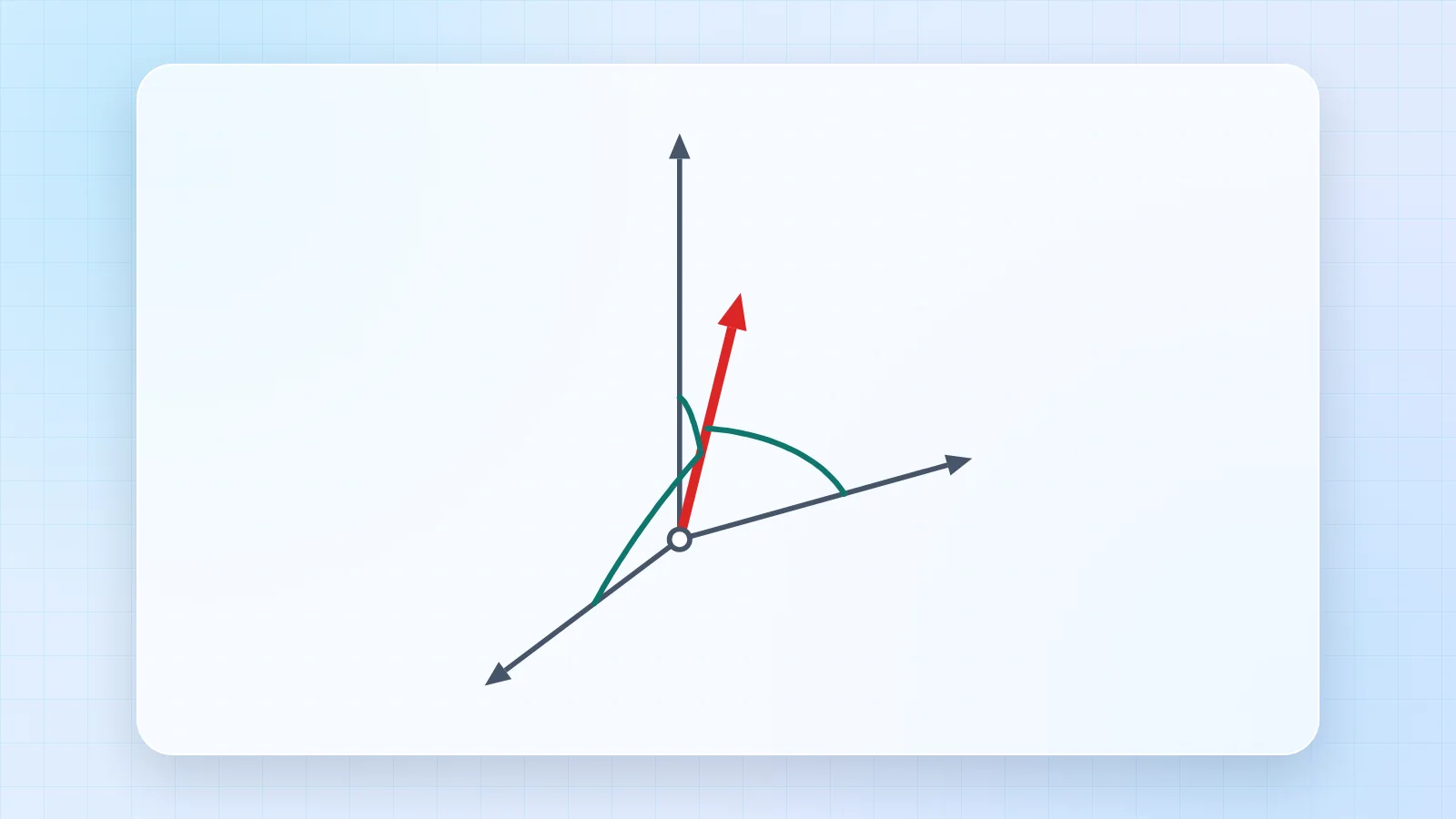
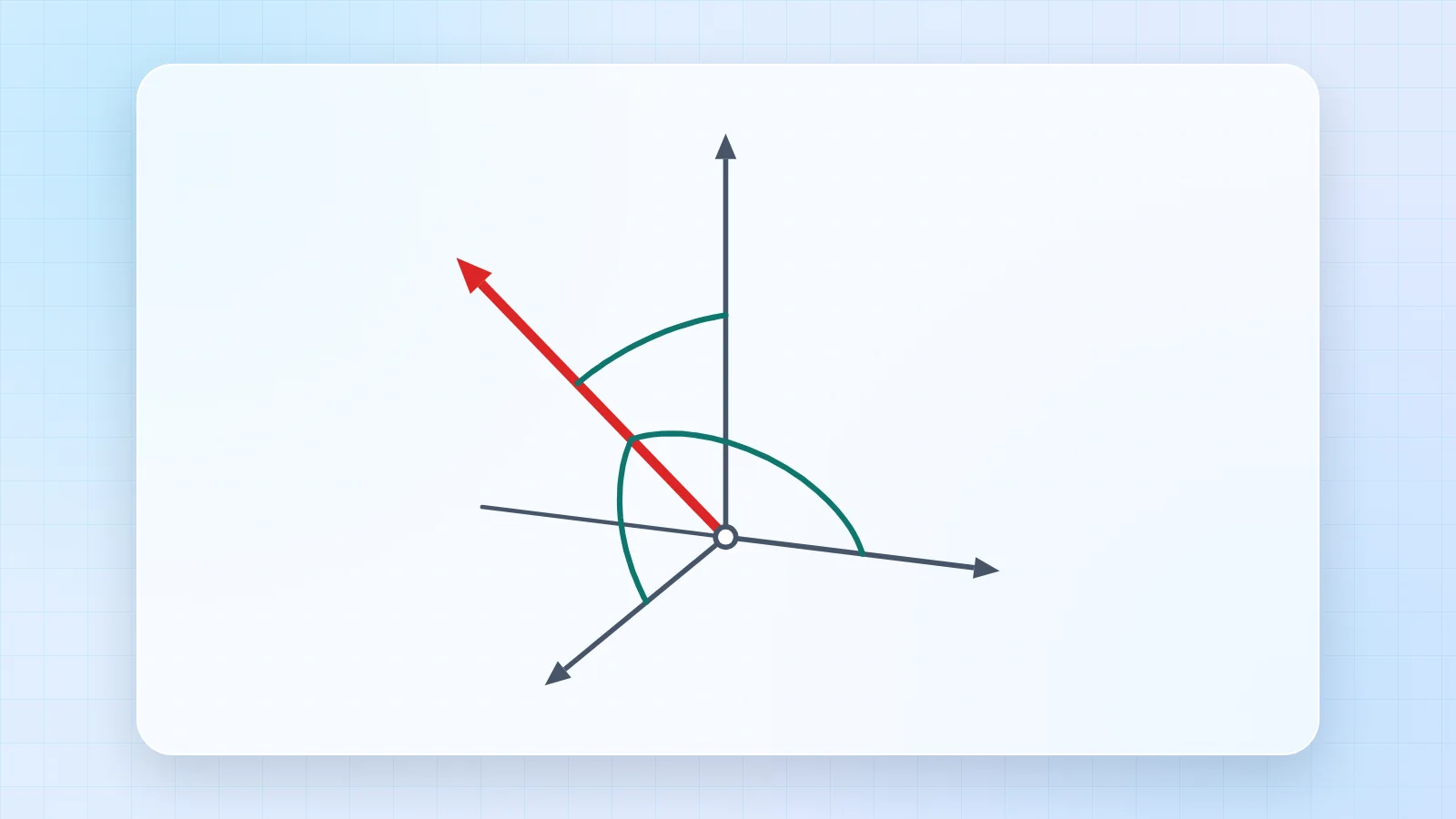
The direction of \(\mathbf{A}\) is given by the three angles \(\theta_x\), \(\theta_y\) and \(\theta_z\) between \(\mathbf{A}\) and the positive axes (Figure 2, right). Each lies between \(0^\circ\) and \(180^\circ\). Their cosines, the direction cosines, are the components divided by the magnitude:
Squaring and adding these three relations and using Equation 2 gives
So only two of the angles are independent. If \(\theta_x = 60^\circ\) and \(\theta_z = 45^\circ\), then \(\cos^2\theta_y = 1 - 0.25 - 0.5 = 0.25\), and \(\theta_y\) is either \(60^\circ\) or \(120^\circ\). The sketch decides which: \(60^\circ\) if the vector points toward \(+y\), \(120^\circ\) if it points toward \(-y\).
Notation. Some textbooks call these angles \(\alpha\), \(\beta\) and \(\gamma\). This site writes \(\theta_x\), \(\theta_y\) and \(\theta_z\), so each angle names its own axis.
4. The unit vector
Dividing a vector by its magnitude gives the unit vector in its direction. By Equation 3, its components are the direction cosines:
Turned around, \(\mathbf{A} = A\,\mathbf{u}_A\): a vector is its magnitude times a unit vector that carries the direction. This form is the usual way to write a force once its direction is known from the geometry.
5. Direction by two angles
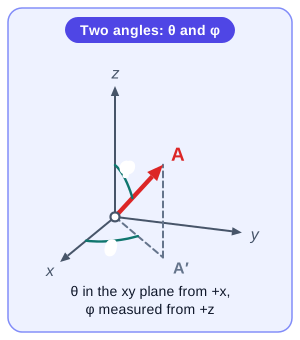
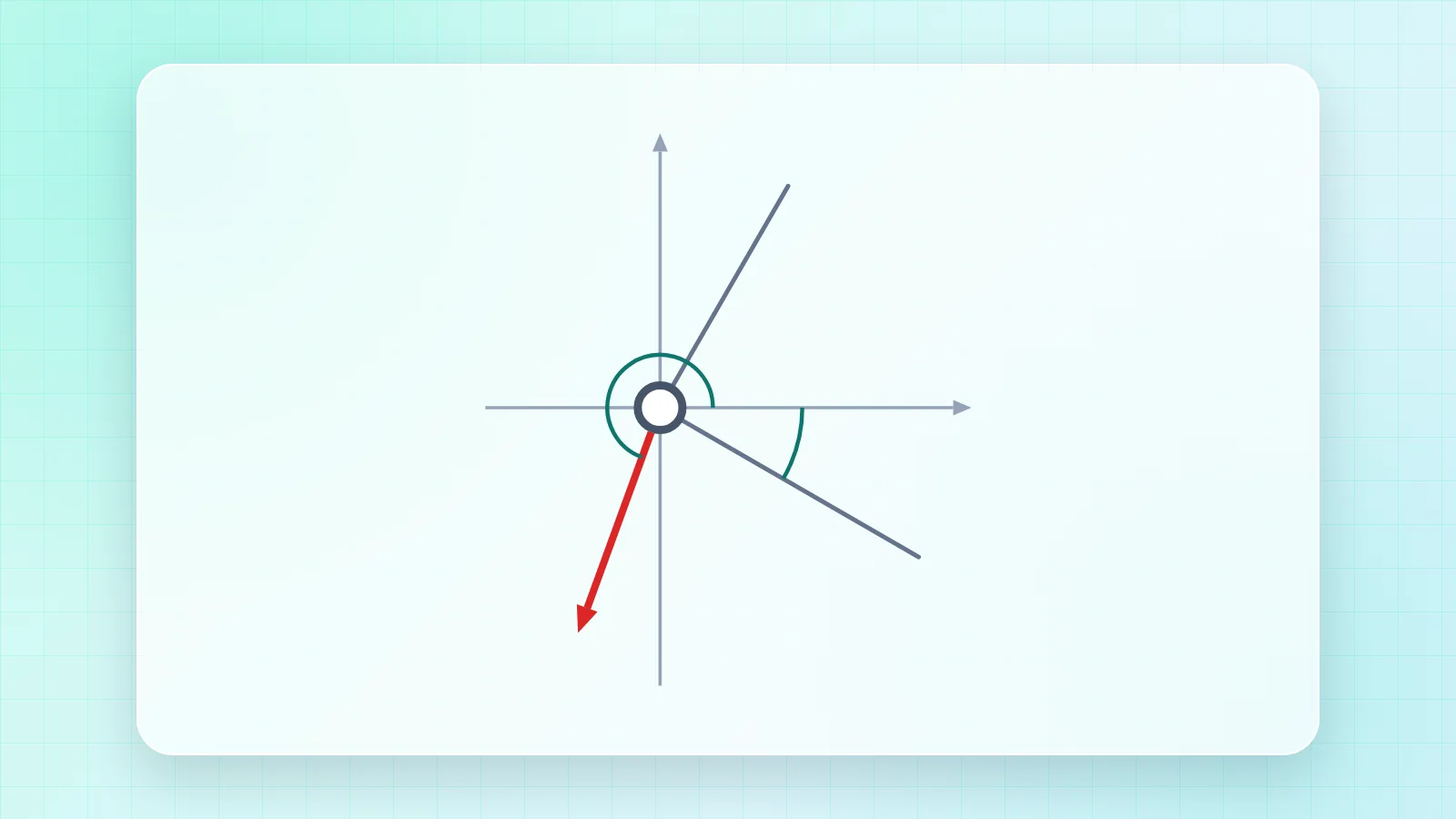
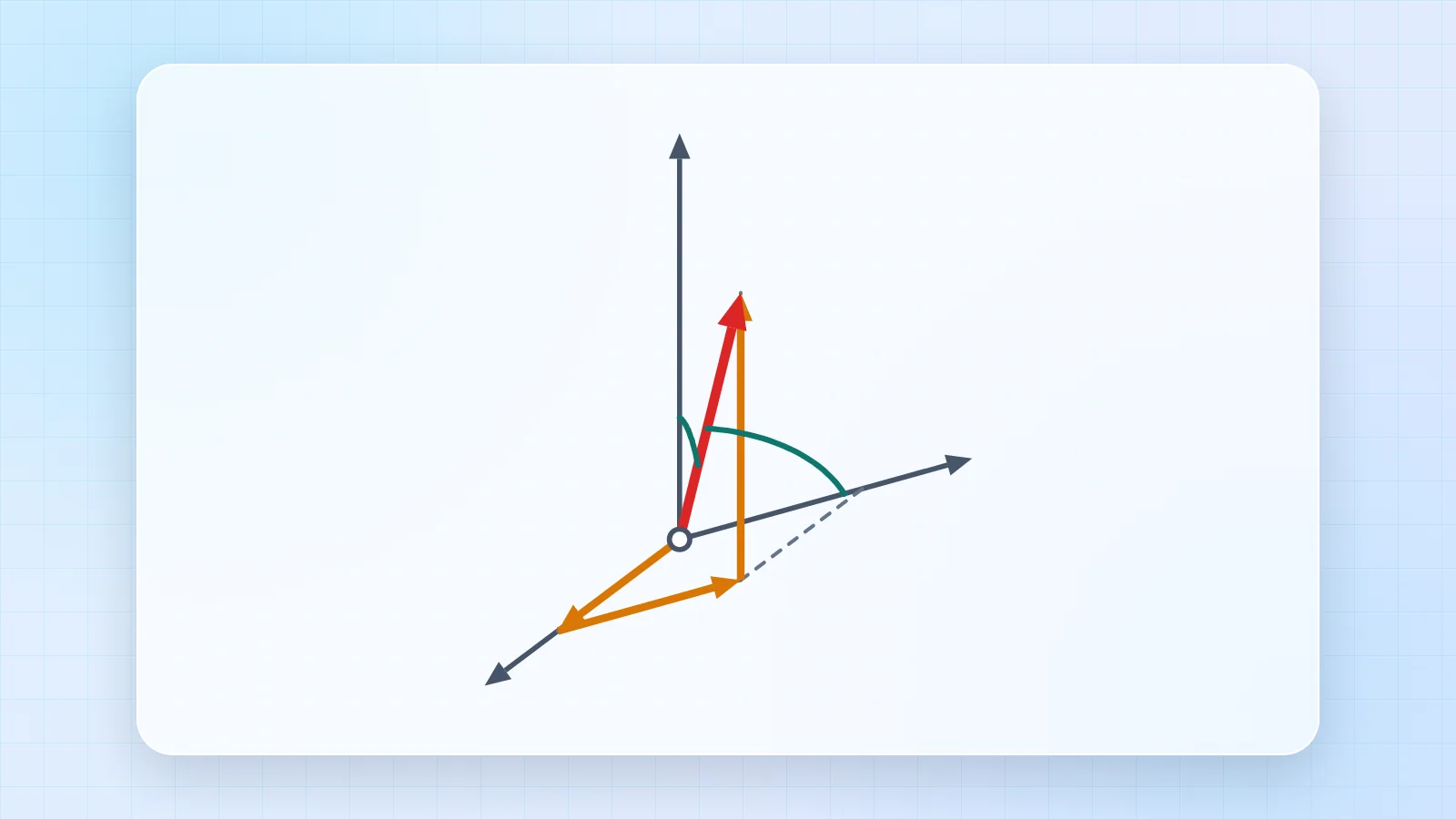
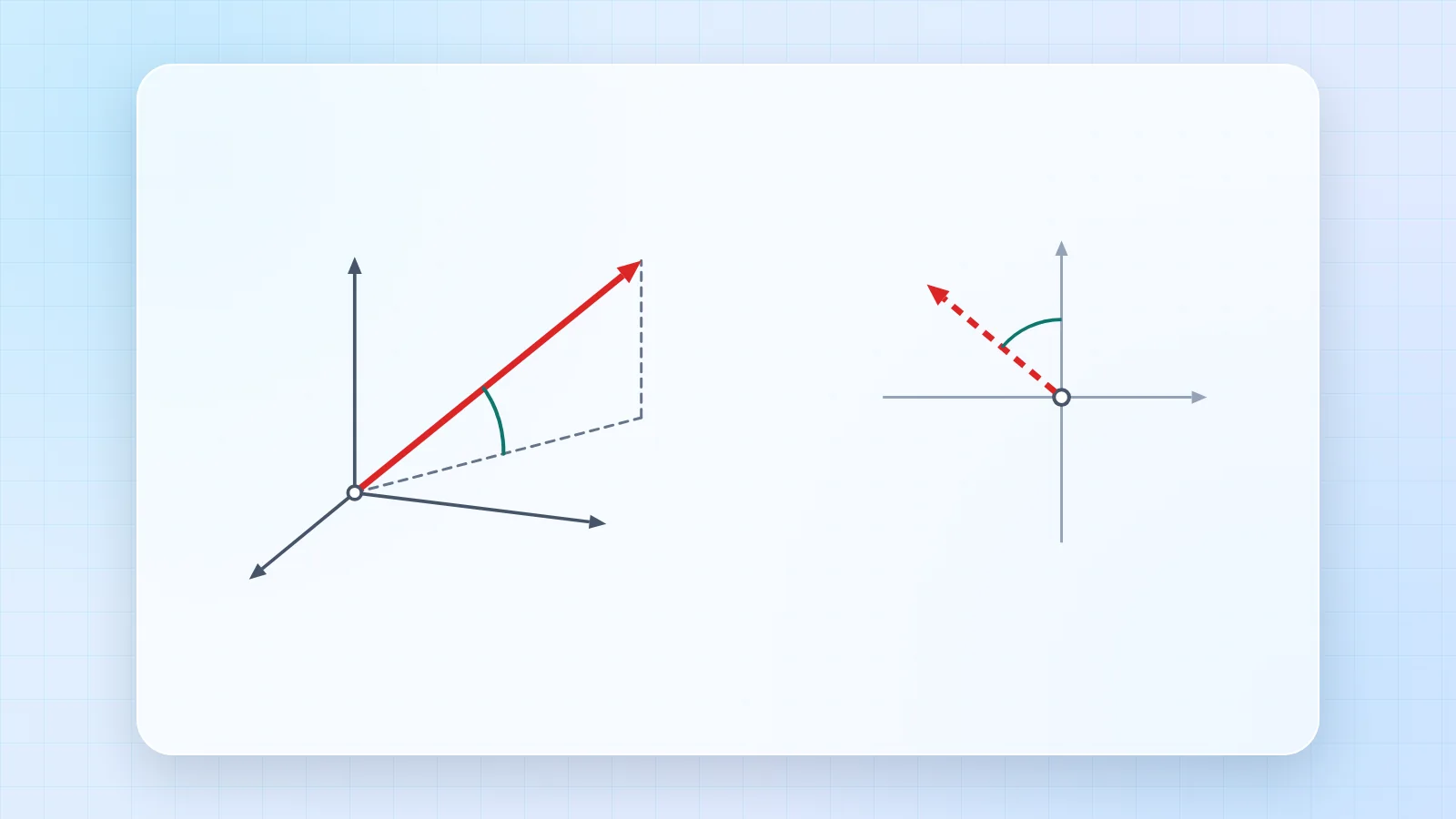
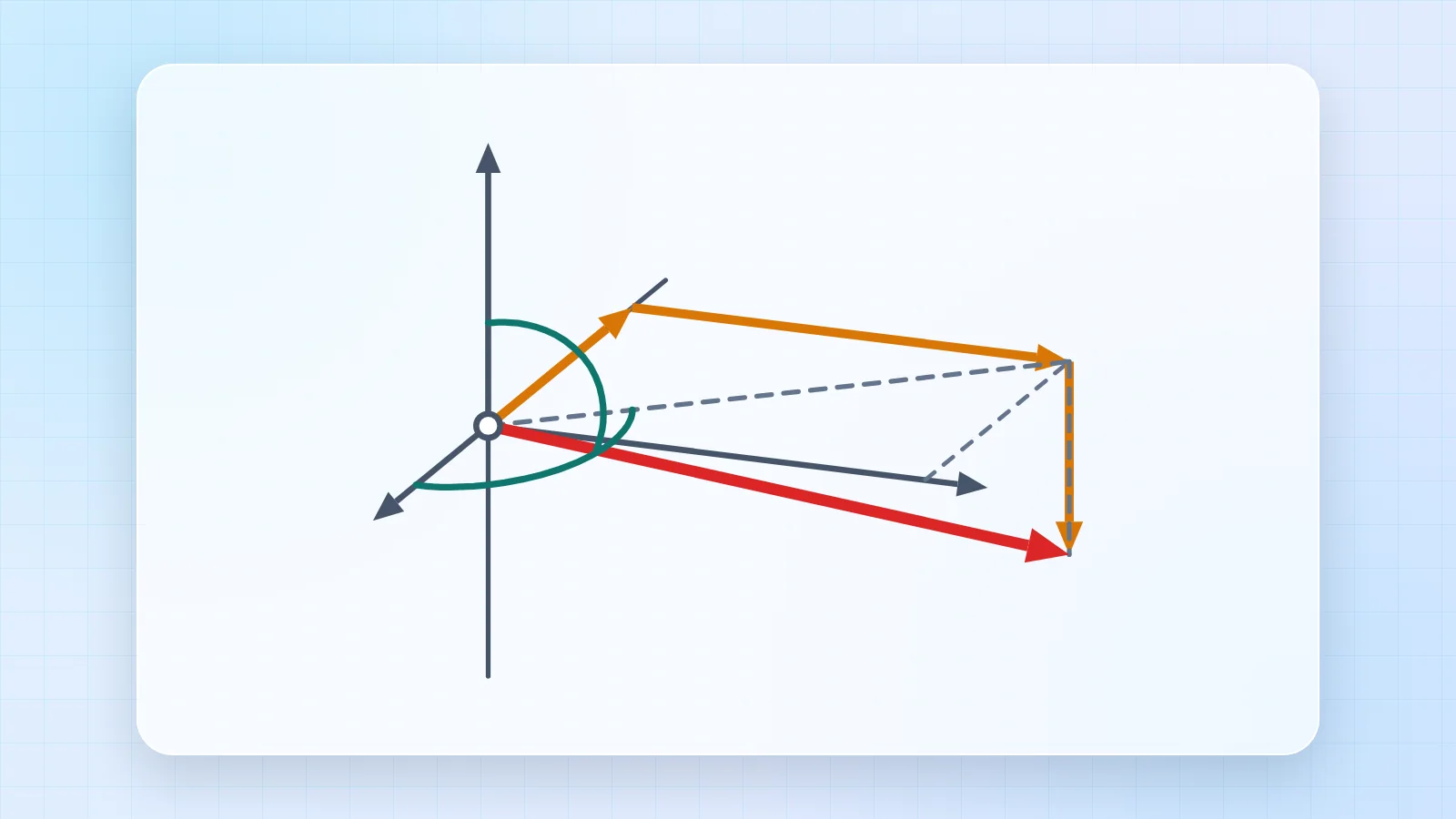
A drawing may give the direction by two angles instead (Figure 3): \(\theta\), measured in the \(xy\) plane from \(+x\) to the projection \(A'\) of the vector, and \(\phi\), measured from \(+z\) to the vector. Resolve in two steps, first vertically and then in the horizontal plane:
Read the angle from the figure. Some books measure the second angle from the horizontal plane rather than from \(+z\). Then sine and cosine swap: \(A_z = A\sin\phi\) and \(A' = A\cos\phi\).
Summary
- Use right-handed axes; \(\mathbf{i}\), \(\mathbf{j}\), \(\mathbf{k}\) point along \(+x\), \(+y\), \(+z\).
- \(\mathbf{A} = A_x\mathbf{i} + A_y\mathbf{j} + A_z\mathbf{k}\) and \(A = \sqrt{A_x^2 + A_y^2 + A_z^2}\).
- Direction cosines: \(\cos\theta_x = A_x/A\), and so on; their squares add up to 1.
- The unit vector \(\mathbf{u}_A = \mathbf{A}/A\) has the direction cosines as components, and \(\mathbf{A} = A\,\mathbf{u}_A\).
- With two angles, resolve vertically first: \(A_z = A\cos\phi\), \(A' = A\sin\phi\).






Comments 0
Ask questions, explain a step or share a tip about this note.
Join the discussion
Log in to comment, reply and vote. It is free.
No comments yet
Ask a question, share a tip or say thanks. Be the first!