



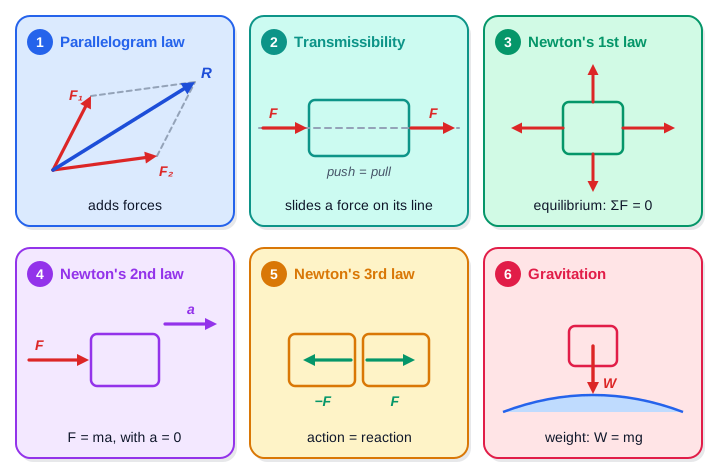
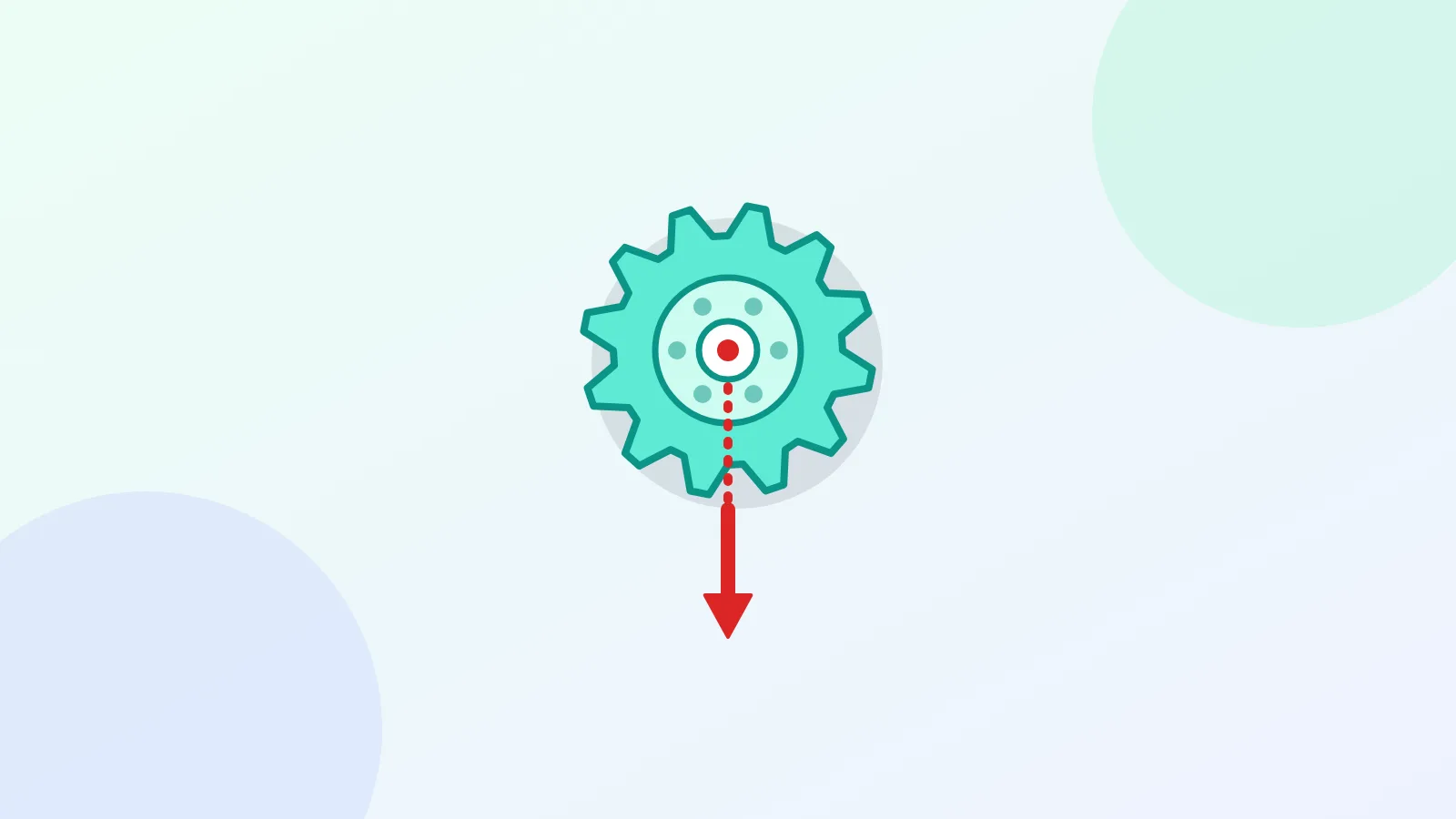
All of statics rests on six principles found by experiment. You do not need to prove them. What you need is to know what each one says and where it appears when you solve a problem (Figure 1).
1. The parallelogram law
Two forces acting at a point can be replaced by a single force, their resultant. The resultant is the diagonal of the parallelogram whose sides are the two forces:
In statics: this is how forces are added. Used the other way round, it splits one force into two components, usually horizontal and vertical, which is the first step of almost every calculation.
2. The principle of transmissibility

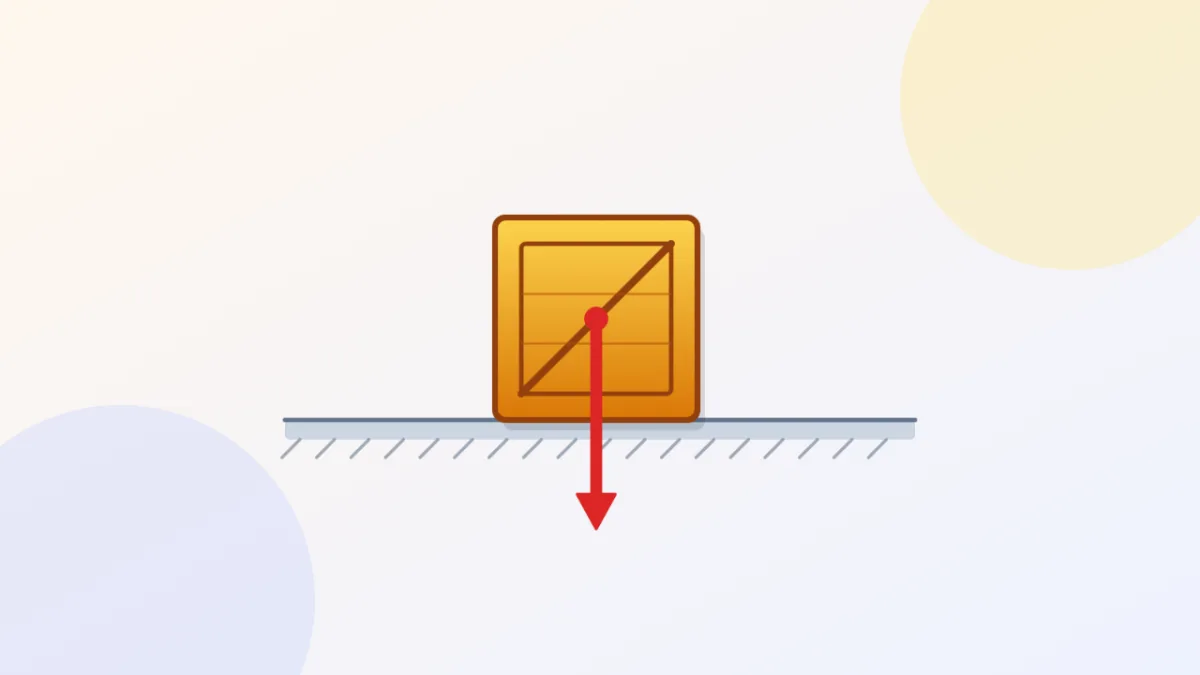
A force acting on a rigid body can be moved anywhere along its line of action without changing the body's equilibrium or motion. Pushing a crate from behind and pulling it from the front with the same force along the same line have the same effect (Figure 2).
In statics: you may slide a force to the most convenient point on its line, for example to make its turning effect (moment) easier to calculate.
Only for rigid bodies. The principle describes external effects. Inside the body, pushing and pulling are not the same: one compresses the material, the other stretches it.
3. Newton's laws of motion
Newton's three laws link forces and motion:
- First law: if the resultant force on a particle is zero, it stays at rest or keeps moving at constant velocity. This is the condition of equilibrium.
- Second law: a resultant force gives a particle an acceleration, \(\vec{F} = m\vec{a}\). Statics is the case \(\vec{a} = \vec{0}\); the law also defines the newton.
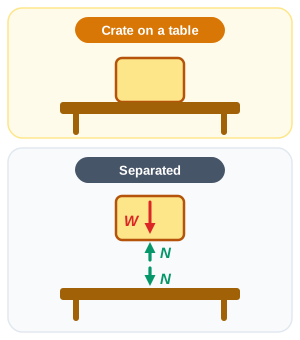
- Third law: the forces two bodies exert on each other are equal in size, opposite in direction and act along the same line.
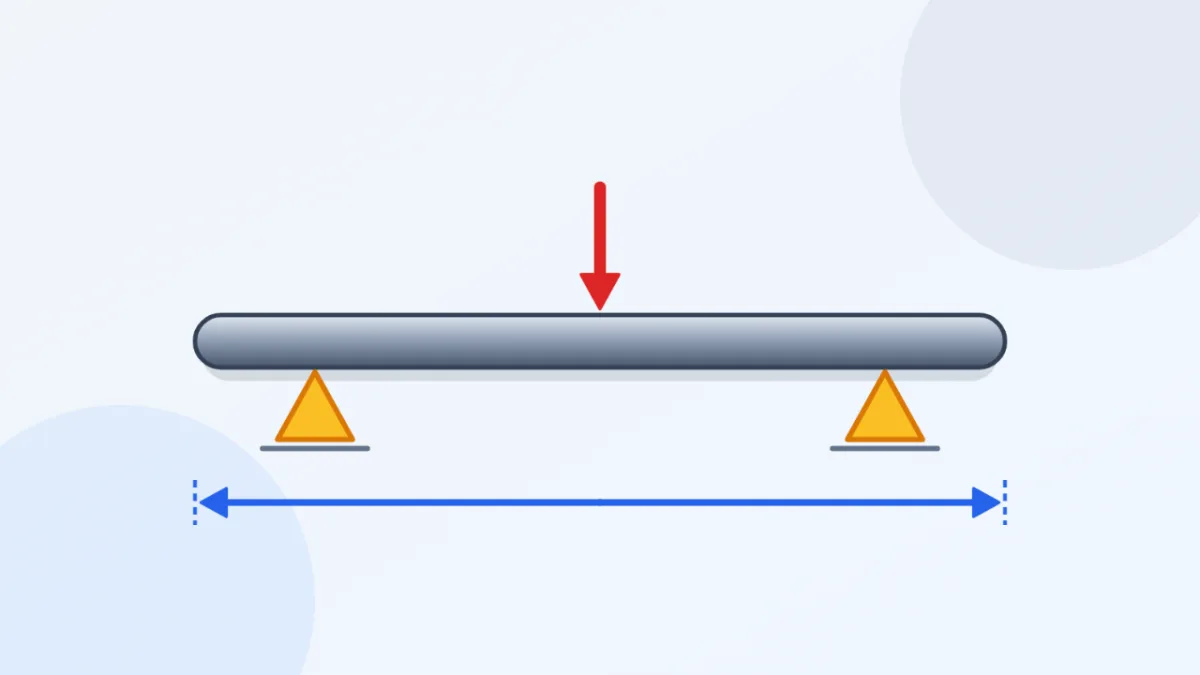
In statics: the first law gives the equilibrium equation above, which is used in every problem. The third law is used whenever connected bodies are separated: the force of a crate on a table and the force of the table on the crate are equal and opposite, so each one appears on its own body's diagram (Figure 3).
4. The law of gravitation
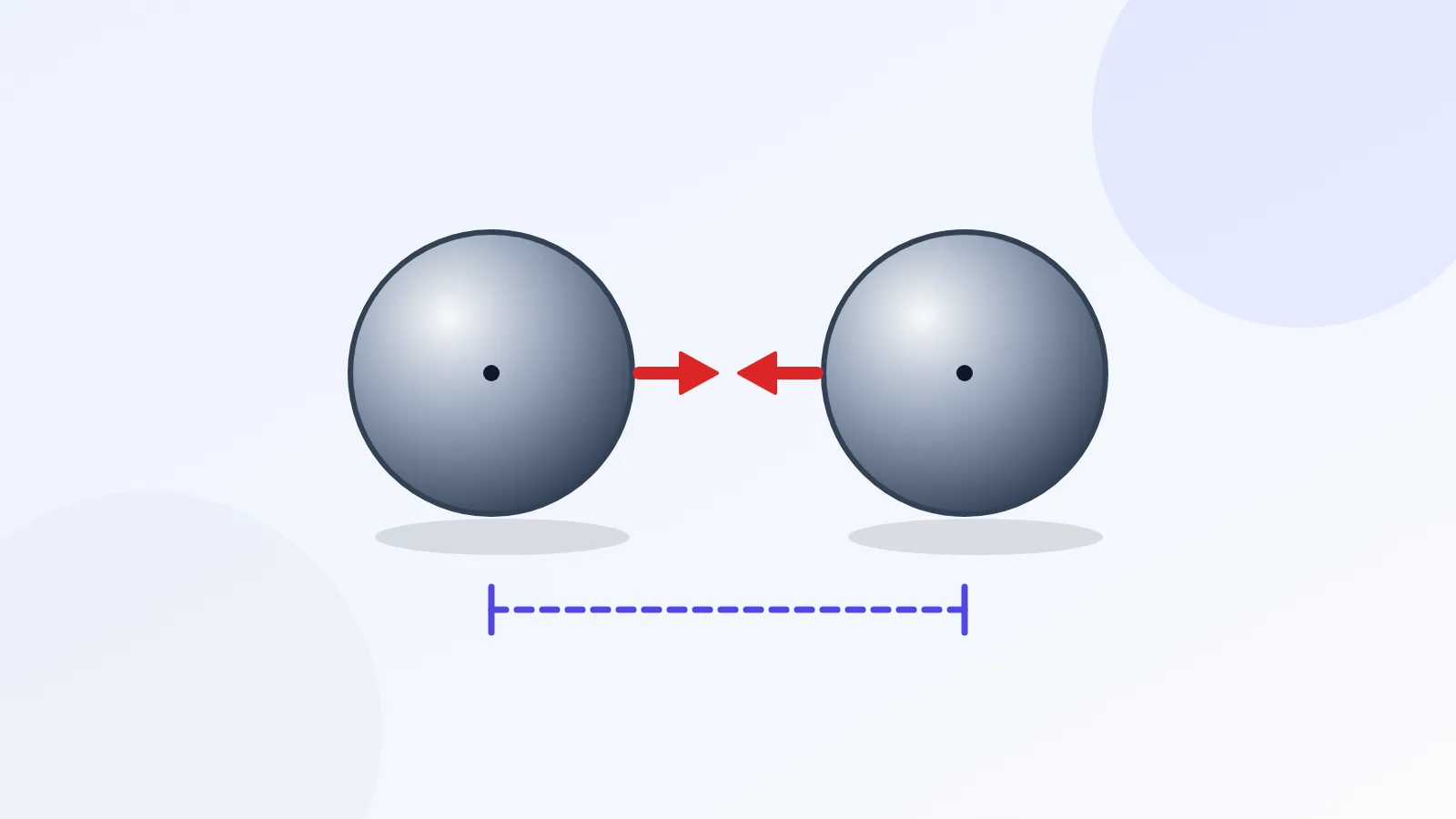
Any two bodies attract each other with a force \(F = G\,m_1 m_2 / r^2\). Near the Earth's surface this attraction is the weight of a body:
In statics: weight is a load on almost every body you analyze. It always points straight down and acts at the body's center of gravity. Mass, in kilograms, stays the same everywhere; weight, in newtons, depends on where the body is.
5. Putting them together
Every statics problem uses the principles in the same order:
- Find the loads, including each weight from \(W = mg\).
- Separate connected bodies, using action and reaction at each contact.
- Add or split the forces with the parallelogram law.
- Apply equilibrium, \(\sum \vec{F} = \vec{0}\), and solve for the unknown forces.
Summary
- Statics rests on six experimental principles.
- The parallelogram law adds forces and splits them into components.
- On a rigid body, a force can slide along its line of action.
- Newton's first law gives equilibrium; the third law links connected bodies.
- The law of gravitation gives the weight of a body, \(W = mg\).












Comments 0
Ask questions, explain a step or share a tip about this note.
Join the discussion
Log in to comment, reply and vote. It is free.
No comments yet
Ask a question, share a tip or say thanks. Be the first!