

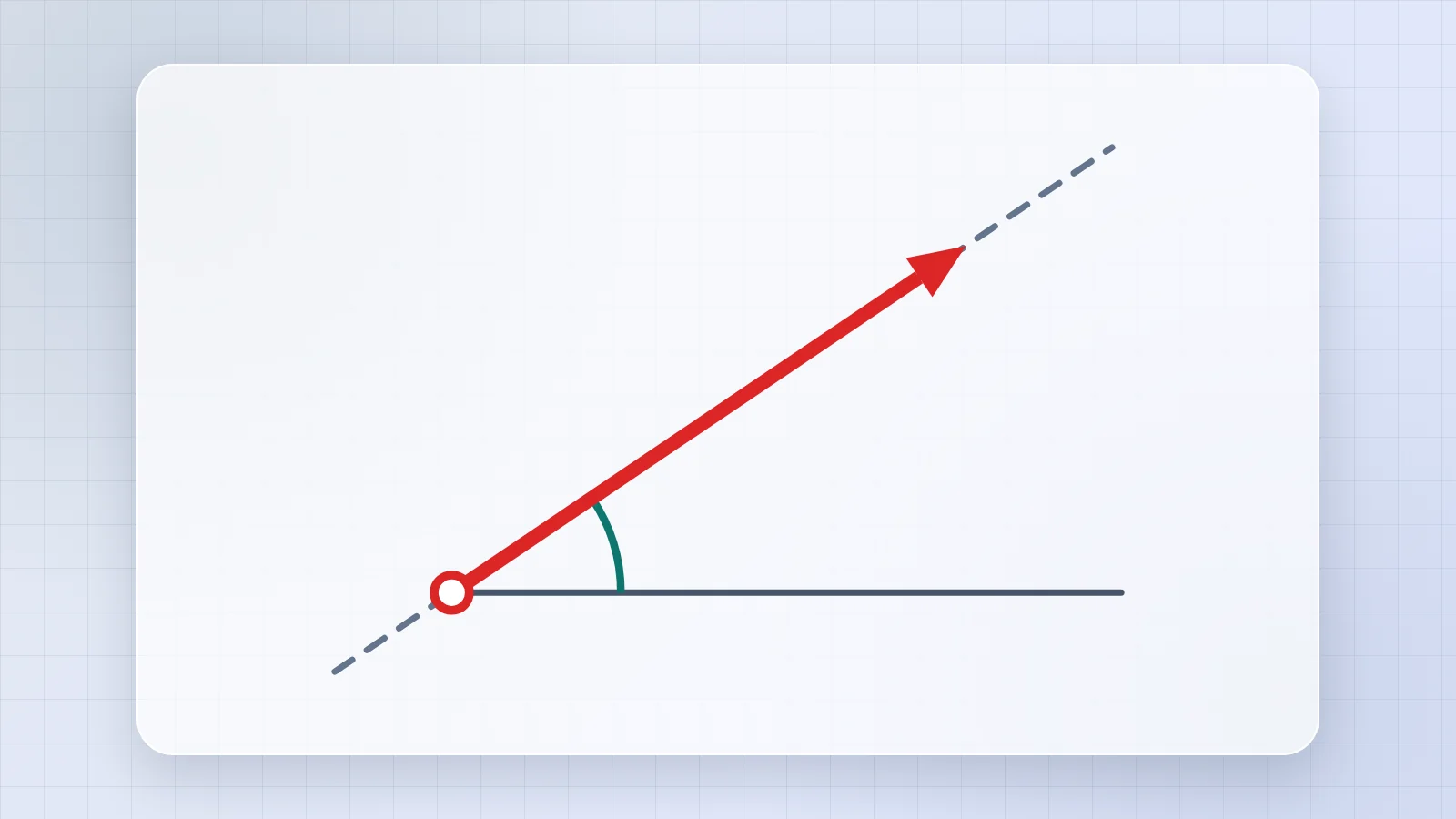

A scalar is described by a number alone; a vector needs a size and a direction. Force is a vector, so almost every step in statics, from adding loads to splitting them into parts, is a vector operation. This note sets out what a vector is, how it is drawn and how it is written.
1. Scalars and vectors
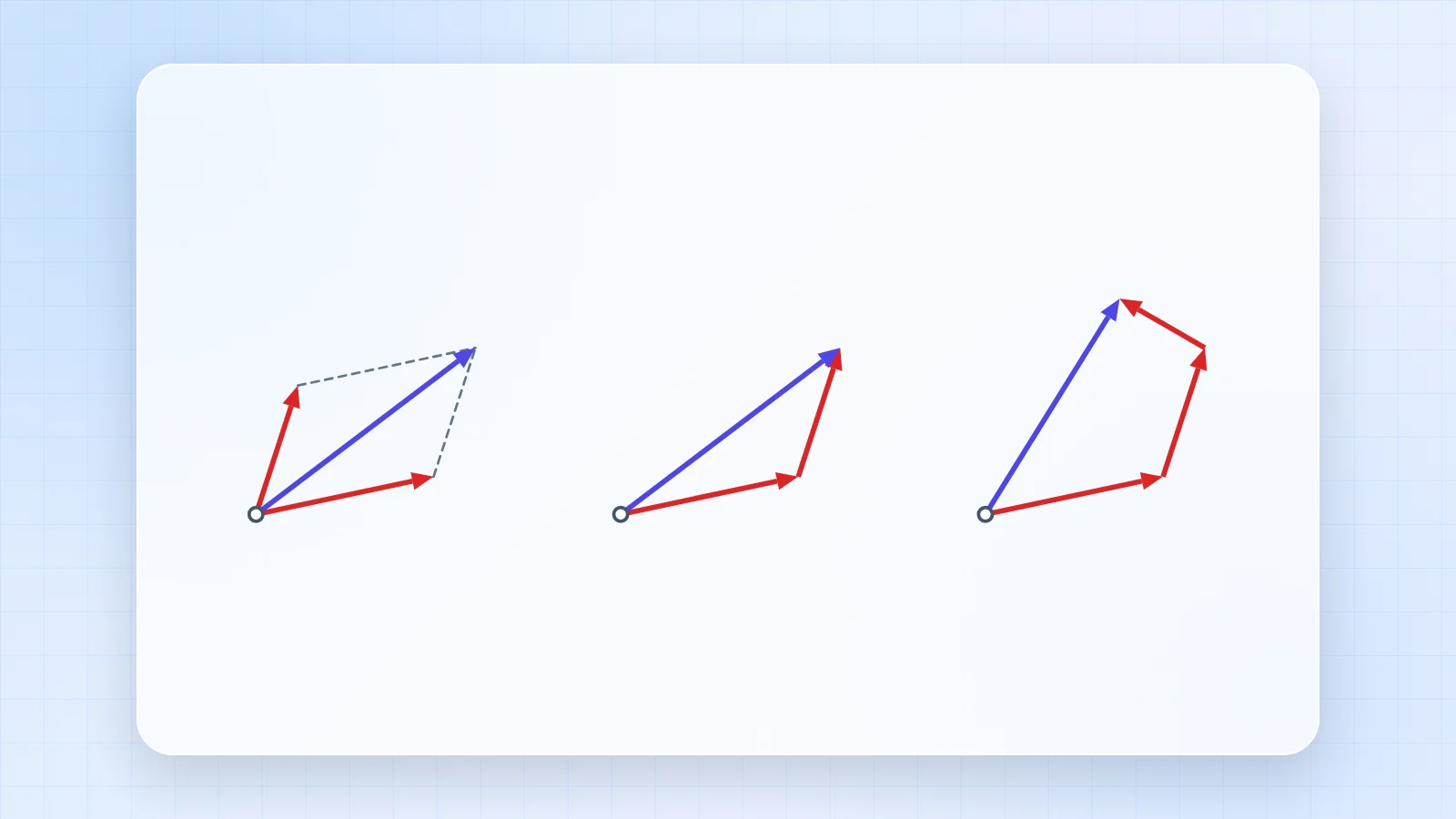
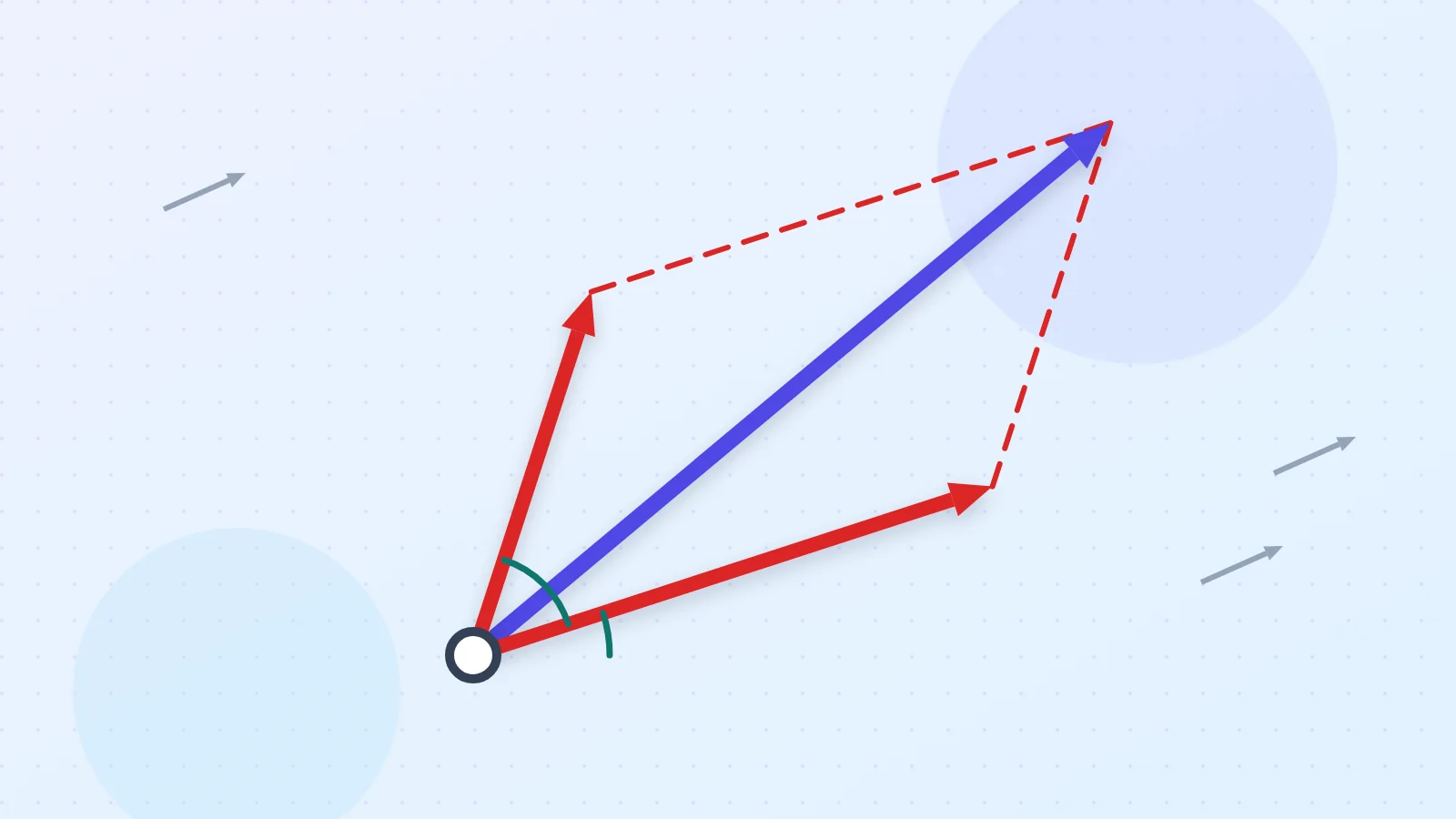
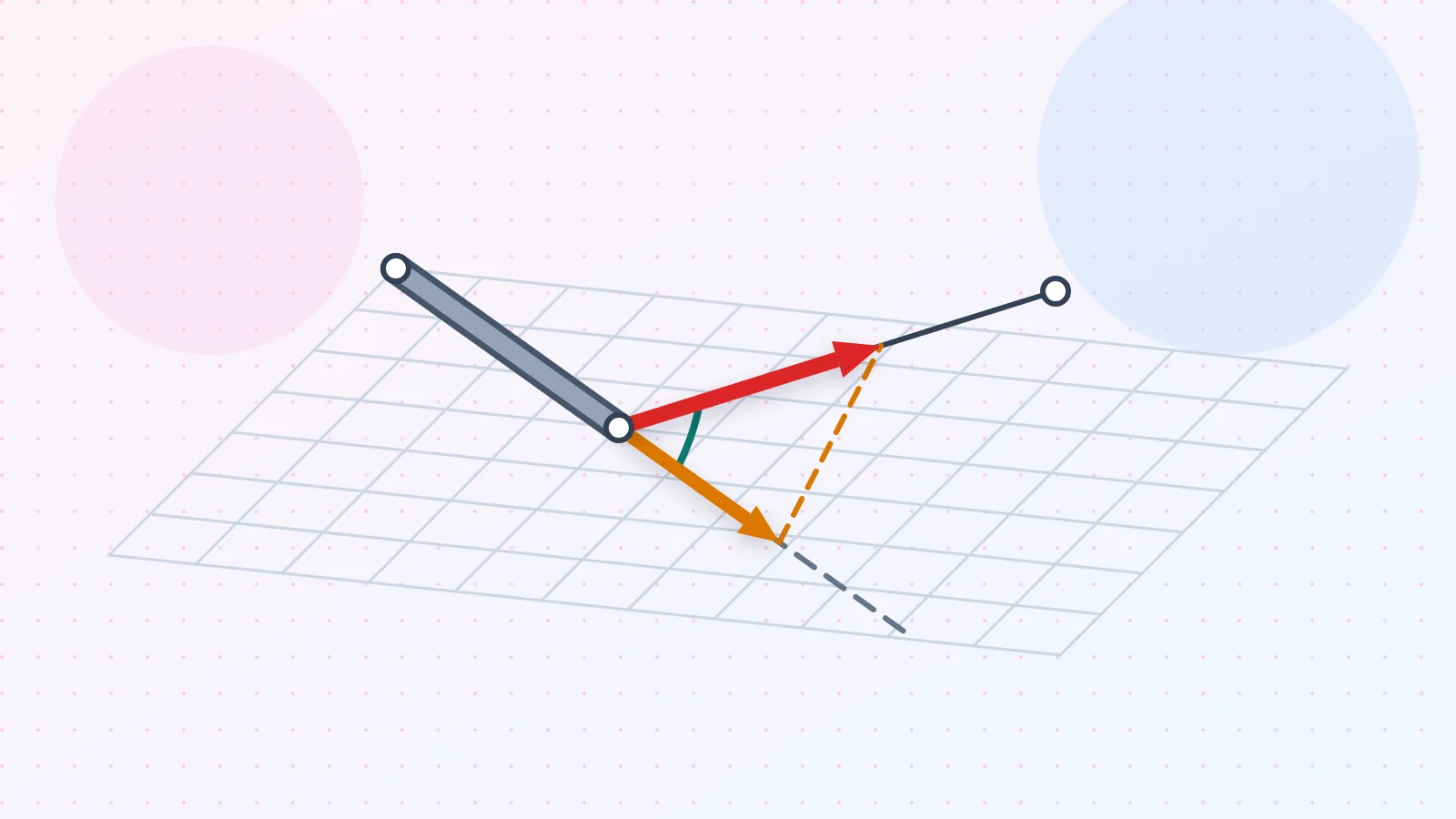
A scalar is a quantity that is fully described by its magnitude, a positive or negative number with a unit. A vector has both a magnitude and a direction, and two vectors of the same kind combine by the parallelogram law.
| Quantity | Type | Unit |
|---|---|---|
| Length, mass, time | scalar | m, kg, s |
| Force | vector | N |
| Position | vector | m |
| Moment of a force | vector | N·m |
Direction alone is not enough. To be a vector, a quantity must also add by the parallelogram law. A finite rotation of a body has a size and an axis, but two finite rotations do not add this way, so a finite rotation is not a vector.
2. How a vector is drawn
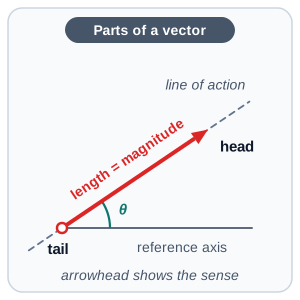
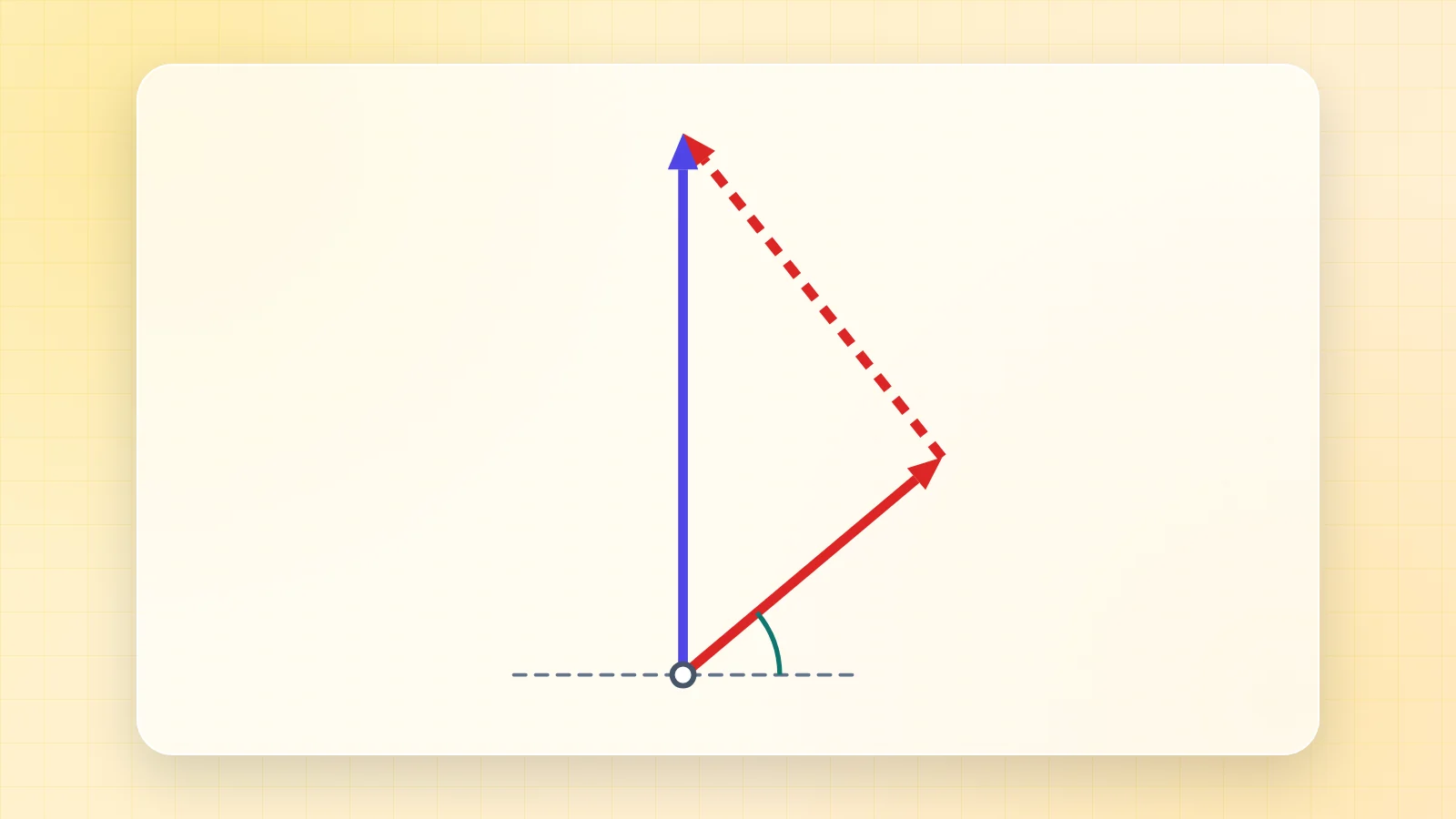
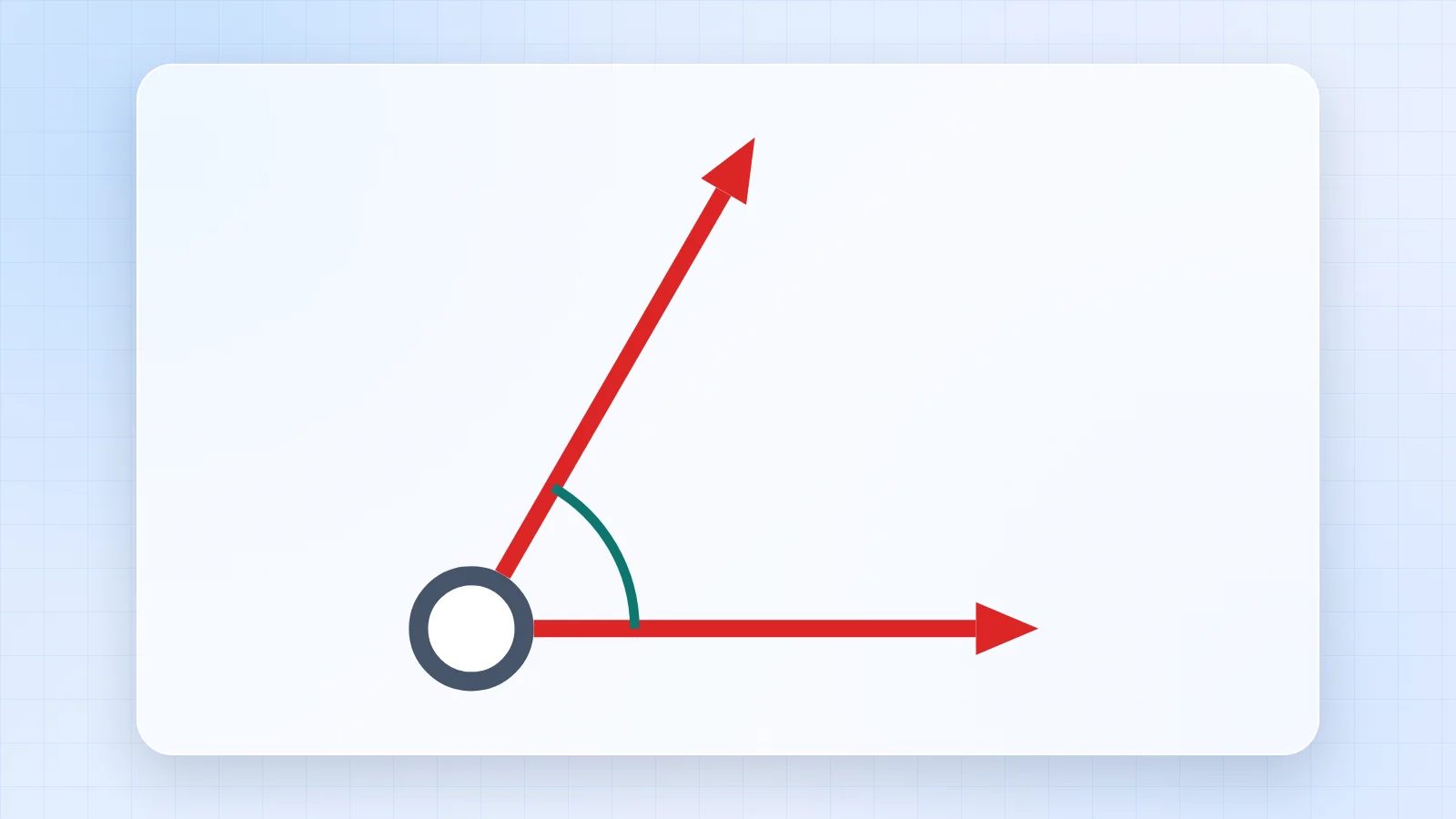
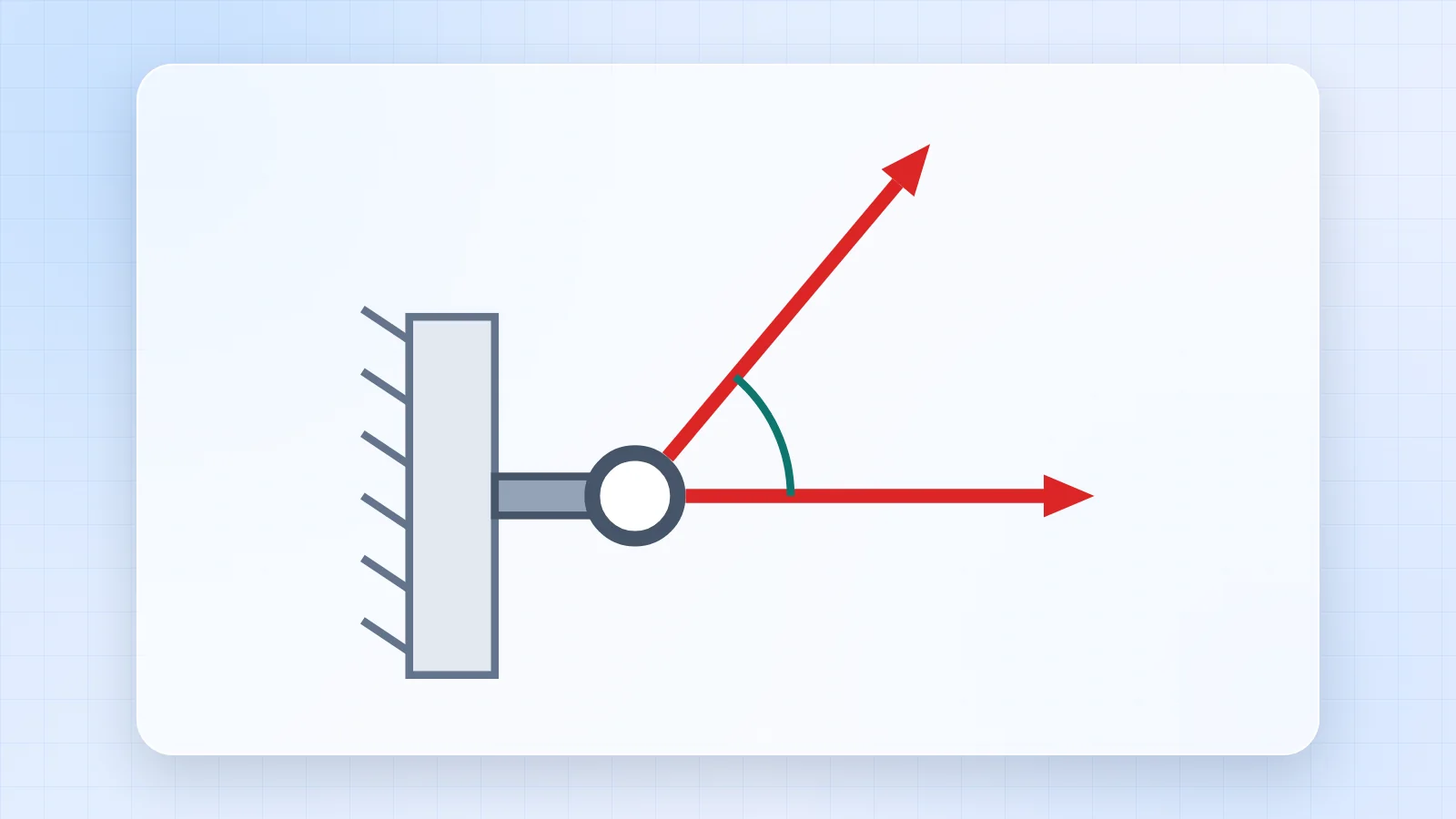
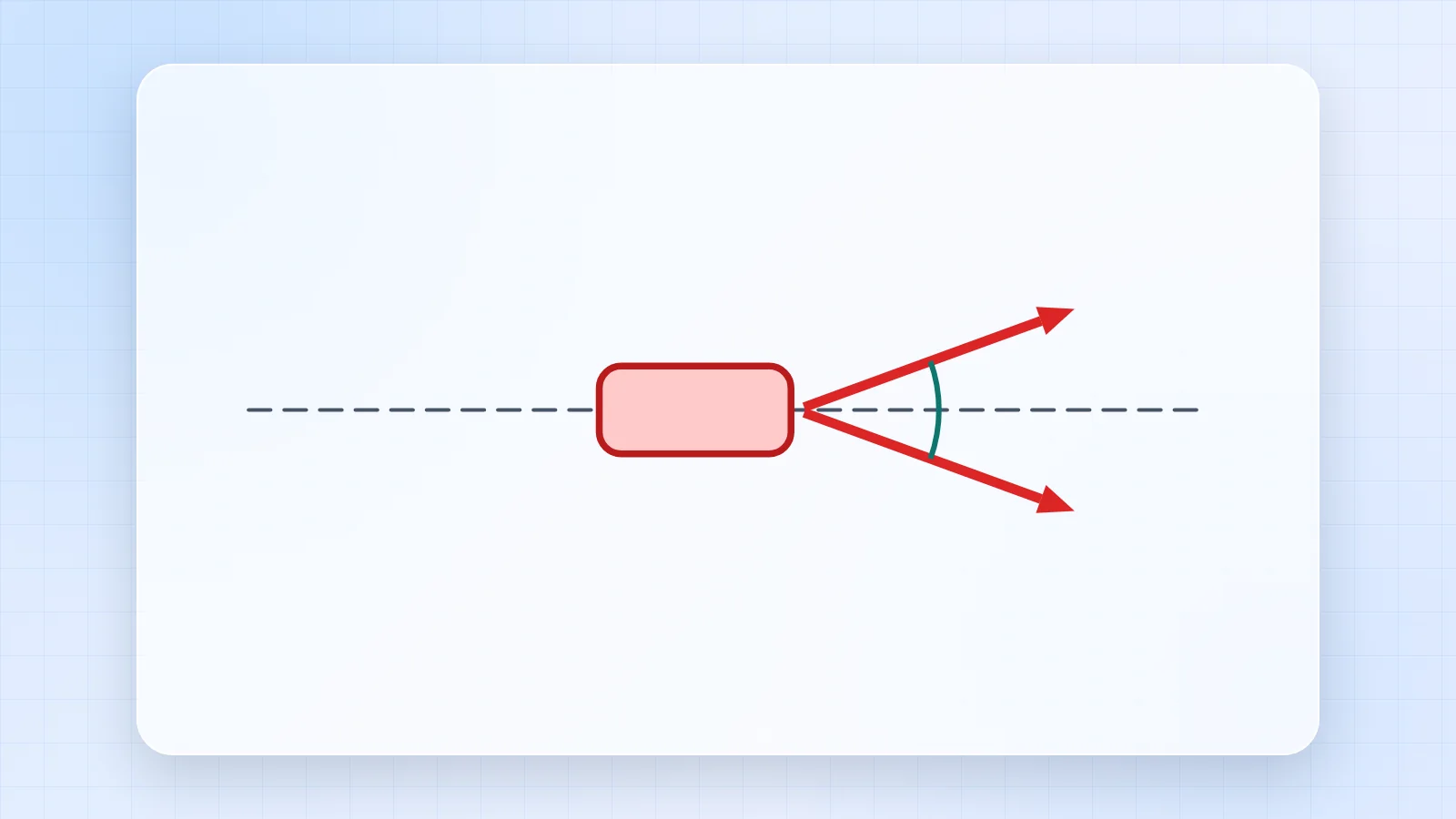
A vector is drawn as an arrow (Figure 1):
- the length of the arrow, drawn to a scale, shows the magnitude;
- the angle \(\theta\) between the arrow and a fixed reference axis gives the direction;
- the arrowhead shows the sense, that is, which way along the line the vector points;
- the straight line that carries the arrow is its line of action.
For a force, the tail or the head of the arrow is placed at the point where the force acts.
3. How a vector is written
In print a vector is written in bold, \(\mathbf{F}\), and its magnitude in italic, \(F\) or \(|\mathbf{F}|\). In handwriting, put an arrow over the letter: \(\vec{F}\). The magnitude is always positive; the direction is given separately, by an angle or by components.
Keep vectors and magnitudes apart. Writing \(\mathbf{F} = 500\,\text{N}\) is wrong, because a number cannot carry a direction. Write \(F = 500\,\text{N}\) and state the direction, for example "500 N at 30° above the \(x\) axis".
4. Multiplying a vector by a scalar
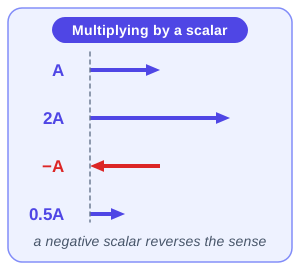
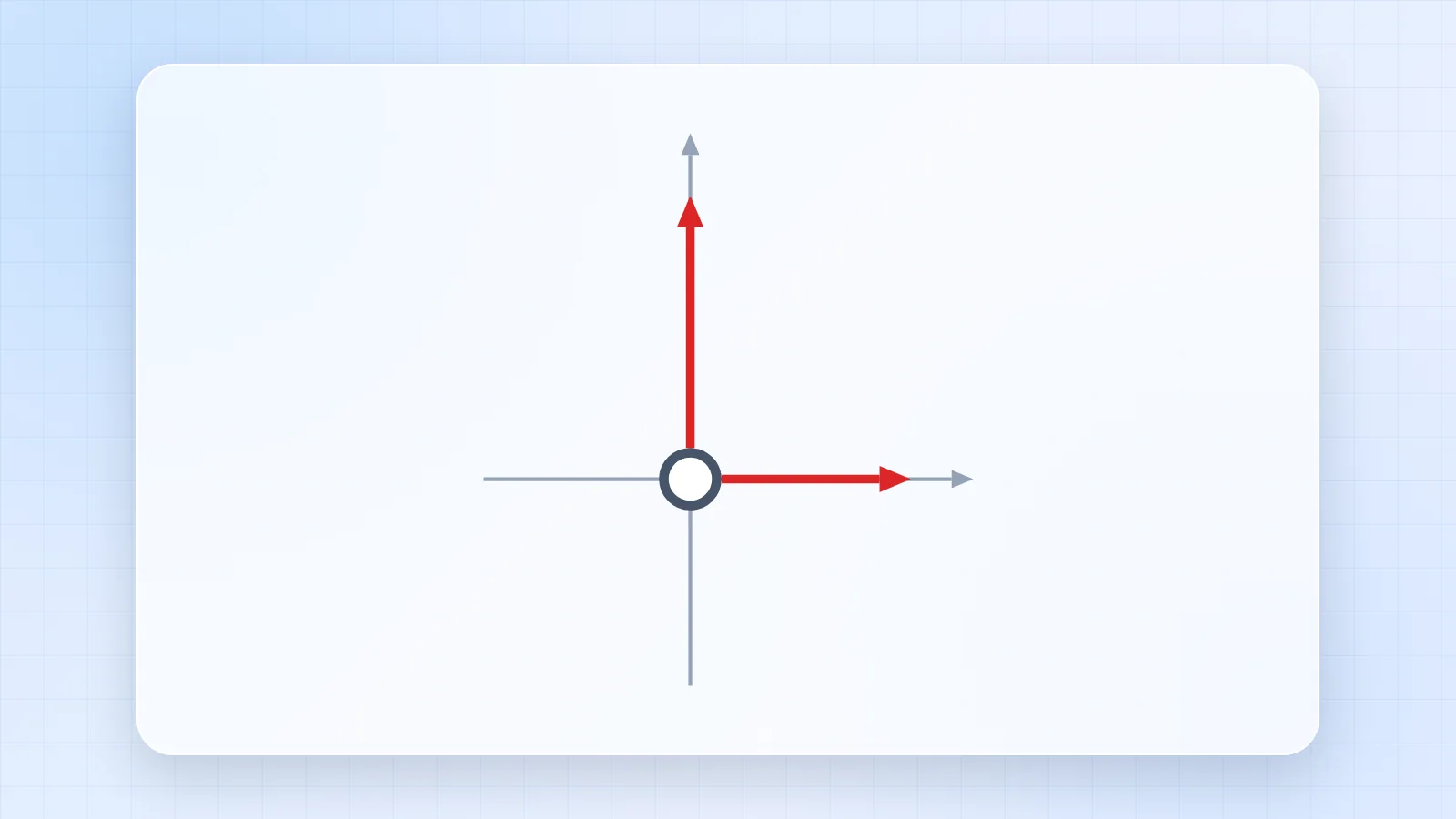
The product of a vector \(\mathbf{A}\) and a scalar \(k\) is a vector with magnitude \(|k|A\). If \(k\) is positive, the direction does not change; if \(k\) is negative, the sense is reversed (Figure 2).
- Dividing by a scalar is multiplying by its inverse: \(\mathbf{A}/k = (1/k)\,\mathbf{A}\).
- The negative of a vector, \(-\mathbf{A}\), has the same magnitude and the opposite sense.
- Two vectors are equal when they have the same magnitude and the same direction.
5. Free, sliding and fixed vectors
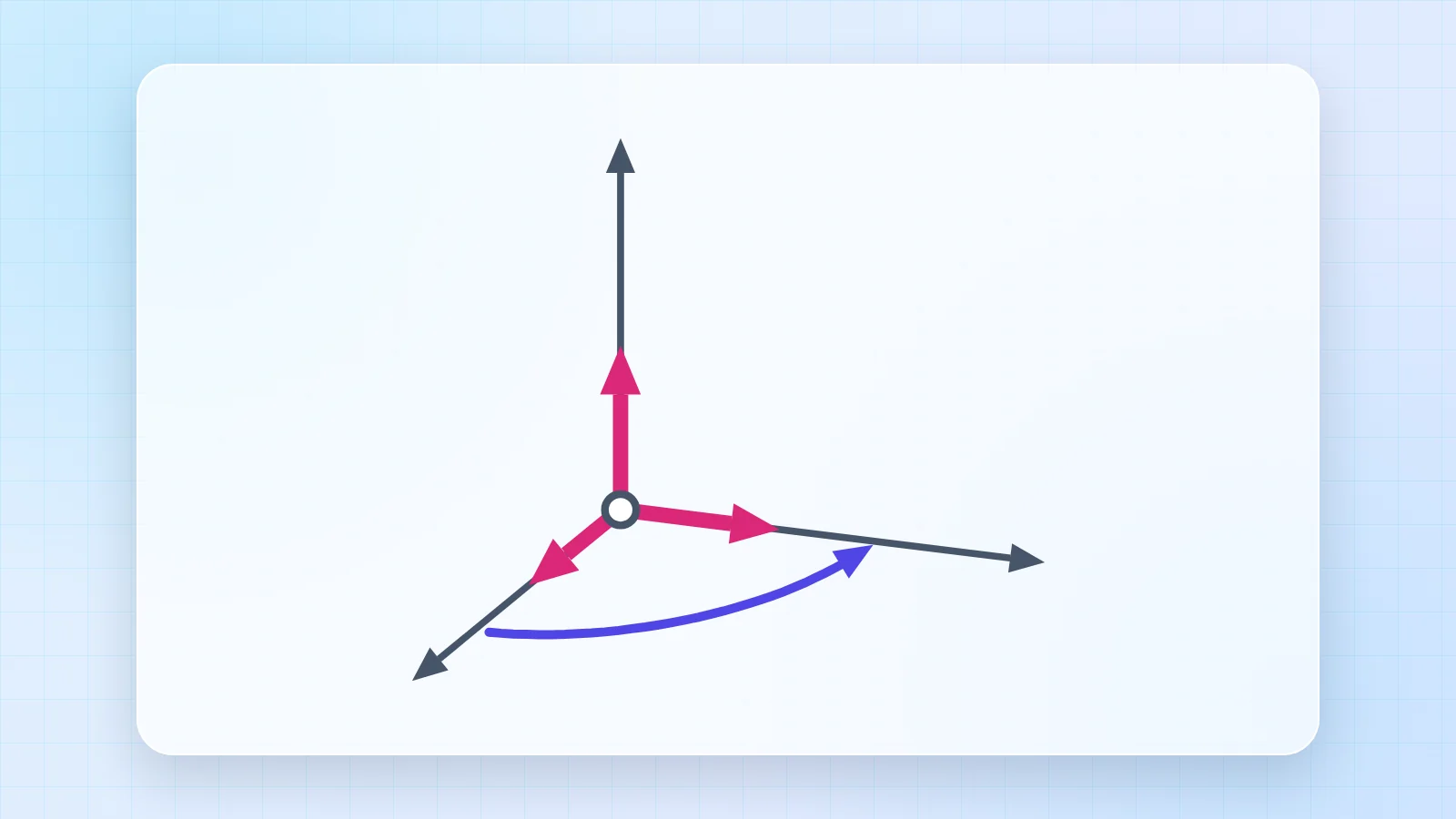
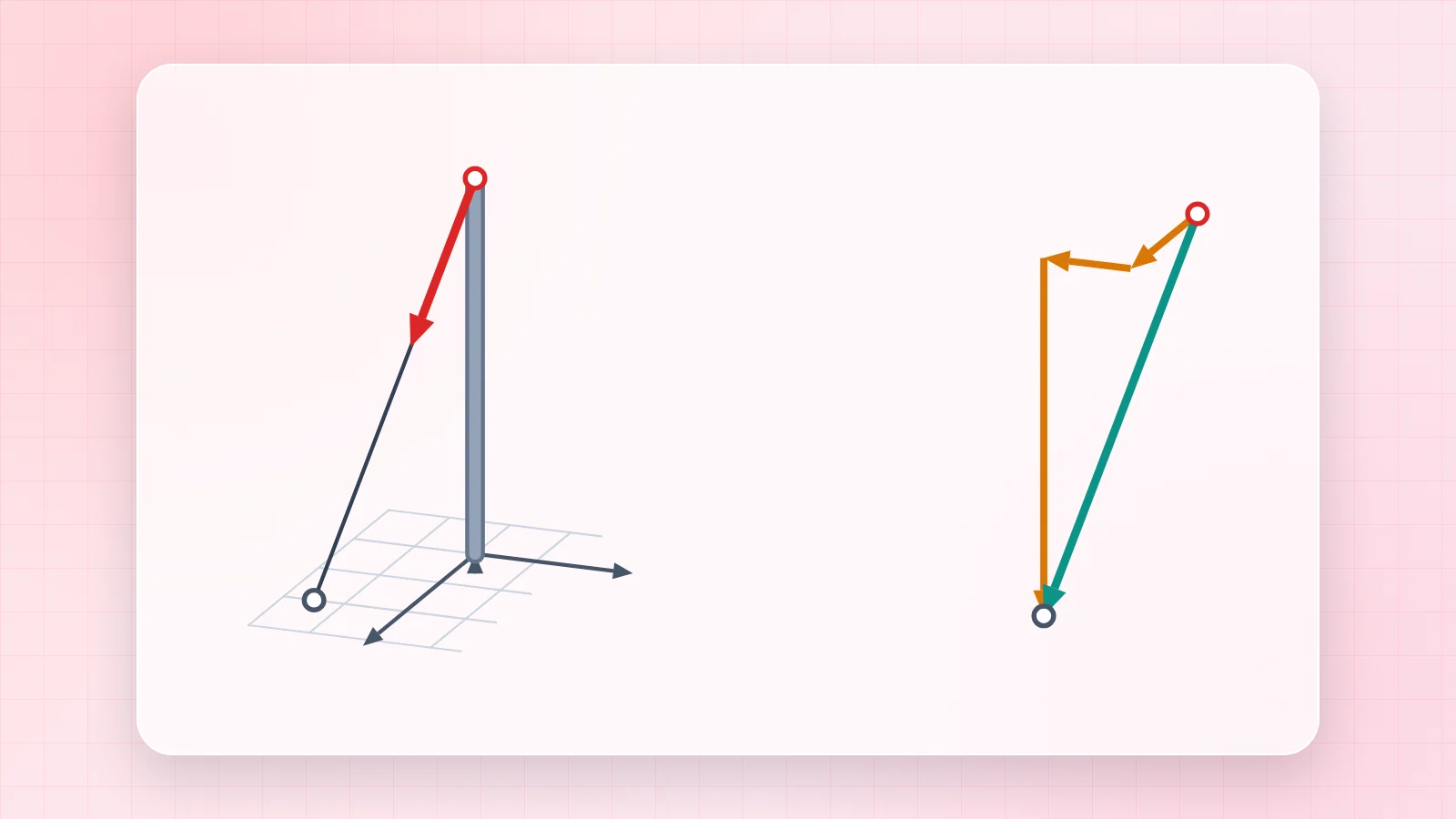
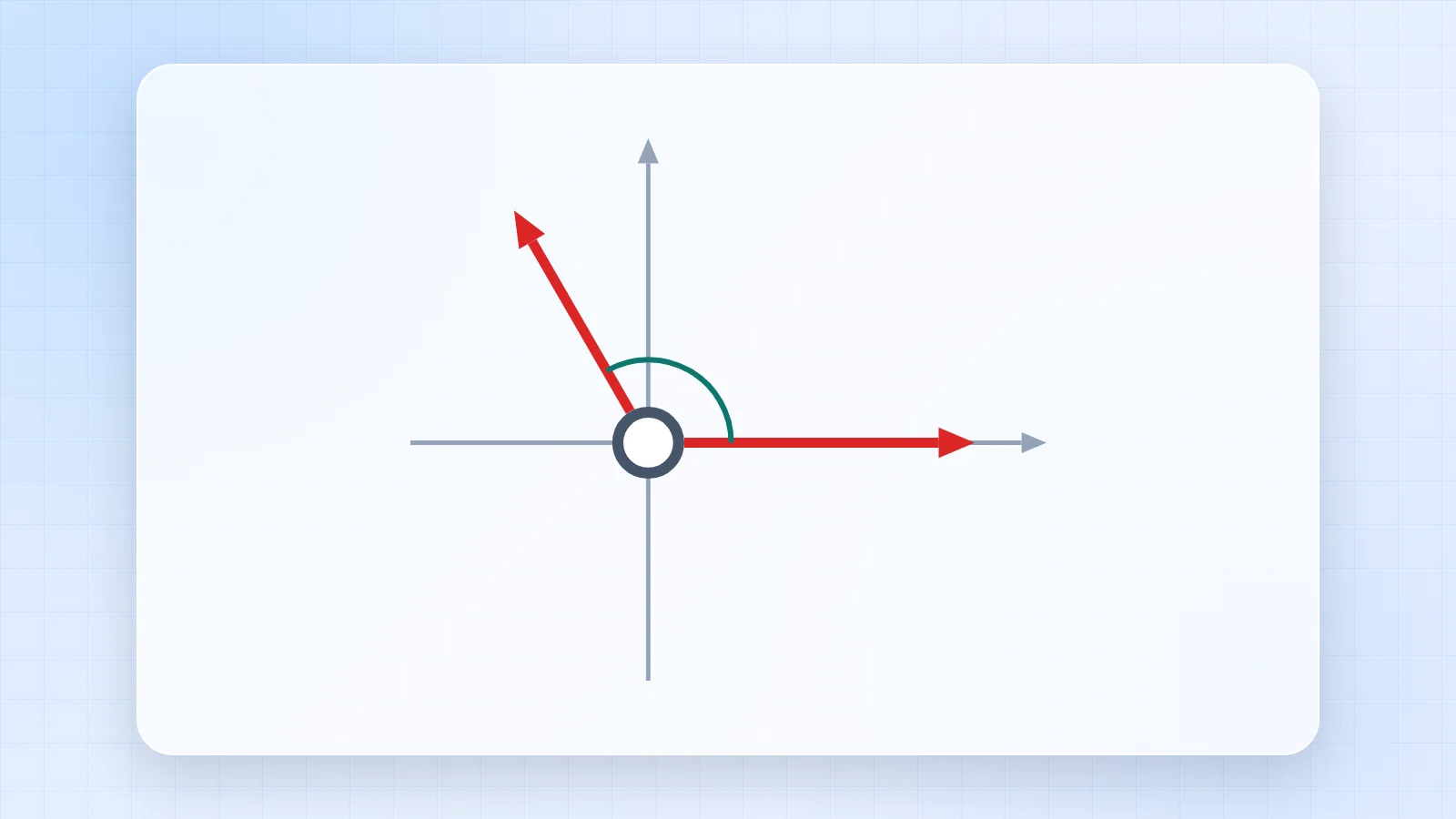
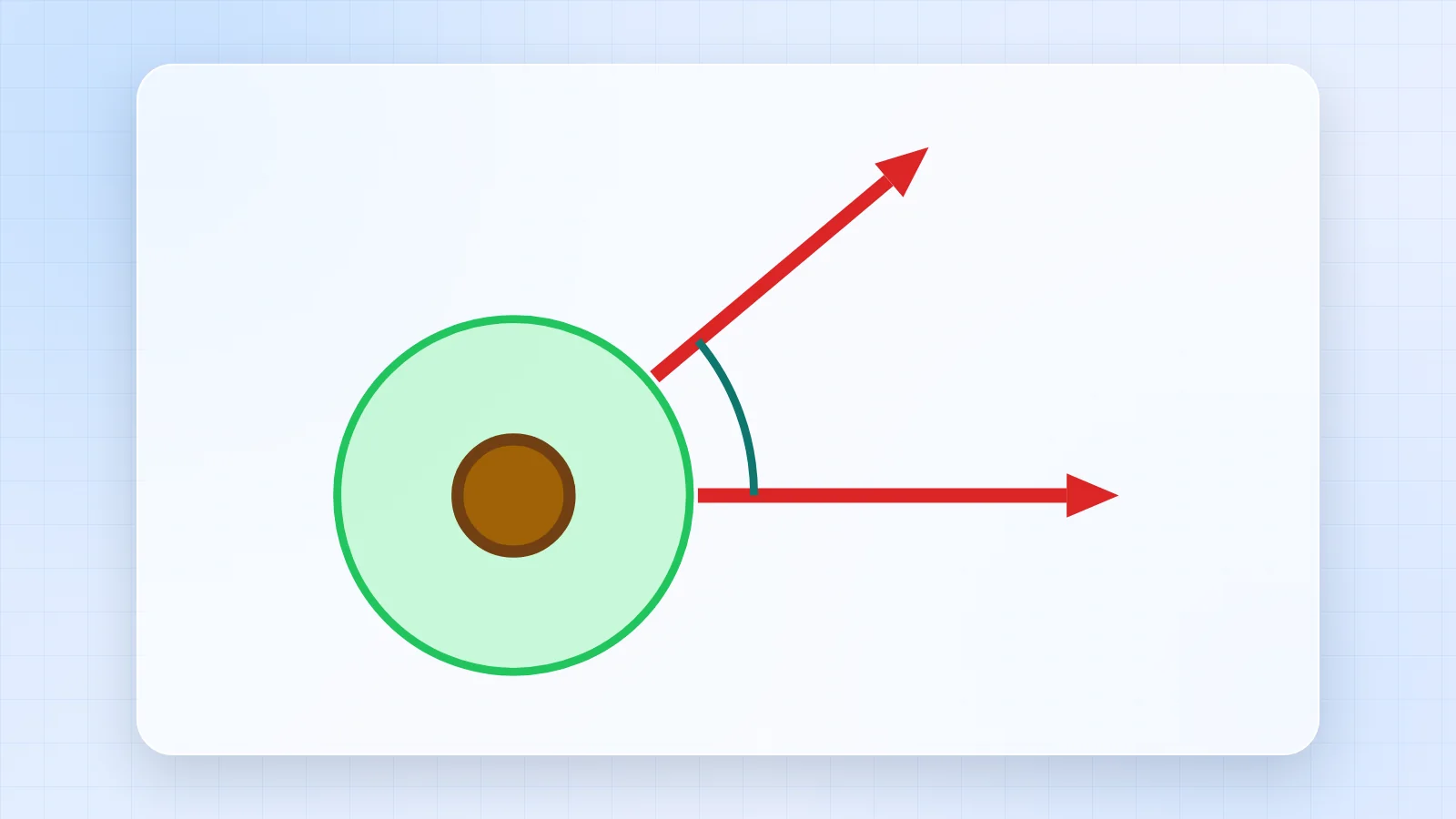
How much of the arrow's position matters depends on what the vector describes (Figure 3):
- Free vector: only magnitude and direction matter. The displacement of a body that moves without rotating is the same for every point of it.
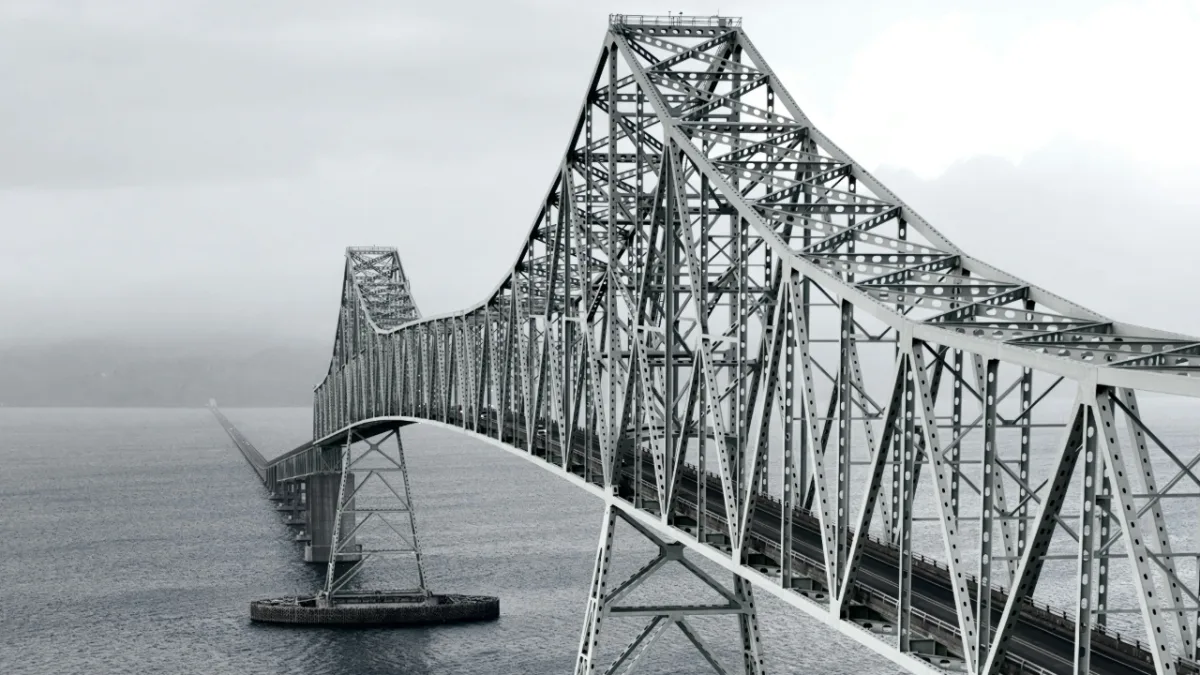
- Sliding vector: the line of action also matters, but not the point on it. A force on a rigid body may slide along its line of action without changing the external effect. This is the principle of transmissibility.
- Fixed vector: the point of application matters too. The deformation and the internal forces of a deformable body depend on exactly where a load is applied.
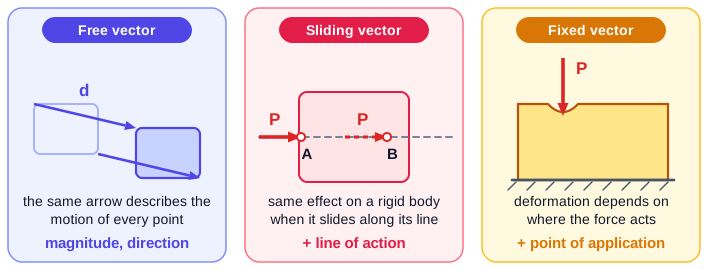
In statics, forces on rigid bodies are treated as sliding vectors. In mechanics of materials, the same forces must be treated as fixed vectors.
Summary
- A scalar has only a magnitude; a vector has a magnitude and a direction and adds by the parallelogram law.
- An arrow shows a vector: length for magnitude, angle for direction, arrowhead for sense.
- Write vectors in bold, \(\mathbf{F}\), and magnitudes in italic, \(F\); never set a vector equal to a number.
- \(k\mathbf{A}\) has magnitude \(|k|A\); a negative \(k\) reverses the sense.
- Forces on rigid bodies are sliding vectors; on deformable bodies they are fixed vectors.










Comments 0
Ask questions, explain a step or share a tip about this note.
Join the discussion
Log in to comment, reply and vote. It is free.
No comments yet
Ask a question, share a tip or say thanks. Be the first!